

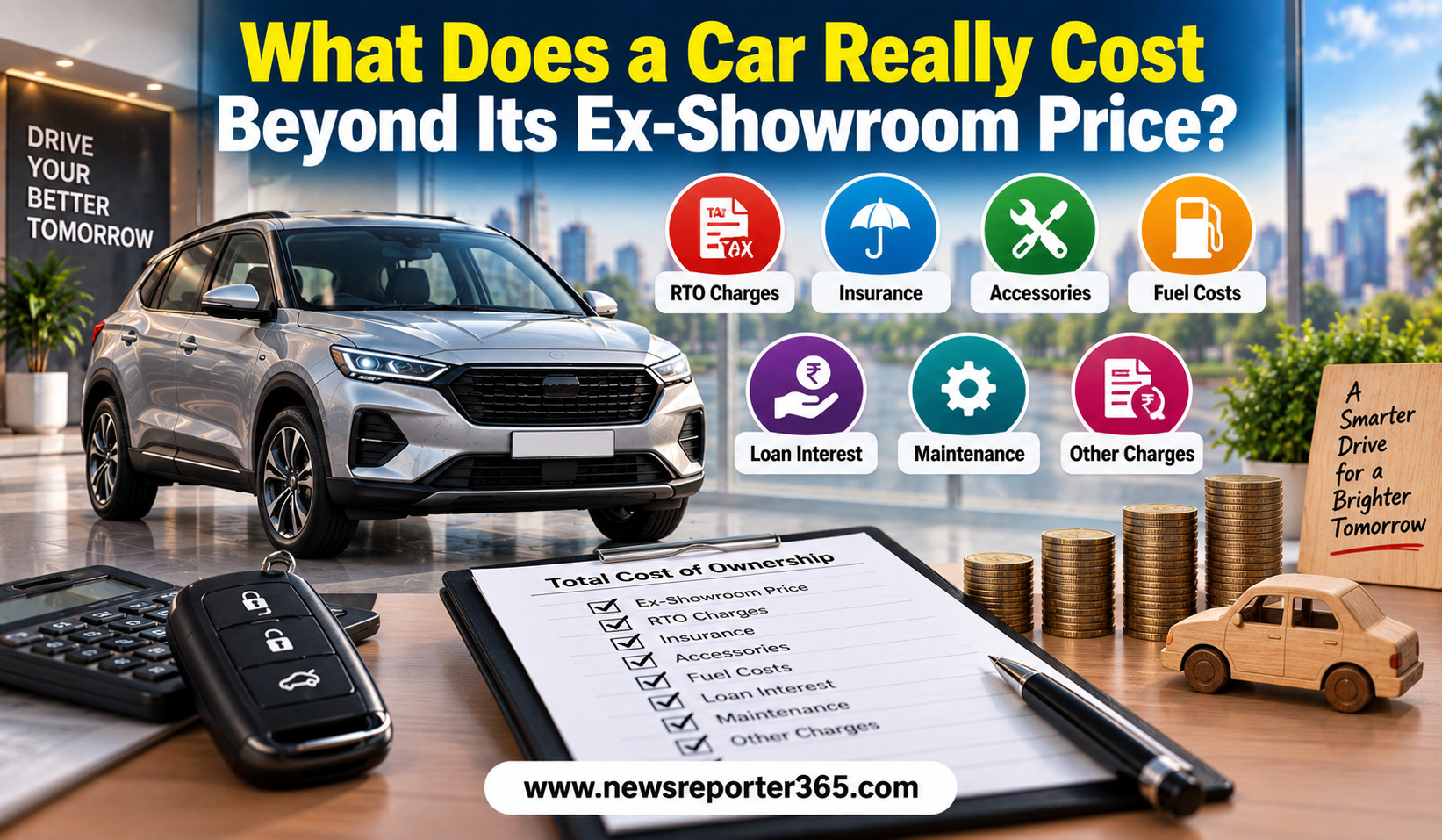
Buying a car often begins with one simple number: the ex-showroom price. It is the figure displayed in advertisements, comparison websites and dealership promotions, and it can make one model appear considerably cheaper than another. However, the amount printed next to a car’s name is rarely the amount a buyer ultimately pays to get it on the road.
The actual cost of owning a new car includes several additional expenses. Registration charges, road tax, insurance, FASTag, optional accessories, handling-related charges, extended warranties and other dealership or ownership costs can increase the final bill. For buyers working with a fixed budget, understanding these expenses is important before making a booking.
This is why the on-road price is a more useful figure when comparing cars. While the ex-showroom price helps buyers understand the manufacturer’s listed price, the on-road amount provides a clearer picture of the money required to legally drive the vehicle.
Ex-Showroom Price Is Only the Starting Point
The ex-showroom price generally represents the price of the vehicle before several government and ownership-related charges are added. It is the figure manufacturers and dealers commonly use when promoting a particular variant.
For example, a car advertised at ₹8 lakh may initially look comfortably within the budget of someone planning to spend around ₹9 lakh. But once registration, insurance and other applicable charges are added, the final amount could be significantly higher.
This difference becomes particularly important when comparing vehicles from different segments. Two cars with similar ex-showroom prices can have noticeably different on-road prices depending on factors such as the state of registration, insurance selection and variant-specific costs.
Registration and Road Tax Can Change the Final Bill
One of the biggest additions to the vehicle’s advertised price comes from registration and applicable road taxes. These charges vary according to the state and, in some cases, the vehicle’s price, fuel type or other classifications.
The buyer does not usually have the option of treating registration as an optional expense. A new vehicle must be properly registered before it can be used legally on public roads.
Because taxation structures differ between states, the same car can have different on-road prices in different parts of India. This is one reason buyers should avoid relying entirely on an online price seen for another city.
Insurance Is Another Major Cost
Insurance is another important component of the final purchase bill. A new vehicle needs appropriate insurance coverage before it can be driven legally, and the premium can vary based on the vehicle, coverage, insurer and selected add-ons.
Dealers often provide insurance packages during the purchase process, but buyers may have choices regarding insurers and coverage options. Comparing policies can therefore be worthwhile instead of automatically accepting the first insurance quote presented at the dealership.
The cheapest policy is not necessarily the best choice either. Features such as zero-depreciation cover, roadside assistance and other add-ons can affect both the premium and the level of protection available after an accident.
The Difference Between Ex-Showroom and On-Road Price
The easiest way to understand the difference is to think of the ex-showroom price as the starting price and the on-road price as the amount required to take the vehicle home after applicable costs have been included.
| Cost Component | Usually Included in Ex-Showroom Price? | Can Increase On-Road Cost? |
| Vehicle price | Yes | — |
| Registration charges | No | Yes |
| Road tax | No | Yes |
| Insurance | No | Yes |
| FASTag and related charges | Generally no | Yes |
| Optional accessories | No | Yes |
| Extended warranty | No | Yes |
| Service packages | No | Yes |
| Finance-related charges | No | Yes, if financed |
The exact components and amounts can differ depending on the vehicle, state, dealership and buyer’s choices. Therefore, a quotation showing the complete on-road amount is more useful than simply checking the manufacturer’s starting price.
Accessories Can Quietly Increase the Purchase Cost
Accessories are another area where the final cost can grow. Floor mats, seat covers, door visors, dash cameras, alloy wheels, body protection products and other accessories may be offered during the purchase process.
Some buyers genuinely need particular accessories, while others may purchase them because they are presented as part of a package. It is worth checking whether an accessory is necessary, whether it is already included in the variant and whether a similar product can be purchased elsewhere for less.
Buyers should also separate essential costs from optional spending. A mandatory registration fee is very different from a premium accessory package, even though both may appear on the final quotation.
Extended Warranty and Service Packages Need Careful Consideration
Modern cars come with manufacturer warranties, but dealerships may also offer extended warranty programs and maintenance packages. These can provide additional protection or make future service expenses easier to plan.
However, these products should be evaluated based on the vehicle’s expected ownership period and the terms of the package. A buyer planning to keep the car for many years may find an extended warranty more useful than someone who expects to sell it relatively early.
Similarly, service packages can make budgeting easier, but buyers should understand what services are actually covered before paying for them.
Financing Makes the Car More Expensive Over Time
For buyers taking a car loan, the purchase cost does not end with the down payment and initial on-road payment. Interest on the loan adds to the total amount paid over the repayment period.
A lower monthly EMI can sometimes look attractive because it reduces the immediate financial burden. However, extending the loan tenure can increase the total interest paid.
Buyers should therefore compare the total repayment amount, rather than focusing only on the monthly EMI. Processing fees and other finance-related charges should also be checked before signing the loan documents.
A sensible car budget should include both the upfront amount and the future monthly commitment.
Fuel and Charging Costs Continue After Purchase
The real cost of a car does not stop once it leaves the dealership. Fuel is likely to become one of the most regular expenses during ownership.
For petrol and diesel vehicles, monthly fuel spending depends on factors such as annual kilometres, traffic conditions, driving style and real-world fuel efficiency. Electric vehicle owners face charging expenses instead, although their running costs can differ depending on charging location and electricity rates.
This means buyers should consider their expected usage before selecting a car. A vehicle with a slightly higher purchase price but lower running expenses may make more financial sense for someone who drives long distances regularly.
Maintenance, Tyres and Repairs Add to Ownership Cost
Routine maintenance is another expense that buyers sometimes overlook. Engine oil, filters, brake components, tyres, batteries and other wear-and-tear items eventually require replacement or servicing.
The cost can vary significantly between models. Premium vehicles may have more expensive parts and servicing, while some mass-market models may be cheaper to maintain.
Tyres are particularly important because their replacement cost can vary depending on wheel size and tyre specification. A car with larger wheels may look attractive, but replacement tyres can cost considerably more than those used on a smaller-wheel variant.
A practical ownership budget should therefore account for regular servicing as well as unexpected repairs.
Depreciation Is a Cost Even If You Do Not Pay It Monthly
Depreciation is often ignored because it does not appear as a monthly bill. Yet it can be one of the largest financial costs associated with vehicle ownership.
A car generally loses value as it gets older and accumulates kilometres. The amount of depreciation depends on the model, condition, mileage, demand in the used-car market and other factors.
Two vehicles purchased at similar prices can therefore have very different resale values after several years. Buyers who frequently change cars should pay attention to expected resale value because depreciation directly affects the effective cost of ownership.
Parking, Tolls and Daily Usage Also Matter
For city drivers, parking can become a surprisingly regular expense. Office parking, residential parking arrangements and paid parking at shopping centres or public locations can add to the annual cost.
Tolls are another consideration for people who frequently travel on highways. Although an individual toll payment may seem small, regular highway users can spend a substantial amount over a year.
Other everyday expenses can include car washing, detailing, pollution checks, accessories replacement and occasional repairs. None of these necessarily determines whether a car is affordable on its own, but together they can make a noticeable difference.
How Buyers Can Calculate the Real Cost
Before booking a car, buyers should request a detailed written quotation from the dealer. The quotation should clearly separate mandatory charges from optional products and services.
A simple calculation should include:
- Ex-showroom price
- Registration and applicable road tax
- Insurance
- Mandatory or applicable vehicle-related charges
- Optional accessories and packages
- Loan-related costs, if applicable
- Estimated fuel or charging expenses
- Expected maintenance and tyre costs
This approach gives buyers a much more realistic picture than simply comparing advertised prices.
Why the On-Road Price Matters More for Budget Buyers
For someone with a strict budget, the difference between ex-showroom and on-road pricing can determine which car is actually affordable. A vehicle that appears cheaper in advertisements may not remain the cheapest after all applicable charges are included.
For this reason, buyers should compare cars using their final on-road prices for the same city, rather than comparing only their ex-showroom prices.
The same principle applies when deciding between variants. A higher variant may offer more features but could also increase registration-related costs, insurance premiums and financing requirements.
Final Word
The ex-showroom price is useful, but it should never be treated as the complete cost of buying a car. The real financial commitment begins with the on-road price and continues through insurance renewals, fuel or charging, maintenance, tyres, repairs, parking and depreciation.
Before making a purchase, buyers should ask for a transparent quotation and understand every major charge. Separating necessary expenses from optional extras can also prevent the final bill from rising unexpectedly.
A car should fit not only the buyer’s purchase budget but also their long-term ownership budget. Looking beyond the ex-showroom price can help buyers make a more informed decision and avoid financial surprises after bringing their new vehicle home.
FAQs
Is the ex-showroom price the final price of a car?
No. The ex-showroom price generally does not represent the complete amount a buyer pays to put the vehicle on the road. Registration, applicable taxes, insurance and other costs are added separately.
What is an on-road price?
The on-road price is the amount a buyer generally needs to pay to obtain and legally use the vehicle, after applicable registration, taxes, insurance and other relevant charges are included.
Why does the same car have different on-road prices in different states?
Vehicle taxes and registration-related charges can vary between states. As a result, the same model and variant can have different final prices depending on where it is registered.
Are car accessories included in the ex-showroom price?
Usually, optional accessories are not included in the basic ex-showroom price. Buyers should check the quotation carefully to determine which accessories are included and which are being charged separately.
Does a car loan increase the total cost?
Yes. When a vehicle is financed, interest and potentially other loan-related charges increase the total amount paid over the repayment period.
What should buyers compare when choosing between two cars?
The most useful comparison is the complete on-road price along with expected running, maintenance, insurance and resale costs. Looking only at ex-showroom prices can give an incomplete picture of affordability.