

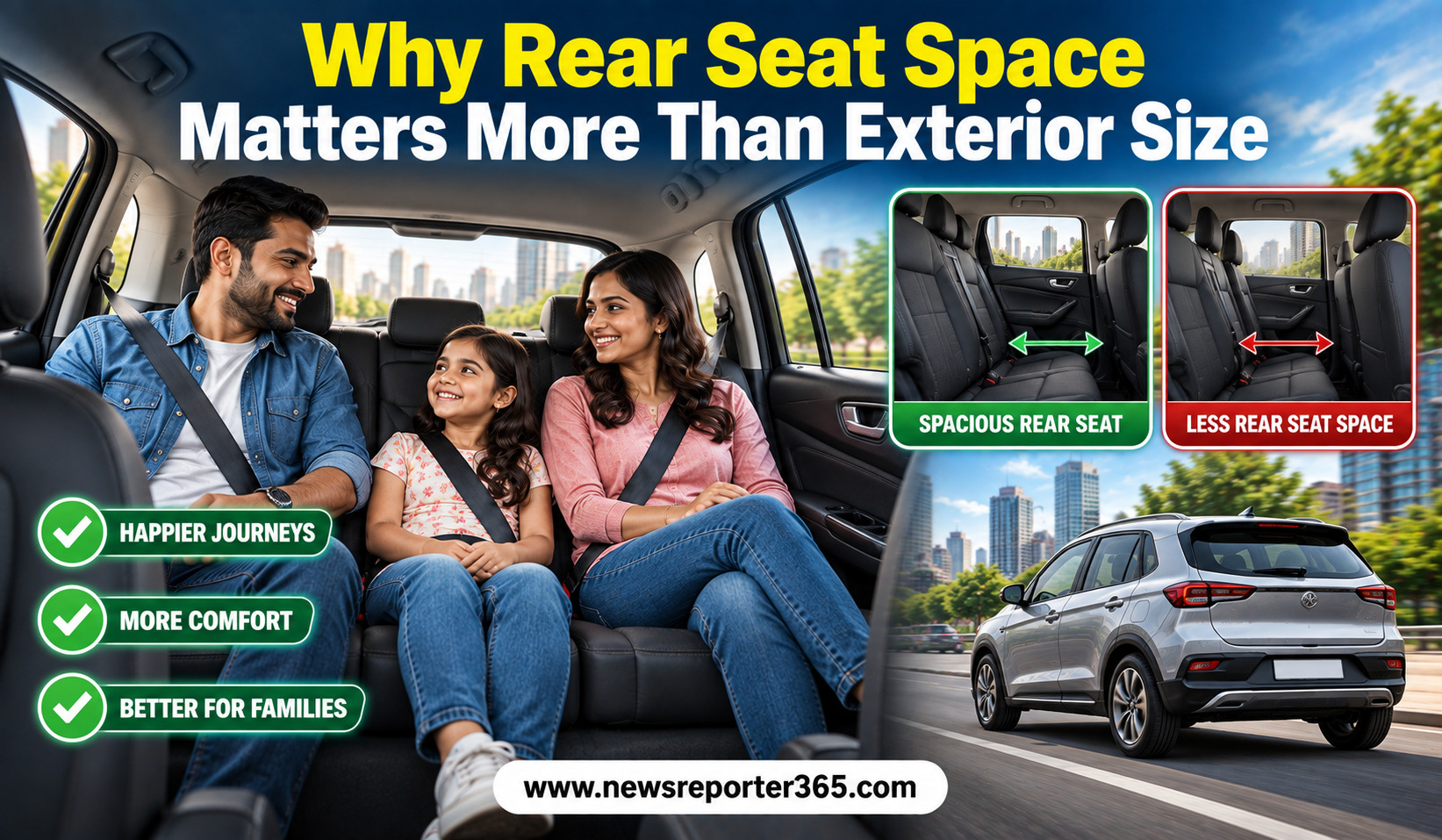
When people compare cars, exterior design is often one of the first things they notice. A longer body, wider stance or larger-looking SUV can create the impression that the vehicle must also have a more spacious cabin. But in practical family-car buying, appearance does not always tell the full story.
For families, rear-seat space can matter more than exterior size. A car may look large from the outside but offer limited legroom or shoulder room inside. Another vehicle with a relatively compact footprint may use its dimensions more efficiently and provide a surprisingly comfortable rear cabin.
This difference is becoming increasingly important as urban families look for vehicles that are easy to drive and park while still providing enough space for passengers. Instead of judging a car by its exterior dimensions alone, buyers should understand how the available space has been packaged inside.
Why Rear Seat Space Matters for Families
The rear seat is where family members often spend a significant part of their journey. Children travel to school, parents sit in the back during family trips and adults may use the rear seats for longer highway journeys.
Unlike the driver and front passenger, rear occupants have fewer opportunities to adjust their seating position. This makes the design and dimensions of the second row particularly important.
A vehicle with adequate rear legroom can make a noticeable difference during longer journeys. Passengers can sit more comfortably without constantly adjusting their position or feeling restricted by the front seats.
For families, rear-seat comfort is therefore not simply a luxury. It can influence how practical the car feels every day.
Exterior Size Does Not Guarantee Interior Space
A common assumption is that a larger car automatically provides a larger cabin. While exterior dimensions can contribute to interior room, the relationship is not direct.
Manufacturers have to use the vehicle’s space for several components, including the engine or electric powertrain, suspension, safety structures, fuel tank or battery, luggage compartment and other mechanical systems.
The way these components are arranged determines how much room remains for passengers.
This is why two cars with similar exterior lengths can feel very different inside. One may prioritize boot space, while another may push the cabin forward and provide greater passenger room.
Wheelbase Plays an Important Role
Wheelbase is one of the key dimensions influencing passenger space. It measures the distance between the front and rear axles.
A longer wheelbase can provide manufacturers with more room between the wheels to package the passenger compartment. This can potentially create additional rear legroom.
However, the wheelbase alone does not determine cabin space. Seat design, dashboard packaging, floor layout and the position of the front seats also matter.
For buyers comparing family cars, looking at wheelbase alongside actual rear-seat measurements can provide a better understanding of the available passenger space.
Legroom Is Not the Only Measurement
Rear-seat comfort involves much more than legroom. A passenger may have plenty of space for their knees but still feel uncomfortable if shoulder room or headroom is limited.
Three important dimensions deserve attention: legroom, shoulder room and headroom.
Legroom determines how freely passengers can position their legs. Shoulder room becomes particularly important when three people need to sit across the rear bench. Headroom affects taller passengers and can also influence how easy it is to enter and exit the vehicle.
The shape and firmness of the rear seat also matter. A wide bench with good cushioning can feel more comfortable than a larger-looking cabin with poorly designed seating.
Rear Seat Space Is Important for Child Seats
Families with young children have another reason to prioritize rear-seat space. Child seats can take up considerable room, especially when installed behind the front passenger or driver.
Parents need enough space to install the child restraint correctly without making the front passenger position unusable.
ISOFIX mounting points, seat-belt accessibility and the shape of the rear bench can all influence how practical the installation is.
Families should ideally check their actual child seat in the vehicle before purchase. A car that appears spacious in a showroom may feel considerably different once a child restraint is installed.
Three Rear-Seat Factors Buyers Should Check
When evaluating a family car, buyers should focus on the actual rear-seat experience rather than relying entirely on the brochure:
- Legroom: Check whether passengers can sit comfortably with the front seats adjusted for regular driving.
- Width: See whether two or three passengers can sit comfortably without feeling cramped.
- Headroom and access: Check the roof clearance and how easily passengers can enter and exit.
These simple checks can reveal more about family practicality than exterior styling.
Compact Cars Can Use Space Efficiently
Modern vehicle design has made packaging increasingly important. A relatively compact vehicle can sometimes provide impressive passenger space by positioning its wheels close to the corners and maximizing the distance available for the cabin.
Shorter front and rear overhangs can help create a more efficient interior-to-exterior ratio.
This is particularly useful for city families. They may want a car that is easy to park and manoeuvre while still offering comfortable seating for passengers.
As urban parking spaces become more challenging, efficient packaging can be more useful than simply choosing a physically larger vehicle.
The Importance of Rear Door Opening
Rear-seat comfort starts before the passenger even sits down. Door design and opening width can influence how easy it is for children, elderly passengers and adults to enter the vehicle.
A car with generous rear-seat dimensions but a narrow or awkward door opening may not feel particularly family-friendly.
Parents should also check whether there is sufficient room to place a child into a car seat without hitting the door frame or front seat.
For older passengers, a comfortable step-in height and a sufficiently wide door can make regular journeys easier.
Rear Seat Space vs Boot Space
There is often a compromise between passenger space and luggage capacity. Manufacturers have to decide how much of the vehicle should be dedicated to passengers and how much should be used for cargo.
For a family car, both areas matter. A spacious rear seat is useful, but families also need enough luggage capacity for shopping, school bags and weekend travel.
The ideal vehicle is therefore one that balances the two rather than maximizing one at the expense of the other.
A flexible rear seat can provide an additional advantage by allowing families to adjust passenger and luggage space depending on their needs.
Why Exterior Dimensions Can Be Misleading
Consider two cars with similar lengths. One might have a long bonnet, reducing the space available for the passenger compartment. Another could have a shorter front section and a more upright cabin, creating more room for occupants.
Similarly, a large-looking SUV may devote significant space to styling elements, wheel arches or exterior proportions without providing equivalent usable cabin space.
This is why buyers should avoid judging interior practicality while standing outside the vehicle.
The real test begins when passengers sit in the second row.
How to Test Rear Seat Space Before Buying
A showroom visit should include more than checking the dashboard and driver’s seat. Families should spend time in the back and recreate their normal seating arrangement.
If two adults regularly travel with children, place the child seats where they would normally be installed. Adjust the front seats to realistic driving positions and then check the available rear space.
If three passengers may regularly sit in the second row, all three should sit together during the evaluation.
Also check whether passengers can comfortably reach seat-belt buckles and whether the centre position is practical.
Rear Seat Comfort Comparison
| Factor | Why It Matters | What to Check |
| Legroom | Affects passenger comfort on longer journeys | Knee clearance behind front seats |
| Shoulder room | Important when carrying three passengers | Width of rear bench |
| Headroom | Important for taller occupants | Distance between head and roof |
| Seat cushioning | Influences long-trip comfort | Support and firmness |
| Door opening | Makes entry and exit easier | Rear door width and angle |
| Child-seat compatibility | Important for young families | ISOFIX and belt access |
Rear Seats Matter Even More on Long Trips
A rear seat that feels acceptable for a 15-minute city journey may become uncomfortable after several hours on a highway.
Long-distance passengers need enough room to change their sitting position and stretch their legs. Families who frequently travel between cities should therefore give rear-seat comfort greater importance during the buying process.
Suspension and ride quality also affect rear passengers. A vehicle can have excellent legroom but still feel uncomfortable if the rear suspension is harsh over rough roads.
This is another reason a proper test drive with family members can be more useful than relying solely on specifications.
Common Mistakes When Choosing a Family Car
Many buyers make decisions based heavily on exterior appearance. A large SUV may appear more practical, while a compact hatchback may seem too small before anyone sits inside.
Another mistake is checking only the driver’s seat. If the driver has plenty of room but rear passengers are cramped, the car may not meet the family’s actual needs.
Buyers should also avoid assuming that a longer car automatically has a more spacious rear cabin.
Some common mistakes include:
- Judging cabin space from exterior appearance.
- Ignoring rear-seat width.
- Forgetting to test child-seat compatibility.
- Not checking rear-seat comfort with the front seats properly adjusted.
- Choosing boot space without considering passenger requirements.
The Best Family Car Is Not Always the Biggest
The ideal family vehicle is one that uses its available dimensions effectively. A compact car with clever packaging can sometimes provide more usable passenger space than a larger vehicle.
For families living in busy cities, this balance becomes particularly valuable. A smaller exterior footprint can make parking and manoeuvring easier, while an efficient cabin can keep passengers comfortable.
This approach also helps buyers avoid paying for vehicle size they may not actually need.
Conclusion
Rear-seat space deserves much more attention when buying a family car. Exterior size can provide a general idea about a vehicle’s footprint, but it does not tell the complete story about passenger comfort.
Wheelbase, cabin packaging, seat design, headroom, shoulder room, legroom and rear-door access all contribute to the actual experience. For families with children, child-seat compatibility adds another important consideration.
The smartest approach is to sit in the rear seat, test the space with realistic seating positions and evaluate how the vehicle performs during an actual test drive. Buyers should also consider their regular passenger count, luggage requirements and parking environment.
Ultimately, a family car does not have to be the biggest vehicle on the road. It needs to make the best use of its available space. When rear-seat comfort is prioritized alongside practical exterior dimensions, families can find a vehicle that is easier to live with every day.
FAQs
Why is rear-seat space important in a family car?
Rear-seat space directly affects passenger comfort, particularly for families travelling with children or adults in the second row. Good legroom, width and headroom can make everyday and long-distance journeys more comfortable.
Does a bigger car always have more rear-seat space?
No. Exterior size does not automatically translate into usable cabin space. Interior packaging, wheelbase, seat design and the positioning of mechanical components all influence passenger rooms.
What is the most important rear-seat measurement?
There is no single measurement that determines comfort. Legroom, shoulder room and headroom should all be considered, along with seat design and access.
Is the wheelbase important for rear-seat comfort?
Yes. A longer wheelbase can provide more room between the axles for passenger accommodation, potentially increasing rear legroom. However, it is only one factor in cabin design.
What should parents check when buying a car with a child seat?
Parents should check ISOFIX availability where applicable, child-seat compatibility, rear-seat width, seat-belt access and the amount of space remaining for front passengers.
Can a compact car be comfortable for a family?
Yes. A compact vehicle with efficient packaging can provide good passenger space while remaining easier to park and manoeuvre in urban areas.