

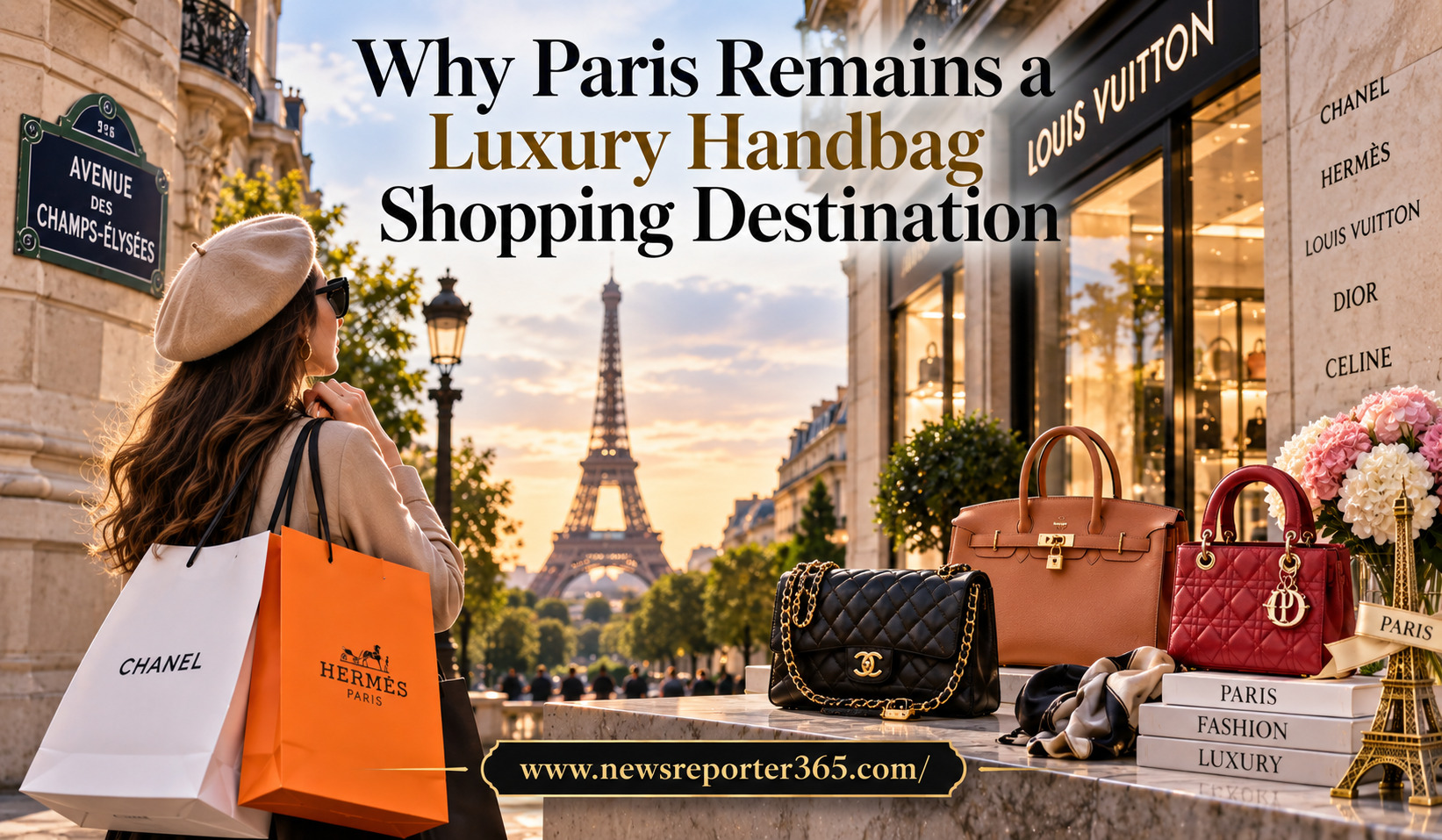
Paris continues to hold a special position in the global luxury fashion industry. For decades, the French capital has attracted shoppers searching for designer clothing, jewellery, watches and, particularly, luxury handbags. Even as luxury retail expands across cities such as Dubai, Singapore, London and New York, Paris remains an important destination for consumers who want to experience high-end fashion at its source.
The appeal of buying a luxury handbag in Paris goes beyond the product itself. The city combines famous fashion houses, historic shopping streets, flagship boutiques, department stores and a long-established culture of craftsmanship. For international visitors, shopping for a designer handbag can therefore become part of the wider Paris travel experience.
Changing consumer behaviour has also influenced the luxury handbag market. Buyers are increasingly interested in craftsmanship, resale value, vintage products and the story behind a fashion house. Paris is particularly well positioned to serve these interests because its luxury ecosystem includes both major global brands and specialist retailers.
Paris Has Deep Roots in Luxury Fashion
One of the biggest reasons Paris remains important to luxury handbag shoppers is its connection with the history of fashion. The city has played a major role in the development of haute couture and luxury design, helping establish France as a centre for premium fashion.
Several globally recognised French fashion houses were founded in Paris or developed strong identities through the city. Their boutiques have become destinations in their own right, attracting tourists and fashion enthusiasts from around the world.
This heritage creates a different shopping experience from buying the same brand in an ordinary retail environment. Visitors are not simply purchasing a handbag; they are entering a market closely connected with the brand’s history and identity.
The combination of heritage and modern retail continues to strengthen Paris’s reputation among luxury shoppers.
Flagship Boutiques Create a Unique Shopping Experience
Paris is home to numerous flagship and major boutiques operated by international luxury brands. These stores are often designed to reflect the identity of the fashion house, with carefully planned interiors, personalised service and displays that showcase current collections.
For luxury handbag shoppers, this environment can be an important part of the purchase. Customers can examine materials closely, compare different sizes and discuss options with sales advisers before making a decision.
Flagship stores may also provide access to collections or products that vary from those found in other markets. Stock is never guaranteed, particularly for highly sought-after handbags, but the concentration of luxury retailers gives shoppers multiple opportunities to explore.
This is one reason visitors often include Paris shopping in their travel plans even when similar brands are available in their home countries.
Paris Offers Several Luxury Shopping Districts
Luxury shopping in Paris is not restricted to one street or neighbourhood. Different areas offer different experiences, allowing visitors to build their shopping itinerary around their interests.
The Golden Triangle, centred around Avenue Montaigne, Avenue George V and the Champs-Élysées, is one of the city’s best-known luxury retail areas. It brings together prestigious fashion houses and premium boutiques within a relatively concentrated part of central Paris.
Saint-Germain-des-Prés provides another important shopping environment. The neighbourhood combines established luxury names with independent designers, boutiques and cafés, creating a more mixed retail atmosphere.
The Marais is also popular with visitors interested in contemporary fashion, independent labels and vintage shopping. These different districts help Paris appeal to both traditional luxury consumers and younger shoppers looking for something less conventional.
Department Stores Add More Choice
Paris’s department stores remain an important part of the city’s luxury-shopping ecosystem. Instead of visiting individual boutiques across different parts of the city, shoppers can explore multiple brands in a single location.
Large department stores have also become attractions in their own right. Their architecture, seasonal displays and fashion departments attract visitors who may not initially be planning to make a luxury purchase.
For handbag shoppers, the main advantage is convenience. A visitor can compare different brands, styles and price points without spending the entire day travelling between boutiques.
| Shopping format | Main attraction | Best for |
| Flagship boutique | Brand experience and personalised service | Specific luxury brands |
| Department store | Multiple brands in one location | Comparing options |
| Vintage retailer | Older and discontinued designs | Collectors |
| Pre-owned specialist | Wider range of resale products | Value-focused shoppers |
The Vintage Luxury Market Strengthens Paris’s Appeal
Another factor helping Paris maintain its position is the city’s established vintage and pre-owned luxury market.
Luxury handbag buyers are increasingly interested in products from previous decades. Older designs can offer distinctive shapes, materials and details that are not always found in current collections. Some discontinued models have also developed strong demand among collectors.
Paris has specialist stores and resale businesses where shoppers can find pre-owned designer handbags. This gives visitors an alternative to traditional brand boutiques and allows them to search for pieces that may no longer be produced.
However, pre-owned shopping requires greater attention to authenticity and condition. Buyers should research the seller, ask about authentication procedures and carefully inspect the handbag before paying.
The growth of resale also fits with changing attitudes toward luxury. Instead of viewing a handbag as a short-term fashion purchase, some consumers see it as a product that can remain useful for years and potentially retain part of its value.
French Craftsmanship Remains a Major Attraction
Craftsmanship is another reason Paris continues to attract luxury shoppers. High-end handbags often involve detailed leatherwork, precise stitching, carefully finished hardware and strict quality control.
Consumers have become increasingly interested in how luxury products are made. A handbag’s material, construction and durability can be just as important as its logo or appearance.
French luxury brands have benefited from this growing interest because craftsmanship is closely connected with their identities. Paris provides shoppers with an opportunity to experience these brands within the cultural environment where French luxury fashion has developed.
For buyers making a significant investment, this connection between design, craftsmanship and heritage can add emotional value to the purchase.
International Visitors Add to Paris’s Luxury Market
Paris attracts millions of international visitors each year, making tourism an important part of the city’s luxury retail environment. Visitors from Europe, Asia, the Middle East, North America and other regions contribute to demand for designer products.
Luxury handbags are particularly suitable for international shoppers because they are relatively easy to transport compared with larger luxury goods. A handbag can also serve as a long-lasting reminder of a trip.
Tourist demand means major luxury shopping areas are accustomed to serving international customers. Many stores provide assistance in multiple languages, while payment systems generally support international cards.
For travellers from outside the European Union, potential VAT-refund eligibility can also influence the shopping decision. Eligible visitors who meet the relevant requirements may be able to recover part of the VAT paid on qualifying purchases when leaving the EU.
However, the refund process has specific rules and procedures, so travellers should check the latest requirements before making a high-value purchase.
The Price Advantage Needs Careful Consideration
Paris is sometimes viewed as a place where luxury handbags are automatically cheaper than in other countries. The reality can be more complicated.
Prices vary by market, while currency exchange rates can change the final cost for international shoppers. Credit-card foreign-exchange fees, VAT-refund processing and customs charges in the buyer’s home country can also affect the overall expense.
Therefore, shoppers should compare the final cost rather than looking only at the advertised retail price.
A useful approach is to research the handbag before travelling and record its price in the buyer’s home market. This provides a clearer basis for deciding whether purchasing in Paris makes financial sense.
Availability Can Be Part of the Experience
The availability of specific luxury handbags is another factor that attracts shoppers to Paris, although it can also create uncertainty.
Popular handbags, special colours and limited collections may sell quickly. Different boutiques can have different inventory, and a product displayed online may not necessarily be available at a particular store.
This makes flexibility useful. Shoppers who have a first-choice handbag should ideally have one or two alternative options in mind.
The search itself can become part of the Paris shopping experience. Instead of visiting a single store and expecting a guaranteed purchase, shoppers can explore different neighbourhoods, boutiques and retailers.
Luxury Shopping Has Become a Travel Experience
Modern luxury consumers increasingly view shopping as part of travel rather than a separate activity. Paris is particularly well suited to this trend because shopping can easily be combined with museums, restaurants, architecture and cultural attractions.
A day spent exploring luxury boutiques can be combined with a visit to a historic neighbourhood or an evening in one of the city’s restaurants. This creates an experience that is difficult to reproduce through online shopping.
Social media has also contributed to this trend. Paris fashion districts and luxury boutiques frequently appear in travel and fashion content, encouraging visitors to explore the city for themselves.
Sustainability Is Changing Luxury Shopping
Sustainability is another factor influencing modern handbag purchases. Some shoppers are moving away from fast fashion and looking for products that can be used for many years.
Luxury handbags can fit into this approach when they are purchased thoughtfully and maintained properly. High-quality materials and repair services can potentially extend the useful life of a handbag.
The growing popularity of pre-owned shopping also supports this shift. Buying an existing handbag gives a product another period of use rather than relying entirely on new production.
For Paris, the combination of traditional craftsmanship and a mature resale market creates a strong foundation for consumers interested in more considered luxury purchases.
What Makes Paris Different From Other Luxury Cities?
Cities such as London, Milan, Dubai, Singapore and New York have strong luxury retail markets, but Paris has a distinctive combination of fashion heritage, French luxury houses, historic shopping districts and tourism.
| Paris advantage | Why it matters |
| Fashion heritage | Connects shopping with decades of luxury history |
| Major boutiques | Offers direct access to global luxury brands |
| Shopping districts | Provides different retail experiences |
| Vintage market | Helps shoppers find older and discontinued designs |
| Tourism | Makes luxury shopping part of a wider travel experience |
| Craftsmanship | Adds emphasis to materials and construction |
This combination explains why Paris continues to stand out even as luxury shopping becomes increasingly global.
Final Thoughts
Paris remains a major luxury handbag shopping destination because it offers much more than access to expensive products. The city’s fashion heritage, flagship boutiques, department stores, vintage retailers and craftsmanship create an ecosystem that appeals to different types of luxury consumers.
International visitors can also benefit from the convenience of concentrated shopping districts and, when eligible, the possibility of a VAT refund. However, shoppers should compare prices, understand tax rules and research availability before making a major purchase.
FAQs
Why is Paris famous for luxury handbags?
Paris has a long connection with luxury fashion and is closely associated with several internationally recognised fashion houses. Its boutiques, shopping districts and craftsmanship contribute to its reputation.
Is buying a luxury handbag in Paris cheaper?
It can be competitive depending on the brand, model, exchange rate and the shopper’s home market. Eligible non-EU visitors may also qualify for a VAT refund, but buyers should calculate the final cost rather than assuming Paris will always be cheaper.
Which areas of Paris are popular for luxury shopping?
The Golden Triangle around Avenue Montaigne and Avenue George V is a major luxury area. Saint-Germain-des-Prés and the Marais also offer designer, independent and vintage shopping.
Can I find vintage luxury handbags in Paris?
Yes. Paris has an established market for vintage and pre-owned designer goods. Buyers should pay close attention to authentication, condition and seller reputation.
Are luxury handbags available at every Paris boutique?
No. Stock can vary between stores, and popular models or colours may be unavailable. It is useful to have alternative choices when shopping for a specific handbag.