

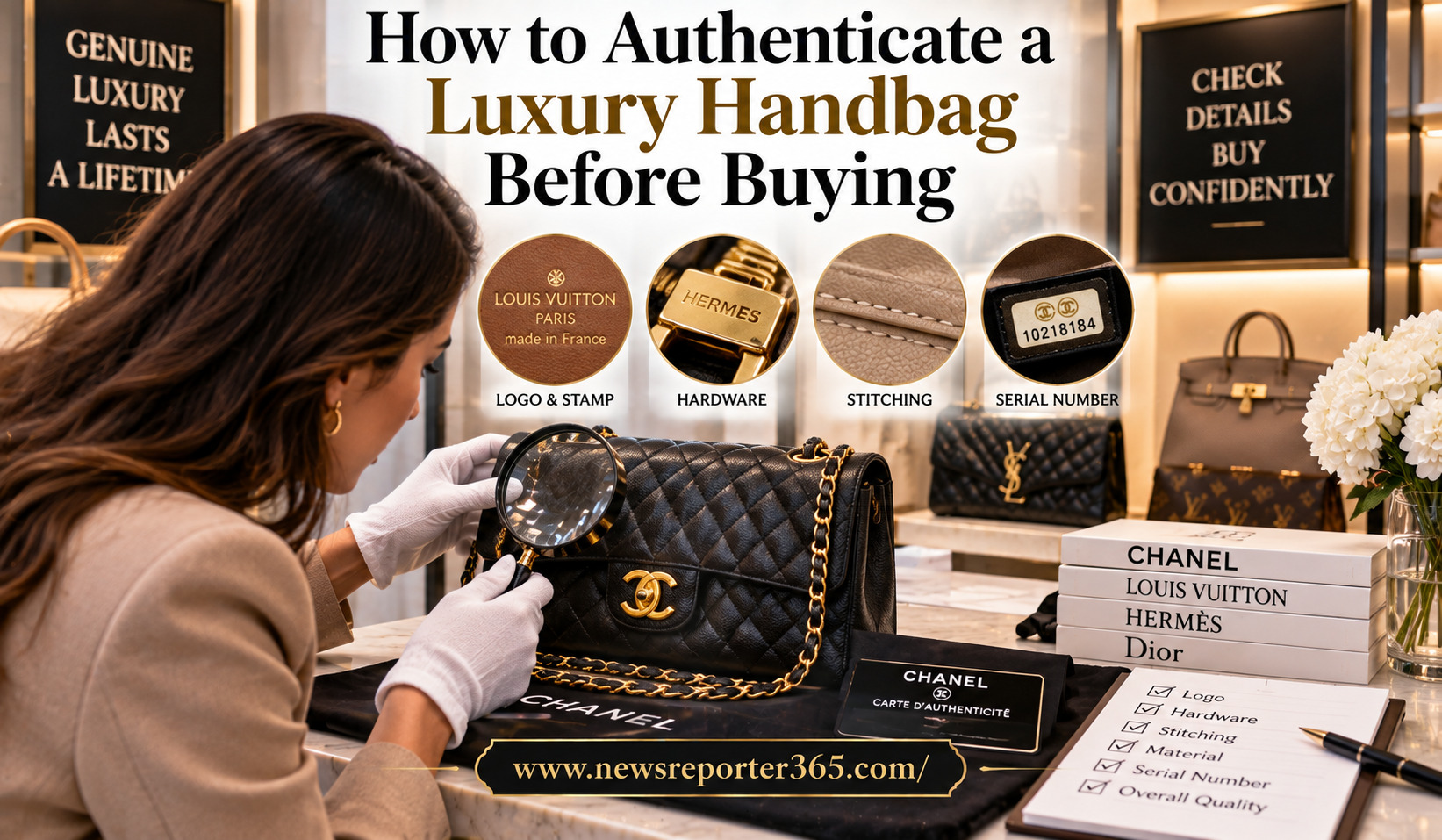
The market for luxury handbags continues to expand, with buyers showing interest in everything from current designer collections to vintage and pre-owned pieces. As the resale market grows, so does the importance of authentication. A handbag can look genuine at first glance while still containing details that raise questions about its origin.
Buying a luxury handbag is often a significant financial decision, particularly when purchasing a pre-owned item. Unlike ordinary fashion accessories, designer handbags can carry high price tags and, in some cases, maintain considerable resale value. This makes authentication an essential part of the buying process rather than an optional final check.
While professional authentication services can provide additional confidence, buyers can also perform several basic checks themselves. Examining the overall construction, materials, branding, hardware, stitching and accompanying documentation can help identify potential warning signs before money changes hands.
Why Handbag Authentication Matters
Luxury brands invest heavily in design, craftsmanship and brand identity. Their handbags typically feature carefully controlled materials, construction methods and finishing details. Counterfeit manufacturers attempt to reproduce these characteristics, but inconsistencies can appear when the product is examined closely.
The risk is particularly relevant in the pre-owned market. Online marketplaces and social media have made it easier for individuals and businesses to buy and sell designer handbags, but the distance between seller and buyer can make physical inspection difficult.
A convincing photograph does not necessarily prove authenticity. Lighting, image quality and editing can hide imperfections. A buyer who relies only on photographs may overlook important details that would be visible when examining the handbag in person.
Authentication therefore helps protect both the buyer’s money and the long-term value of the purchase.
Start With the Seller
Before examining the handbag itself, consider who is selling it. A reputable seller should be able to provide clear information about the product’s history, condition and purchase documentation.
Established pre-owned retailers often have their own authentication procedures, while individual sellers may provide less information. Neither situation automatically proves that a handbag is genuine or counterfeit, but the seller’s transparency can provide an important first indication.
Be cautious if the seller refuses to provide additional photographs, gives contradictory information or creates pressure to complete the transaction immediately.
Some common warning signs include:
- A price that appears unusually low compared with the normal market value.
- Refusal to provide clear photographs of important details.
- Inconsistent information about where or when the handbag was purchased.
- Pressure to make an immediate payment.
- Requests to complete payment outside a protected marketplace.
A low price alone does not prove that an item is fake. However, when several warning signs appear together, buyers should slow down and investigate further.
Examine the Overall Construction
One of the most useful authentication techniques is to look at the handbag as a complete product rather than concentrating on a single detail.
Luxury handbags are generally manufactured with considerable attention to construction. The shape should appear intentional and consistent, while panels, handles and seams should fit together properly.
Look at the handbag from different angles. Check whether the structure appears symmetrical and whether the material sits naturally. Uneven panels, poorly aligned edges or excessive adhesive can indicate poor-quality manufacturing.
This does not mean that every small imperfection proves a handbag is counterfeit. Genuine products can develop wear, especially when they are pre-owned. The important point is whether the overall construction matches the standards expected from the particular brand and model.
Check the Stitching Carefully
Stitching can provide useful clues because different luxury houses use specific construction techniques. Buyers should become familiar with the typical stitching pattern of the exact handbag they are considering.
Look for consistency in stitch spacing, alignment and tension. Randomly uneven stitches, loose threads or visibly messy finishing can be warning signs.
However, stitching should never be used as the only authentication test. Counterfeit manufacturers have become increasingly sophisticated, and some fake handbags can reproduce stitching patterns surprisingly well.
The correct approach is to combine stitching observations with other details such as materials, hardware, branding and internal features.
Study the Logo and Branding
Branding is another important area to examine. Luxury houses typically use carefully controlled typography, logos and placement.
Look closely at the logo’s shape, spacing and positioning. Letters should normally appear consistent with the brand’s established design. Misspellings, unusual fonts or poorly aligned logos are obvious warning signs.
However, authenticity cannot be determined simply because a logo looks correct. Modern counterfeit products may reproduce exterior branding with considerable accuracy.
For this reason, buyers should compare the logo with verified photographs of the same model and production period rather than relying on general images of the brand.
Inspect the Hardware
Hardware can reveal differences between authentic and counterfeit products. Depending on the handbag, this can include zippers, clasps, buckles, chains, studs and other metal components.
Pay attention to the finish and weight of the hardware. It should look appropriate for the model and should not appear excessively lightweight or poorly finished.
The engraving is also worth checking. Brand names, logos and other markings should generally have consistent proportions and finishing.
It is important to research the exact model, however, because hardware can change between collections and production years. A detail that appears different from a newer handbag may simply reflect an older version of the design.
Examine the Material and Interior
The material should match what was advertised by the seller. If the handbag is described as a particular type of leather, buyers should understand what that leather normally looks and feels like.
Leather texture can vary naturally, particularly with genuine products, so an unusual grain does not automatically indicate a counterfeit. Instead, buyers should look at the overall quality and consistency of the material.
The interior deserves just as much attention as the exterior. Examine the lining, pockets, labels, stitching and internal hardware. Compare these features with reliable references for the exact model.
Counterfeit products may reproduce the exterior appearance but overlook smaller internal details.
Serial Numbers, Date Codes and Identification Marks
Many luxury handbags have used serial numbers, date codes, authenticity cards, microchips or other identification systems at different points in their production history.
These details are often misunderstood. The presence of a number or code does not automatically prove that a handbag is authentic. Counterfeiters can copy genuine-looking numbers, and brands can change their identification systems over time.
The correct approach is to determine whether the marking is appropriate for the specific model and production period.
| Authentication feature | What to examine | Why it matters |
| Logo | Font, spacing and placement | Brand consistency |
| Stitching | Pattern, spacing and finishing | Construction quality |
| Hardware | Weight, engraving and finish | Model-specific details |
| Material | Texture, quality and consistency | Product specifications |
| Interior | Lining, labels and pockets | Often reveals inconsistencies |
| Identification mark | Format and placement | Should match production period |
Don’t Depend on Packaging Alone
Packaging can make a luxury handbag appear more convincing, but it should never be treated as proof of authenticity.
Boxes, dust bags, receipts, cards and tags can also be reproduced or mixed with counterfeit products. A seller may even have genuine packaging from another handbag.
This means the handbag itself should always remain the primary focus of the authentication process.
Original receipts can be useful supporting evidence, particularly when they contain information consistent with the handbag. However, documentation should be considered alongside the physical characteristics of the product.
Compare the Bag With Reliable References
Before purchasing an expensive handbag, research the exact model rather than simply searching for the brand.
Find photographs from reputable sources and compare details such as the shape, dimensions, pocket arrangement, logo placement, hardware and interior construction.
This is especially important for vintage handbags because designs can change over time. A handbag from an older collection may legitimately have different details from a newer version of the same model.
Useful research should focus on the exact model, collection and approximate production period.
Be Careful With Online Purchases
Online shopping has made luxury handbags more accessible, but it also increases authentication challenges. Buyers cannot physically inspect the product before paying in many cases.
Request high-resolution photographs of important areas before making a purchase. These can include the logo, stitching, hardware, interior, identification markings, corners and areas showing wear.
Buyers should also understand the marketplace’s buyer-protection and return policies. A platform that provides meaningful protection can be preferable to an informal transaction with no realistic way to recover money.
For particularly expensive handbags, professional authentication is worth considering before finalising the purchase.
Professional Authentication Can Add Confidence
Professional authentication services use specialists who compare a handbag against known characteristics of authentic products. Depending on the service, authentication may involve photographs or a physical inspection.
Professional authentication is particularly valuable when purchasing rare, vintage or high-value handbags. It can also be useful when the buyer is unfamiliar with a particular brand.
However, buyers should research the authentication provider itself. A service should have a clear methodology and an established reputation rather than simply claiming expertise.
For very expensive purchases, using both a reputable seller and an independent authentication service can provide an additional layer of protection.
What Buyers Should Avoid
The safest approach is to avoid rushing into a purchase simply because a handbag appears to be a bargain.
Buyers should be particularly cautious when several risk factors appear together:
- The seller cannot explain the handbag’s history.
- The price is dramatically below comparable listings.
- Important photographs are unavailable.
- The return policy is unclear or nonexistent.
- The seller insists on an unprotected payment method.
A genuine luxury handbag can be expensive, but paying a high price does not guarantee authenticity either. Research and verification remain important at every price level.
Authenticity Is More Than One Detail
One of the most important lessons for luxury handbag buyers is that there is no single feature that can always prove authenticity.
A serial number can be copied. Packaging can be reproduced. Logos can be replicated. Even stitching can be imitated.
Authentication works best when multiple characteristics are considered together. The handbag’s construction, materials, branding, hardware, interior details and production information should all tell a consistent story.
If several details do not match, buyers should investigate before proceeding.
Final Thoughts
Authenticating a luxury handbag before buying is an important step, particularly when purchasing an expensive pre-owned or vintage piece. Counterfeit products have become increasingly sophisticated, meaning buyers cannot rely on one feature or a quick visual inspection.
The best strategy is to research the exact model, examine the construction, compare branding and hardware, inspect the interior and verify any identification details. Buyers should also investigate the seller and understand the available return and buyer-protection policies.
For high-value purchases, professional authentication can provide additional reassurance. Most importantly, shoppers should never allow urgency or an unusually attractive price to replace proper research.
A luxury handbag should represent value, craftsmanship and confidence. Taking time to verify its authenticity before paying can help ensure that the purchase delivers exactly what the buyer expects.
FAQs
How can I tell if a luxury handbag is authentic?
Start by examining the overall construction, stitching, logo, hardware, materials, interior and identification details. Compare these characteristics with reliable references for the exact model and production period.
Is a serial number enough to prove authenticity?
No. Serial numbers and other identification markings can be copied. They should be treated as one part of a broader authentication process.
Can packaging prove that a handbag is genuine?
No. Boxes, dust bags, cards and other accessories can also be reproduced or paired with counterfeit products. The handbag itself should receive the most attention.
Are expensive handbags always authentic?
No. A high price does not guarantee authenticity. Counterfeit products can sometimes be listed at prices close to genuine items.
Should I use a professional authentication service?
For expensive, rare or vintage handbags, professional authentication can provide additional confidence, especially when buying from an unfamiliar seller.