

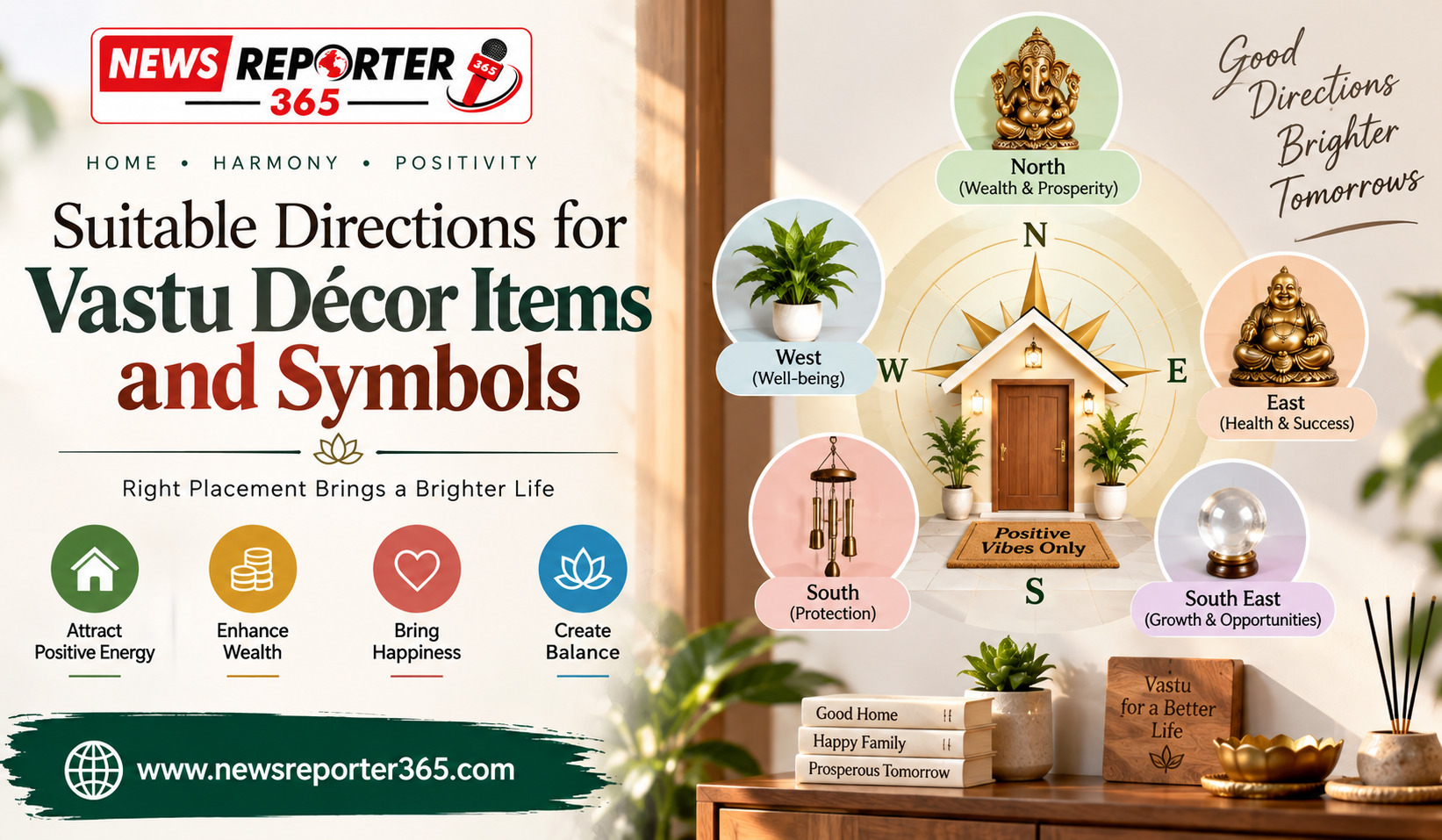
When you decorate your home, you usually think about colours, furniture, lighting, and the overall look of each room. But if you follow Vastu Shastra, there is another important detail you may want to consider—the direction in which you place your décor items and symbols.
According to Vastu principles, different directions are associated with different energies and elements. Because of this, simply choosing a beautiful Vastu décor item is not always enough. Where you place it can also matter. A symbol that is considered suitable for one direction may not be the ideal choice for another.
Understanding the Directions for Vastu Décor Items and Symbols can help you arrange your home thoughtfully while maintaining a balanced and pleasant atmosphere. Whether you are decorating a new house or simply making a few changes to your existing space, these guidelines can give you a practical starting point.
Why Directions Matter in Vastu Décor
Vastu Shastra is based on the idea that your surroundings can influence the energy and harmony of your living space. The eight primary directions—North, South, East, West, Northeast, Northwest, Southeast, and Southwest—are traditionally connected with different energies and elements.
When you place a decorative symbol, artwork, idol, plant, mirror, or other Vastu-inspired item, the direction can therefore become an important consideration.
You don’t necessarily have to redesign your entire home around Vastu. Instead, you can use these principles as a guide when choosing locations for decorative elements.
For example, you may use the Northeast for spiritual or peaceful décor, while the Southeast can be associated with items connected to fire and warmth. The key is to understand the traditional associations and apply them sensibly to your space.
1. Northeast Direction: Ideal for Spiritual and Peaceful Décor
The Northeast, often known as the Ishan corner, is traditionally considered one of the most significant areas of a home in Vastu.
If you want to create a calm and spiritually oriented corner, this direction can be a suitable choice. You can consider placing items such as spiritual artwork, meditation-related décor, or symbols associated with peace and positivity here.
A small prayer space can also work well in this area, depending on the layout of your home.
You can keep the décor simple rather than filling the corner with too many objects. A clean space with soft lighting, meaningful artwork, or a carefully chosen spiritual symbol can create a peaceful visual effect.
2. East Direction: Choose Décor Connected With Growth and Freshness
The East direction is traditionally associated with the rising Sun, new beginnings, vitality, and growth.
You can use this direction for décor that creates a fresh and uplifting feeling. Nature-inspired artwork, sunrise paintings, wooden décor, and green plants can be considered for this area.
If you enjoy keeping motivational or inspirational artwork at home, the East wall can also be a practical location to consider.
You should avoid making the space feel crowded. A bright, uncluttered East-facing area can look naturally welcoming, particularly when it receives good morning light.
3. North Direction: Suitable for Prosperity-Related Décor
The North direction is traditionally associated with wealth, opportunities, and career-related growth. If you want to incorporate Vastu-inspired prosperity décor into your home, this is one direction you may consider.
You can use carefully selected decorative symbols associated with abundance or prosperity. Metallic décor, elegant artwork, and certain water-inspired decorative elements may also be considered depending on your overall interior design.
For your home office or workspace, keeping the North area organized can complement the idea of creating a positive and productive environment.
Rather than adding several prosperity symbols together, choose one or two meaningful pieces. Your décor will look more refined, and the space will feel less cluttered.
4. Southeast Direction: Use Décor Associated With the Fire Element
The Southeast is traditionally connected with the fire element. It is therefore often associated with warmth, energy, activity, and transformation.
If you are selecting décor for this area, you can consider warm-toned artwork, lamps, candles used safely, or decorative pieces featuring fiery colours such as red, orange, or earthy shades.
The kitchen is also traditionally associated with the Southeast direction in Vastu planning.
However, you should avoid going overboard with strong colours or excessive decorative objects. A few carefully selected pieces can provide warmth without making the room visually overwhelming.
5. South Direction: Keep the Décor Balanced and Grounded
The South direction is often associated with strength, stability, and recognition. When decorating this part of your home, you can focus on artwork and objects that give a sense of confidence and grounding.
You might choose heavier wall décor, artistic pieces, or colours that complement the room’s existing design.
If you are hanging artwork in the South, select images that make you feel positive and confident. Avoid artwork that creates a gloomy or uncomfortable mood simply because it is considered decorative.
Your home should ultimately feel comfortable to you, so aesthetics and personal connection should remain important alongside Vastu considerations.
6. Southwest Direction: Choose Stable and Earthy Décor
The Southwest is traditionally associated with stability, grounding, and relationships. Because of this association, heavier furniture and earthy décor can work naturally in this part of your home.
You can consider wooden décor, earthy artwork, family photographs, and objects that represent stability or togetherness.
For a bedroom, warm and neutral tones can create a comfortable atmosphere. If you use symbolic décor, choose designs that make the room feel calm rather than overly energetic.
You can also keep this area relatively clutter-free. Too many unrelated decorative items can make even a well-designed room feel chaotic.
7. West Direction: Add Creative and Relaxed Elements
The West direction is traditionally associated with satisfaction, creativity, and certain forms of achievement.
You can use this direction for artwork, decorative sculptures, creative displays, or pieces that reflect your interests and personality.
If you have a hobby corner, reading area, or creative workspace, West-facing walls can provide opportunities for displaying artwork or inspirational pieces.
You can also experiment with metallic accents or neutral shades if they complement the rest of your interiors.
The goal is not to make every object a Vastu symbol. Instead, you can combine traditional ideas with modern interior design to create a space that feels natural.
8. Northwest Direction: Consider Airy and Movement-Oriented Décor
The Northwest is traditionally associated with the air element and movement. It can therefore be suitable for décor that gives the room a lighter, more open feeling.
You can consider light fabrics, elegant metallic accents, travel-related artwork, or décor that represents movement and openness.
This direction can also work well with minimalist arrangements. Instead of placing a large number of objects on a wall or shelf, leave some empty space around your décor.
A balanced arrangement can make the room feel more spacious while keeping your Vastu-inspired choices visually appealing.
Placement of Common Vastu Décor Items
Understanding directions becomes easier when you look at specific decorative items.
Buddha Statue
A Buddha statue is commonly used to create a peaceful atmosphere. When placing one, choose a clean and respectful location rather than simply placing it wherever there is an empty shelf.
Avoid placing spiritual décor directly on the floor or in areas where it can easily be disturbed.
Vastu Pyramid
Vastu pyramids are popular decorative and symbolic objects. You can place them according to the specific recommendations associated with the product or Vastu tradition you follow.
Because different pyramids may have different intended purposes, check the manufacturer’s or practitioner’s placement guidance rather than assuming that every pyramid belongs in the same direction.
Wind Chimes
Wind chimes are often associated with movement and sound. They can be placed in areas where air can naturally move through them.
Before choosing a location, consider both the traditional Vastu recommendation and practical factors such as whether the sound will be comfortable for everyone at home.
Mirrors
Mirrors can make a room appear larger and brighter, but their placement is often discussed extensively in Vastu.
Instead of placing a mirror randomly, consider what it reflects. A mirror reflecting an attractive, clean, and well-lit part of your home can improve the visual appearance of the room.
You should also avoid positioning mirrors where their reflection makes the room feel uncomfortable, particularly in bedrooms.
Plants
Plants are an easy way to bring a natural element into your interiors. Green plants can make your home feel fresher and more inviting.
You can consider placing suitable indoor plants in areas with enough natural or artificial light. Remember that plant health matters too—dry or neglected plants can make a space look poorly maintained.
Common Mistakes to Avoid With Vastu Décor
One of the biggest mistakes you can make is filling every corner of your home with Vastu symbols.
More décor does not necessarily mean more positive energy. In fact, excessive objects can make your home look cluttered and reduce its overall appeal.
You should also avoid purchasing an item simply because it is labelled “Vastu-friendly.” Consider its material, size, quality, appearance, and whether it actually suits your home.
Another common mistake is ignoring functionality. A decorative object should not block a doorway, interfere with movement, create a safety hazard, or make a frequently used space difficult to access.
You should also be cautious about treating Vastu as a guaranteed solution to personal, financial, or health-related problems. Vastu is a traditional architectural and design practice, and many people use it as a cultural or spiritual framework for arranging their homes.
How to Combine Vastu With Modern Home Décor
You don’t have to choose between modern interiors and traditional Vastu principles.
For example, instead of using an obviously traditional symbol that doesn’t match your décor, you can select a contemporary artwork inspired by nature, spirituality, or traditional motifs.
Similarly, a wooden sculpture, indoor plant, elegant metal décor piece, or simple artwork can follow the overall direction-based concept without making your home look overly traditional.
The best approach is to keep your interiors balanced. Choose décor that has meaning to you, place it thoughtfully, and maintain a clean and organized environment.
Final Thoughts
Knowing the Directions for Vastu Décor Items and Symbols can help you make more thoughtful decisions when decorating your home. From keeping spiritual décor toward the Northeast to considering prosperity-related elements in the North and earthy pieces in the Southwest, each direction has its own traditional significance.
However, you don’t need to follow every rule rigidly. Your home’s size, layout, natural lighting, furniture arrangement, and personal preferences also matter.
When you combine Vastu-inspired placement with practical interior design, you can create a home that feels organized, comfortable, attractive, and personal. After all, the best décor is not simply about following a direction—it is about creating a space where you genuinely enjoy living.