

Introduction
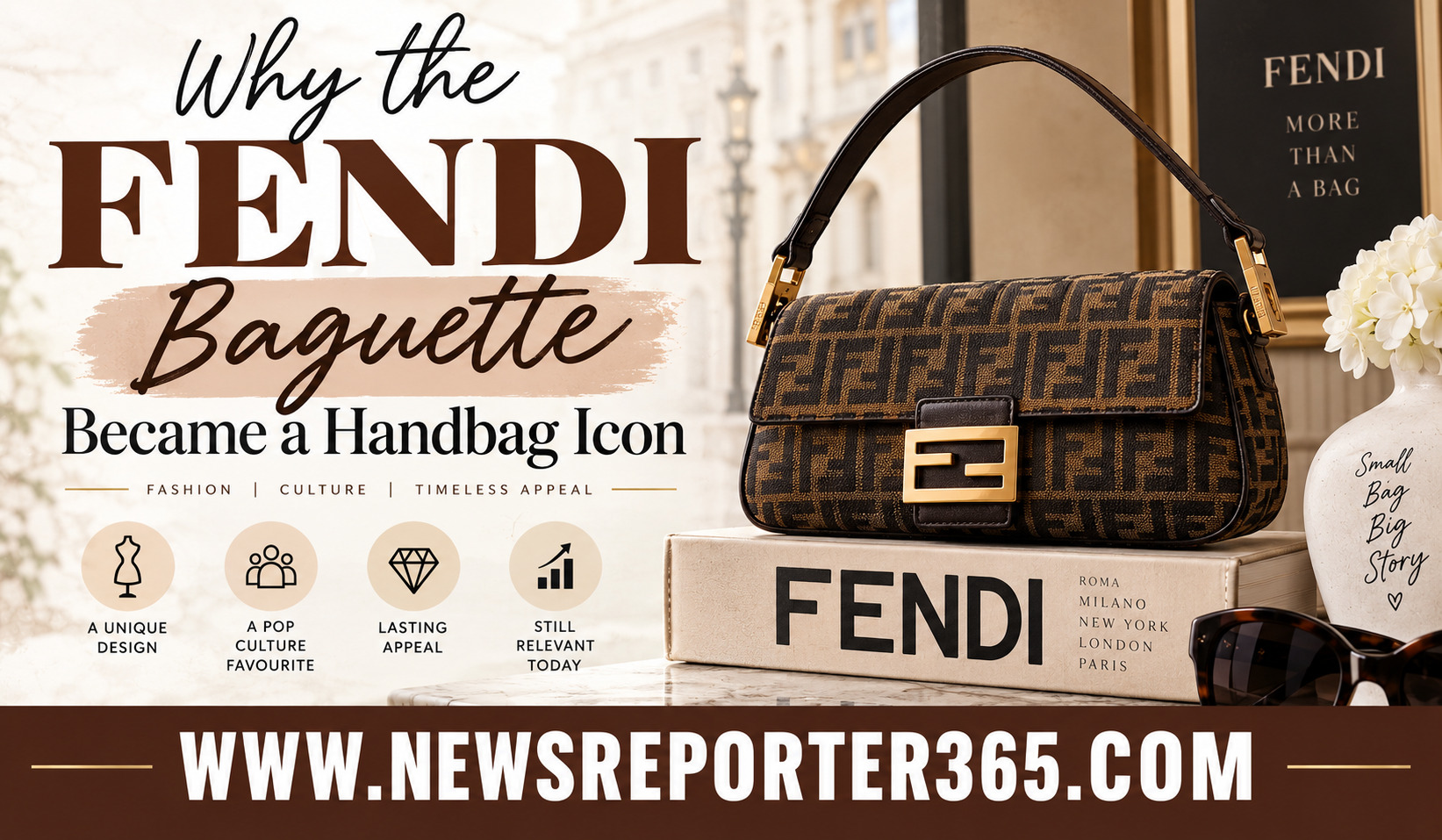
A small bag named after French bread ended up starting an entire cultural obsession with It Bags. Why the Fendi Baguette became a handbag icon has as much to do with timing and pop culture as it does with design. It arrived at a moment when fashion was ready for something smaller, more personal, and more collectible than the oversized shoulder bags that had dominated the previous decade. This guide traces the bag’s Roman roots, its breakout design details, the television moment that turned it into a global phenomenon, and why it continues to resurface in fashion cycles nearly thirty years later.
A Roman House With Decades of Craft
Fendi’s story begins in 1925, when Adele and Edoardo Fendi opened a small fur and leather shop in Rome. The brand spent decades building a reputation for meticulous Italian craftsmanship, long before the Baguette ever existed, working primarily with fur and leather goods for an elite Italian clientele.
The house expanded significantly after the five Fendi daughters joined the family business in 1946, growing the brand’s vision well beyond its original storefront. Karl Lagerfeld joined as creative director in 1965, bringing avant-garde design sensibility and helping introduce the now-iconic double-F logo that would later appear across Fendi’s accessories line.
That foundation mattered. When Silvia Venturini Fendi, granddaughter of the founders, joined the company and turned her attention to accessories in the 1990s, she was working within a house that already had deep expertise in fine leatherwork, exotic skins, and intricate techniques like the Selleria saddle stitching that would later define pieces such as the Peekaboo.
The Bag That Started the It Bag Era
Silvia Venturini Fendi introduced the Baguette in 1997, and it quickly became credited with launching the entire It Bag phenomenon that would define fashion for the next decade.
Unlike the large, structured handbags common at the time, the Baguette was compact, slim, and meant to be carried tucked under the arm, much like its namesake loaf of bread. That small shift in proportion and attitude helped the bag stand out immediately from everything else on the market. Silvia Venturini Fendi has described the Baguette as a kind of manifesto of identity and individuality, noting that the bag is always fundamentally the same shape while constantly appearing different through its endless material variations.
That description captures something important about the bag’s appeal. Rather than offering one fixed design, Fendi treated the Baguette almost like a canvas, releasing it in an ever-expanding range of fabrics, prints, and embellishments that let customers express personal style within a consistent, recognizable silhouette.
Design Details That Set It Apart
The Baguette’s design broke from convention in a few key ways that made it instantly recognizable, even from across a room.
Its compact, structured silhouette paired with a short strap meant for underarm carrying gave it a distinct look compared to shoulder bags of the era. Fendi released the Baguette in an enormous range of materials and embellishments, from beading and embroidery to exotic leathers, turning each version into something closer to a collectible than a standard accessory.
What Made the Baguette Stand Out
- Compact, underarm-carry silhouette unlike anything else at the time
- Constant rotation of prints, materials, and limited editions
- Strong ties to Fendi’s Roman leather craftsmanship heritage
- A design philosophy built around individuality within a consistent shape
- The FF logo buckle closure, later a signature Fendi hardware detail
This approach to variation set a template that other luxury houses would later follow with their own signature bags, though few managed to replicate the sheer volume and creativity of Baguette editions that Fendi produced during the style’s original run. Some versions used exotic skins like lizard or ostrich leg, while others leaned into playful, maximalist embellishment that felt distinctly of its late 1990s moment.
The Sex and the City Effect
Design alone rarely creates a cultural phenomenon. The Baguette had help from television, arriving at exactly the right cultural moment.
The bag’s appearance on Sex and the City, carried by Sarah Jessica Parker’s character Carrie Bradshaw, cemented its status in pop culture almost overnight. The show’s massive audience turned the Baguette into a must-have item, and demand quickly outpaced what many boutiques could supply. In one memorable episode, Carrie’s Baguette is even stolen during a mugging, a moment that treated the bag less like an accessory and more like a beloved character in its own right.
That level of cultural visibility is difficult to manufacture through advertising alone. The show’s influence on fashion during its original run in the late 1990s and early 2000s was enormous, and the Baguette became one of the clearest examples of how television could shape real-world luxury demand almost instantly.
From Baguette to Peekaboo and Beyond
The Baguette’s success set the stage for Fendi’s later accessory hits. Silvia Venturini Fendi went on to design the Spy bag in 2005, a slouchy, hobo-shaped bag with hidden compartments that defined the era’s boho-chic aesthetic, and the Peekaboo in 2008 or 2009, depending on the source, a more structured, understated design conceived partly as a response to the logomania that had dominated fashion for years.
Where the Baguette leaned into constant variation and playful embellishment, the Peekaboo took a more restrained approach, favoring twist-lock hardware and a signature “peek” of contrasting interior lining visible when the bag opens. Together, these designs show how the same house, and often the same designer, could define two very different eras of luxury handbag taste while still drawing on the same underlying craftsmanship tradition.
Why the Baguette Still Resonates Today
Trends fade, but the Baguette has proven unusually durable, resurfacing repeatedly as fashion cycles back toward late 1990s and early 2000s aesthetics.
Part of that staying power comes from Fendi’s willingness to keep reintroducing the bag in fresh materials and colorways, including recent updates like the softer Mama Baguette, which uses nappa leather and a more relaxed drawstring closure while still carrying the recognizable FF logo buckle. Collectors also continue to seek out discontinued prints and special editions, which have become increasingly valuable on the resale market, particularly rare Zucca prints and limited-run collaborations from the bag’s original heyday.
A broader wave of Y2K nostalgia across fashion has only accelerated this renewed interest, with younger buyers discovering the Baguette for the first time through vintage resale platforms and social media rather than through the television show that originally made it famous.
Fendi Baguette Facts at a Glance
| Fact | Detail |
| Introduced | 1997 |
| Designer | Silvia Venturini Fendi |
| Cultural boost | Sex and the City, worn by Carrie Bradshaw |
| Signature trait | Compact, underarm-carry silhouette |
| Legacy | Credited with starting the It Bag era |
Key Takeaways
- Rooted in real craftsmanship: Fendi’s decades of Roman leatherwork gave the Baguette a strong foundation before it ever became a trend.
- Changed handbag proportions: Its compact, underarm design broke from the larger bags common in the 1990s.
- Sparked the It Bag era: The Baguette is widely credited with starting this entire category of fashion.
- Television amplified its fame: Sex and the City turned the bag into a mainstream cultural obsession almost overnight.
- Still relevant decades later: Continued reissues, Y2K nostalgia, and a strong resale market keep the Baguette in demand today.
FAQs
Who designed the original Fendi Baguette?
Silvia Venturini Fendi designed the Baguette in 1997, drawing on the brand’s long history of Roman leather craftsmanship.
Why is it called the Baguette?
The bag was designed to be carried tucked under the arm, similar to how a loaf of French bread is often carried.
What made the Baguette so popular in the late 1990s?
Its compact, distinctive silhouette combined with its appearance on Sex and the City drove significant cultural demand.
Is the Fendi Baguette still made today?
Yes, Fendi continues to release new versions and materials of the Baguette, including updated styles like the Mama Baguette.
Are vintage Fendi Baguette bags valuable?
Discontinued prints and special-edition Baguette bags, particularly rare Zucca and collaboration pieces, have become increasingly sought after on the resale market.
Conclusion
Why the Fendi Baguette became a handbag icon comes down to a rare combination of genuine craftsmanship, a design that broke convention, and a pop culture moment that no marketing budget could have manufactured. Its Roman leatherworking roots gave it substance, its compact underarm silhouette gave it a distinctive identity, and its moment on Sex and the City gave it a cultural reach few accessories ever achieve. Nearly three decades after its debut, and having helped pave the way for later Fendi icons like the Peekaboo, the Baguette continues to prove that a small bag can leave a very large mark on fashion history.