

Introduction
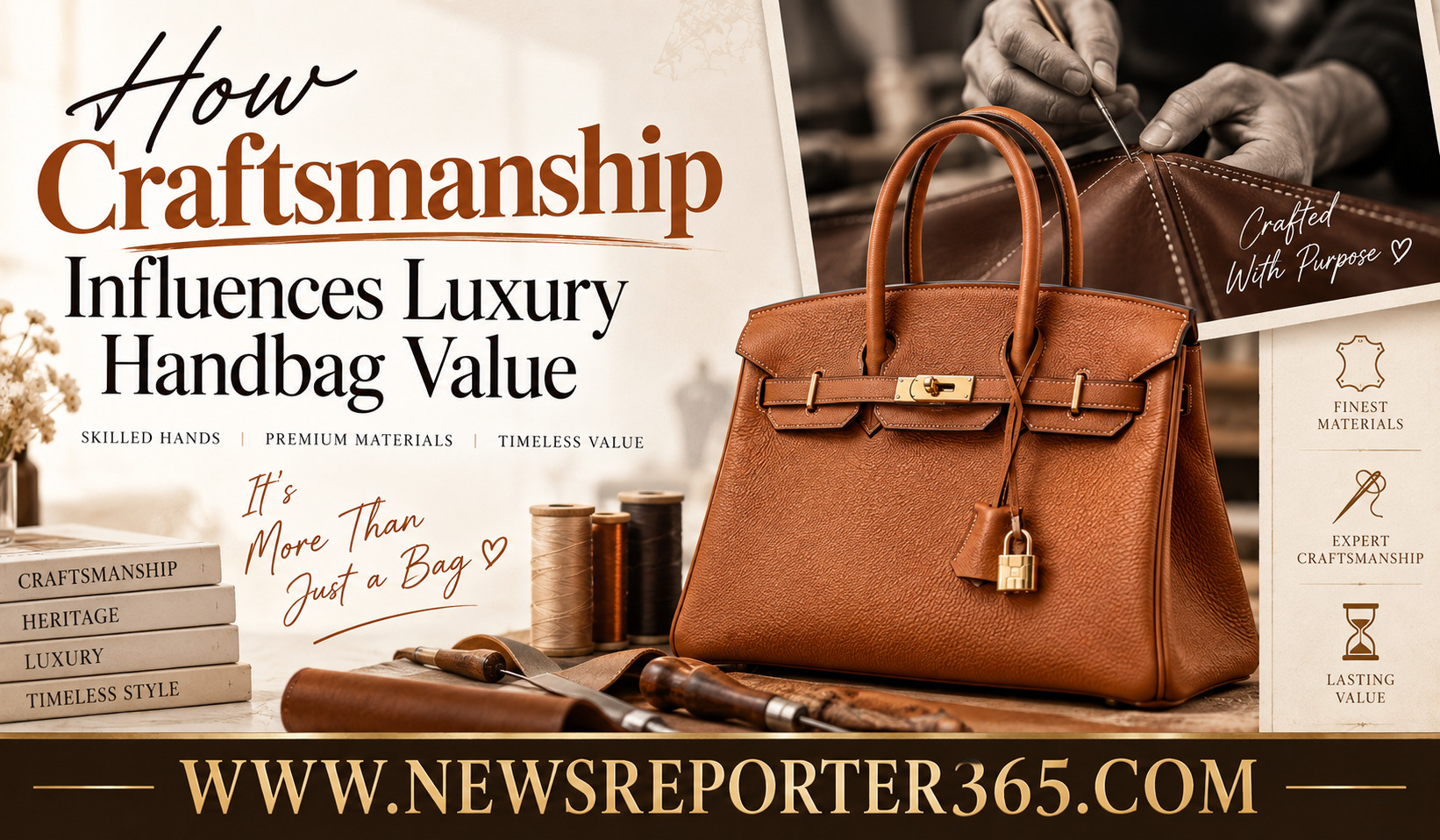
A logo can convince someone to buy a handbag once. Craftsmanship is what convinces someone to buy from that brand again, and what keeps the bag worth something years later. How craftsmanship influences luxury handbag value comes down to a simple but often overlooked truth: construction quality, not branding alone, determines how a bag performs, ages, and holds its price over time. This guide breaks down exactly what separates genuine craftsmanship from surface-level polish, and why that difference matters so much to long-term value.
A Logo Can Sell a Bag, Craftsmanship Keeps It Valuable
Branding gets a buyer’s attention in a store or online listing. It rarely explains why one bag survives a decade of daily use while another falls apart within a few years.
Real value comes from how precisely a bag is cut, assembled, reinforced, and finished. A handbag’s logo can raise its perceived value, but only the underlying workmanship controls its actual lifespan, comfort, and long-term function.
This distinction becomes obvious the moment a bag is used daily rather than admired on a shelf. Stress points, corners, zippers, and straps reveal quality far faster than any label does.
Hand Construction vs Mass Production
Genuine luxury craftsmanship relies heavily on hand-finished details that machines cannot fully replicate. Intricate stitching, hand-shaped structure, and personalized touches all take significant time and specialized skill to execute correctly.
Some heritage houses illustrate this at real scale. Hermès, for example, employs thousands of trained artisans across dozens of production sites, with individual craftspeople dedicating years to mastering a single technique before working on finished pieces.
Mass production, by contrast, prioritizes speed and consistency over individual refinement. That approach can still produce attractive bags, but it generally sacrifices the fine, repeatable precision that defines top-tier craftsmanship.
Material Selection: Where Value Starts
Craftsmanship does not begin with stitching. It begins with material selection, since even the most skilled artisan cannot turn poor quality leather into a durable, long-lasting bag.
Premium materials, including full-grain leather and carefully sourced hardware, form the foundation of a truly valuable handbag. Choosing the right leather for a specific bag’s purpose matters just as much as the leather’s overall quality.
A skilled workshop will not use the same leather for a soft evening clutch, a heavily used commuter tote, and a travel crossbody. Matching material to function is itself a form of craftsmanship, not just a cost decision.
| Craftsmanship Factor | What It Reveals |
| Stitch consistency | Skill level and quality control during assembly |
| Material grade | Long-term durability and how the bag ages |
| Edge paint and finishing | Attention to detail beyond the visible surface |
| Hardware weight | Whether components were built to last |
| Structural reinforcement | Whether the bag holds its shape over years of use |
The Hidden Structure That Holds a Bag Together
Much of what determines a handbag’s long-term value sits beneath the surface, invisible until the bag has been used for a while. Reinforcement boards, interlining choices, and stress-point stitching all decide whether a silhouette keeps its shape.
A tote that collapses into a shapeless puddle of fabric within a year was never built with real structural craftsmanship, regardless of its price tag. A top handle bag without proper base reinforcement will eventually fail at exactly the point buyers rely on most.
This hidden structure is part of why two visually similar bags from different workshops can perform so differently after a few years of regular use. The difference simply is not visible on day one.
Craftsmanship Across Different Price Tiers
Craftsmanship does not exist only at the very top of the market. Mid-tier luxury brands can still apply genuine hand-finishing techniques, even if their production scale is larger than a house like Hermès.
The key difference usually shows up in consistency rather than technique. A smaller workshop may hand-finish every single unit, while a larger brand might reserve full hand-stitching for visible seams and rely on high-quality machine work elsewhere.
Buyers should not assume a lower price automatically means lower craftsmanship, or that a higher price guarantees it. Comparing construction details directly, rather than relying on price alone, remains the more reliable approach at every tier of the market.
How Buyers Can Actually Spot Real Craftsmanship
Examining stitching is the most accessible starting point. Consistent, evenly spaced stitches suggest careful, controlled work, while uneven or loose stitching often signals rushed production.
Checking the leather’s fold behavior offers another useful clue. High-quality leather creases naturally and predictably, while lower quality or heavily processed leather often looks stiff or cracks along fold lines.
Hardware deserves close attention too. Genuine luxury hardware tends to feel heavy and solid, with a smooth finish that resists chipping or tarnishing, unlike lightweight or plastic-feeling components often found on lower quality pieces.
Why Craftsmanship Outlasts Trends
Trends fade quickly, but genuine craftsmanship tends to hold its relevance regardless of a given season’s aesthetic. A well built bag from a decade ago can still function and look appropriate today, while a poorly constructed trend piece from the same era may already be falling apart.
This is a major reason collectors and long-term investors focus so heavily on construction quality rather than chasing whichever silhouette is currently popular. Craftsmanship is what allows a bag to transition from a fashionable purchase into a lasting piece of functional art.
Brands that maintain strict, repeatable quality standards across generations tend to see their pieces appreciate, or at least hold value, far more reliably than brands that prioritize speed and volume over precision.
This pattern shows up clearly in the resale market. Bags known for meticulous construction tend to attract buyers willing to pay closer to, or above, original retail price, while bags known mainly for their branding often see steeper depreciation once the initial trend fades.
Key Takeaways
- Core principle: Branding attracts attention, but craftsmanship determines a handbag’s actual lifespan and value.
- Hand construction: Skilled hand-finished details remain difficult or impossible for machines to fully replicate.
- Material selection: Choosing the right leather and hardware for a bag’s purpose is itself a craftsmanship decision.
- Hidden structure: Reinforcement and stress-point stitching determine whether a bag holds its shape over years.
- Buyer takeaway: Stitching consistency, leather fold behavior, and hardware weight all reveal real craftsmanship.
Frequently Asked Questions
Does craftsmanship matter more than brand name for handbag value?
Craftsmanship generally matters more for long-term value, since construction quality determines durability and lifespan.
How can a buyer tell if a handbag is well made?
Checking stitch consistency, leather fold behavior, and hardware weight are practical ways to judge real craftsmanship.
Why do some luxury bags lose their shape over time?
Bags lose their shape when reinforcement and stress-point stitching are insufficient, regardless of the exterior material used.
Do all luxury brands use the same level of craftsmanship?
No, craftsmanship standards vary significantly across brands, even within the broader luxury handbag category.
Can strong craftsmanship help a handbag hold its resale value?
Yes, bags with strong, consistent craftsmanship generally hold their resale value better than poorly constructed alternatives.
Conclusion
How craftsmanship influences luxury handbag value ultimately comes down to what happens after the purchase, not just what happens in the store. Careful material selection, skilled hand construction, and strong hidden structure all determine whether a bag survives years of real use. Buyers who learn to recognize these details are far better equipped to choose handbags that hold both their function and their value long after the trend cycle around them has moved on.