

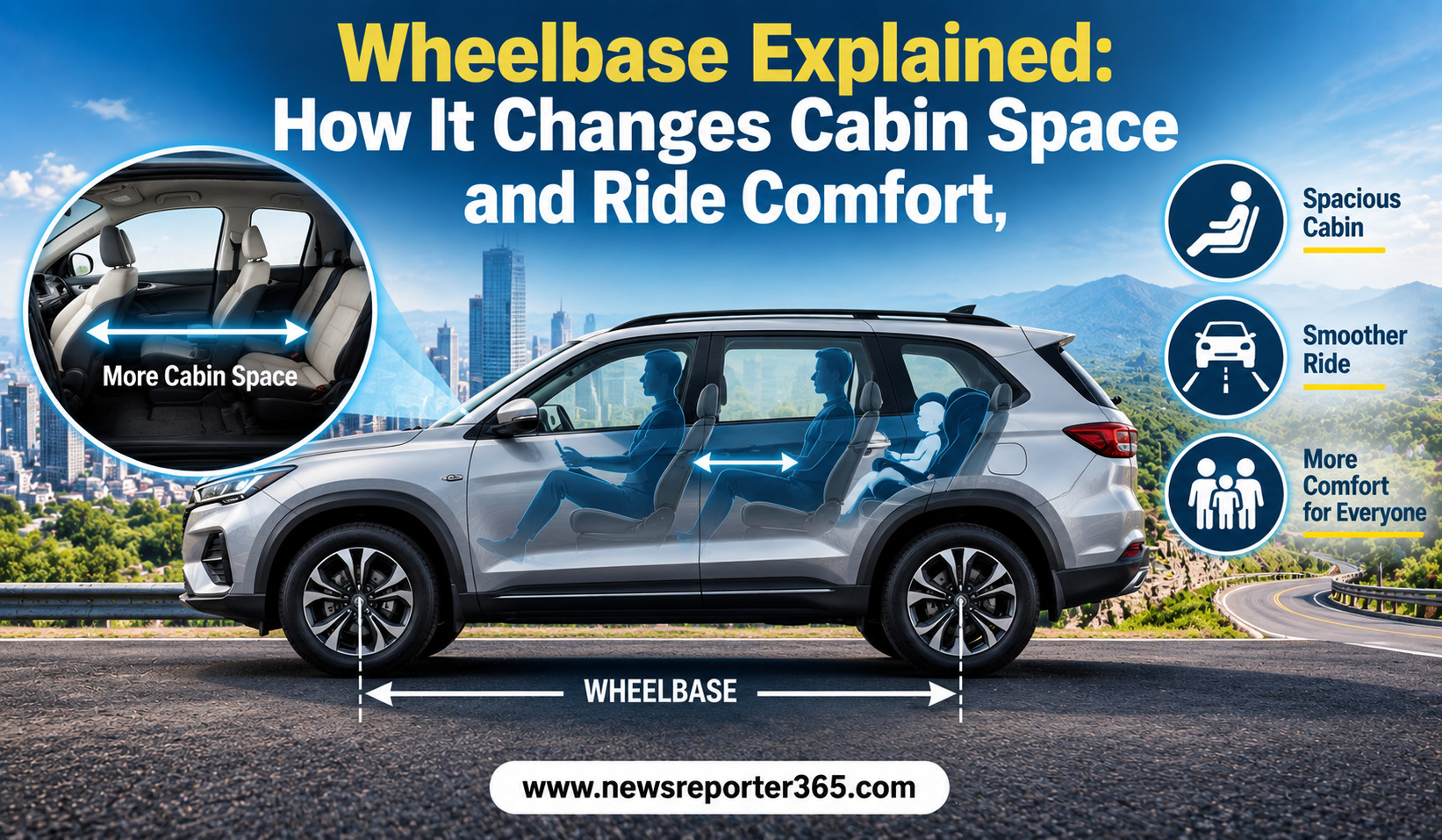
When people compare cars, they usually focus on engine power, mileage, boot space, features and exterior design. However, one specification that often receives less attention can have a major effect on how a car feels inside and on the road: wheelbase.
Wheelbase is a basic measurement found in almost every vehicle specification sheet. It refers to the distance between the centre points of the front and rear wheels. Although the number itself may seem like a technical detail, it can influence cabin space, passenger comfort, vehicle stability and the overall driving experience.
A longer wheelbase is often associated with a more spacious cabin and a smoother ride, but the relationship is not as simple as saying that a longer wheelbase automatically makes a car better. Vehicle weight, suspension design, tyre size, body construction and seating arrangement also play important roles.
Understanding wheelbase can therefore help buyers make a more informed decision when comparing vehicles, particularly when interior comfort is a major priority.
What Is a Wheelbase?
Wheelbase is the horizontal distance between the centre of the front axle and the centre of the rear axle. It is different from the overall length of a vehicle, which measures the complete distance from the frontmost to the rearmost point of the body.
Two cars can have similar overall lengths but different wheelbases. This can happen because manufacturers package the engine compartment, cabin and luggage area differently.
A longer wheelbase generally means the front and rear wheels are positioned farther apart. This can create more usable space between the axles, giving designers greater flexibility when creating the passenger compartment.
The effect is particularly noticeable in vehicles designed to provide generous rear-seat legroom.
How Wheelbase Affects Cabin Space
One of the biggest advantages of a longer wheelbase is the potential for increased interior space. When the wheels are positioned farther apart, manufacturers can potentially use more of the space between them for the passenger cabin.
This does not mean every long-wheelbase car automatically has a huge interior. Interior packaging remains extremely important. The position of the engine, dashboard, seats, fuel system, battery and other components can influence how much space is ultimately available.
Still, the wheelbase is an important starting point when comparing cars with similar body styles.
For rear passengers, the difference can be especially noticeable. A longer wheelbase can allow the rear seats to be positioned farther away from the front seats, potentially creating more knee and legroom.
Why Rear Passengers Often Benefit
Drivers and front passengers usually have multiple seat-adjustment options, allowing them to create a comfortable driving position. Rear passengers have fewer opportunities to change their seating position.
This makes rear-seat packaging particularly important in family cars, sedans and larger SUVs.
A longer wheelbase can provide designers with additional room to create a more spacious rear compartment. This can make a difference during long journeys when passengers spend several hours inside the vehicle.
For families who regularly carry adults in the second row, wheelbase can therefore be a useful specification to examine alongside actual rear-seat measurements.
Wheelbase and Ride Comfort
Wheelbase can also influence ride comfort. A vehicle with a longer distance between its axles can generally experience a different response to bumps, dips and uneven surfaces compared with a vehicle with a shorter wheelbase.
When the front wheels encounter a road imperfection, the rear wheels of a longer-wheelbase vehicle reach that same area later. This can contribute to a more settled feeling over certain types of road surfaces.
This is one reason longer vehicles can sometimes feel more composed at higher speeds. However, suspension tuning remains critical. A poorly tuned suspension can make even a long-wheelbase vehicle uncomfortable, while a well-engineered short-wheelbase car can deliver an impressive ride.
The condition of the road also matters. Large potholes, sharp speed breakers and uneven surfaces can produce different effects depending on the vehicle’s wheelbase and suspension setup.
Does a Longer Wheelbase Always Mean Better Comfort?
Not necessarily. Wheelbase is only one factor in ride quality.
Suspension geometry, spring rates, shock absorbers, tyre sidewall, wheel size and vehicle weight all influence how a car absorbs road imperfections. The way seats are designed can also affect the comfort passengers experience.
For example, a vehicle with a long wheelbase and large low-profile tyres may not necessarily feel softer than a shorter vehicle with smaller wheels and tyres with more sidewall.
This is why buyers should avoid judging ride quality from wheelbase figures alone. A test drive remains one of the best ways to understand how a particular car behaves on real roads.
Wheelbase and High-Speed Stability
A longer wheelbase can also contribute to a vehicle feeling stable and planted, particularly during straight-line highway driving. The greater distance between the axles can influence the vehicle’s directional behaviour.
However, stability depends on much more than wheelbase. Steering calibration, suspension tuning, tyres, aerodynamics and weight distribution also have significant effects.
A longer wheelbase may provide a relaxed highway character, while a shorter wheelbase can make a vehicle feel more agile during quick direction changes.
This creates an important design trade-off. Manufacturers need to balance stability, comfort and manoeuvrability according to the purpose of the vehicle.
Short Wheelbase vs Long Wheelbase
The differences become easier to understand when the two configurations are compared.
| Factor | Short Wheelbase | Long Wheelbase |
| Cabin potential | Generally more compact | Generally greater |
| Rear legroom | Usually more limited | Often more generous |
| Tight manoeuvring | Can be easier | May require more space |
| Highway feel | Can feel more agile | Often feels more settled |
| Parking | Usually easier | May require more room |
| Ride behaviour | Can react more quickly to bumps | Can feel more composed over some surfaces |
These are general tendencies rather than fixed rules. Individual vehicles can behave differently because of suspension and packaging choices.
Wheelbase and City Driving
For urban drivers, a longer wheelbase can have both advantages and disadvantages. The extra cabin space can make the car comfortable for passengers, but the larger distance between the axles can contribute to a longer overall vehicle footprint in many designs.
This can make tight parking spaces and narrow streets more challenging, particularly when combined with a long front or rear overhang.
A shorter-wheelbase vehicle can often feel easier to manoeuvre in crowded areas. It may require less space for certain turns and can be more convenient in compact parking locations.
However, modern steering systems, parking sensors and cameras can make larger vehicles easier to handle than their dimensions might suggest.
Wheelbase Does Not Equal Overall Length
This is an important distinction for car buyers. A longer wheelbase does not necessarily mean the entire vehicle is dramatically longer.
Manufacturers can reduce front and rear overhangs and push the wheels closer to the ends of the body. This approach can create a relatively spacious cabin without producing an excessively large exterior footprint.
This type of packaging is one reason modern vehicles can offer more interior room than older cars of similar exterior dimensions.
When comparing two models, buyers should therefore examine wheelbase, overall length and width together.
Why Wheelbase Matters for Family Cars
For family buyers, the wheelbase can be particularly useful when evaluating rear-seat comfort. Families may spend considerable time travelling together, making passenger space an important part of the ownership experience.
Parents may also need room for child seats, while adults in the rear may appreciate additional legroom on longer journeys.
However, families should physically inspect the rear seat instead of relying solely on the wheelbase figure. Seat design, floor shape, door opening and the position of the front seats can all affect how spacious the cabin actually feels.
A specification sheet can provide useful information, but the real-world seating experience is ultimately more important.
Wheelbase and Electric Cars
Electric vehicles have introduced new opportunities for vehicle packaging. Because electric powertrains can be arranged differently from conventional petrol or diesel systems, some EVs can use their wheelbase efficiently to create a spacious passenger compartment.
Battery placement across the vehicle floor can also influence cabin design and centre of gravity.
This means an electric car with a relatively compact exterior can sometimes provide impressive interior space. Again, wheelbase is an important part of the equation, but it is not the only factor determining cabin room.
What Buyers Should Look at Alongside Wheelbase
Wheelbase is useful, but it should be considered together with several other specifications. A practical comparison should focus on the complete vehicle rather than a single number.
Before making a decision, buyers should examine:
- Overall length and width.
- Front and rear legroom.
- Turning radius and parking practicality.
- Suspension and tyre setup.
- Boot space and seating flexibility.
A test drive should then be used to confirm whether the vehicle delivers the comfort and manoeuvrability expected from the specifications.
The Right Wheelbase Depends on the Vehicle’s Purpose
There is no universally perfect wheelbase. A small city car may benefit from a shorter wheelbase because manoeuvrability is a priority. A luxury sedan may use a longer wheelbase to maximize rear passenger comfort.
SUVs need to balance cabin space with off-road capability, handling and exterior dimensions. Sports cars may use different wheelbase strategies to achieve a particular balance between agility and stability.
Manufacturers therefore choose the wheelbase based on the vehicle’s intended purpose rather than simply trying to make it as long as possible.
Common Mistakes When Comparing Wheelbase
One common mistake is assuming that a longer wheelbase automatically means a larger cabin. Another is comparing wheelbase figures without considering the overall dimensions of the vehicles.
Buyers may also overlook the impact of suspension and tyre design on ride comfort. Two vehicles with similar wheelbases can feel completely different on the same road.
Other mistakes include:
- Judging passenger space without sitting in the rear seat.
- Ignoring overall width and parking requirements.
- Comparing wheelbase without considering vehicle type.
- Assuming wheelbase alone determines ride quality.
Conclusion
Wheelbase may look like a simple technical specification, but it can have a meaningful influence on a vehicle’s design and driving characteristics. A longer wheelbase can provide greater opportunities for cabin space, particularly rear-seat legroom, and may contribute to a more settled ride and highway character.
At the same time, shorter-wheelbase vehicles can offer advantages in manoeuvrability and city driving. The ideal choice depends on how the vehicle is packaged and what the buyer expects from it.
For anyone comparing cars, the wheelbase is worth understanding, but it should never be viewed in isolation. Overall dimensions, interior measurements, suspension tuning, tyre specifications and a proper test drive provide a much clearer picture of whether a vehicle will be comfortable and practical for everyday use.
FAQs
What does wheelbase mean in a car?
Wheelbase is the distance between the centre of the front axle and the centre of the rear axle. It is an important dimension used to describe a vehicle’s layout.
Does a longer wheelbase provide more cabin space?
It can. A longer wheelbase gives manufacturers more space between the axles to package the passenger cabin, which can help increase rear-seat legroom. However, actual cabin space depends on the vehicle’s design.
Does the wheelbase affect ride comfort?
Yes, it can influence how a vehicle responds to bumps and uneven road surfaces. However, suspension tuning, tyres, vehicle weight and other factors are also important.
Is a shorter wheelbase better for city driving?
A shorter wheelbase can make a vehicle easier to manoeuvre in tight urban spaces. However, steering, turning radius and overall vehicle dimensions also affect city-driving convenience.
Is the wheelbase the same as car length?
No. Wheelbase measures the distance between the front and rear axles, while overall length measures the vehicle from its frontmost to rearmost point.
Why do luxury cars often have long wheelbases?
Longer wheelbases can provide additional rear-seat space, which is particularly valuable in vehicles designed around passenger comfort and chauffeur-driven use.