

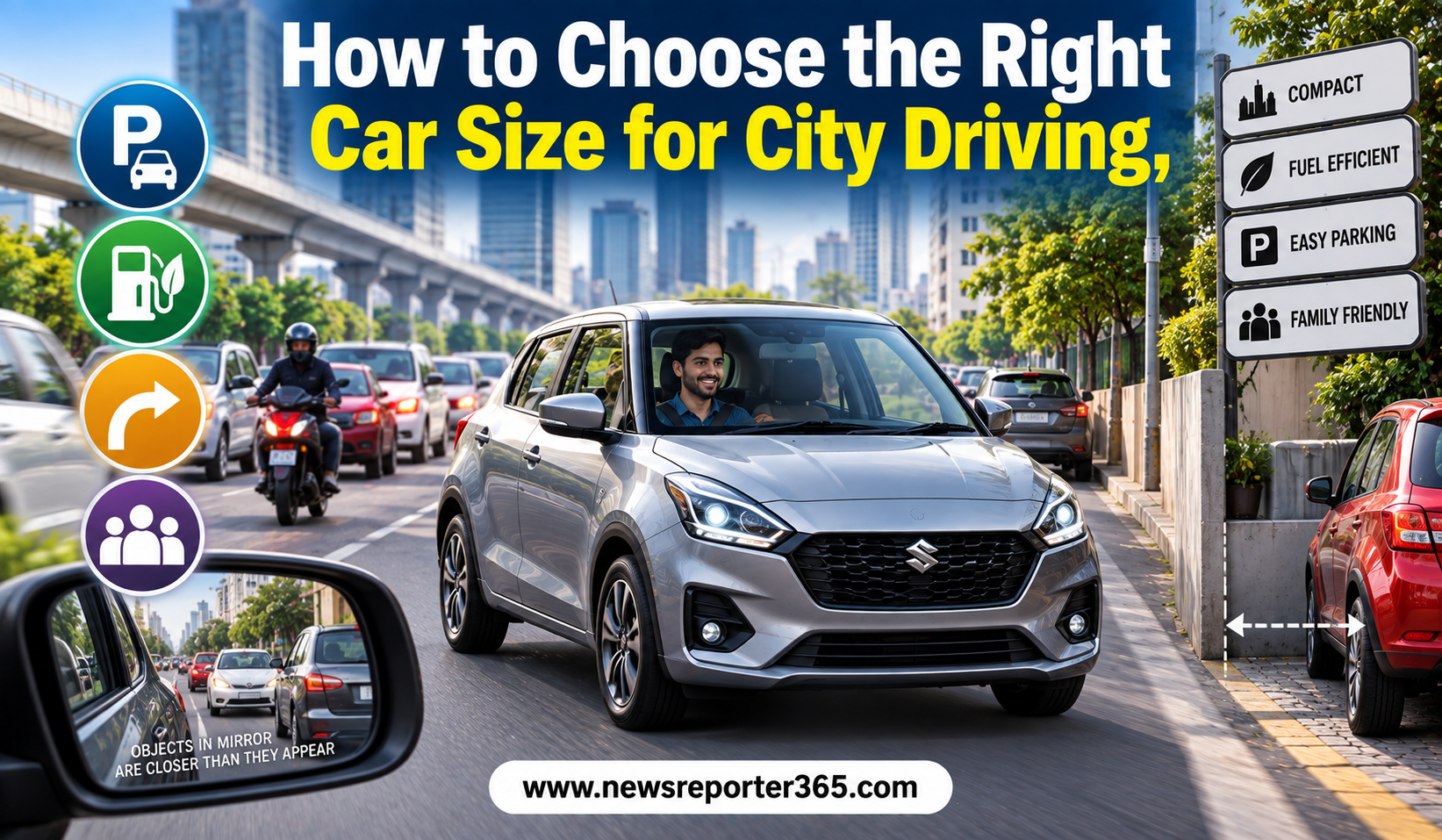
Choosing a car for city driving is not always about buying the biggest vehicle available. In busy urban areas, where narrow roads, crowded markets, traffic jams and limited parking are part of everyday life, the size of a car can have a major impact on the driving experience.
For many buyers, a compact car may appear to be the obvious choice. However, a smaller vehicle is not automatically the best option for every driver. Families may need more rear-seat space, frequent highway travellers may prefer a larger vehicle, while some buyers may want the higher seating position of an SUV.
The growing popularity of SUVs has also changed the way Indian consumers think about car size. Compact SUVs and midsize vehicles now compete with hatchbacks and sedans for urban buyers. As a result, choosing the right dimensions has become more complicated than simply asking whether a car is small or large.
Why Car Size Matters in City Driving
Urban driving presents different challenges compared with highway travel. Cars frequently have to move through congested streets, make quick turns, fit into tight parking spaces and navigate areas where road width can change suddenly.
A vehicle’s overall length and width directly influence how easy it is to manoeuvre. A shorter car generally requires less space to turn and park, while a narrower vehicle can be easier to handle on congested roads.
At the same time, extremely compact dimensions may mean less cabin or luggage space. This is where buyers need to balance practicality with manoeuvrability.
The right size ultimately depends on where and how the car will be used rather than on the size category printed in a brochure.
Hatchback, Sedan or SUV: Which Size Works Best?
Hatchbacks remain popular among urban drivers because they generally offer a compact footprint and practical interiors. Their shorter rear overhang can make parking easier, while a relatively small turning circle can be useful in crowded neighbourhoods.
Sedans can offer more boot space and a comfortable driving experience, but their longer rear section can require greater attention when parking in tight spaces. For buyers who frequently carry luggage or travel outside the city, that additional boot capacity can be valuable.
SUVs and crossovers provide a higher seating position and can offer generous cabin space. However, some models are significantly wider and longer than conventional hatchbacks. This difference becomes noticeable in narrow streets and crowded parking areas.
Compact SUVs attempt to provide a middle ground. They offer some of the practicality and driving position associated with SUVs while maintaining dimensions that can still be manageable in urban conditions.
Length and Width Are Both Important
Many buyers look at overall length when comparing vehicles, but width deserves equal attention. A car that is only slightly longer than another model can still feel considerably larger if it is wider.
Width becomes particularly important on narrow roads where vehicles pass close to each other. It also matters in parking garages, apartment parking areas and older residential neighbourhoods.
When checking dimensions, buyers should consider the vehicle’s body width as well as the width of the mirrors. The published specification may not always represent the exact space the car occupies when the mirrors are extended.
For city driving, a few centimetres can make a surprising difference when navigating tight spaces.
Don’t Ignore the Turning Radius
Turning radius is another important specification for urban buyers. A vehicle with a smaller turning circle can generally make U-turns and tight manoeuvres easier.
This can be useful on narrow residential roads, crowded market streets and parking areas where there is limited room to reposition the car.
However, buyers should not choose a vehicle solely because it has a small turning radius. Steering response, visibility and driver-assistance systems can also influence how easy a vehicle feels to manoeuvre.
During a test drive, drivers should try tight turns, reverse parking and low-speed manoeuvres rather than limiting the evaluation to a short drive on an open road.
Parking Should Be Part of the Buying Decision
Parking is one of the biggest reasons city drivers need to think carefully about car size. A vehicle may feel perfectly manageable on a wide road but become difficult to park in a small residential or office parking space.
Before buying a car, buyers should measure their regular parking space if possible. This is particularly useful for people living in apartment buildings where parking slots may have fixed boundaries.
Parking sensors and cameras can make a larger vehicle easier to handle, but they do not reduce its physical dimensions. Drivers still need enough space to open doors, manoeuvre and exit safely.
A practical city car should therefore fit comfortably into the driver’s usual parking environment.
How Much Cabin Space Do You Really Need?
Choosing the smallest possible vehicle is not always the right strategy. A buyer who regularly travels with four or five people may find a very compact car uncomfortable, especially on longer journeys.
Rear-seat legroom, shoulder room and ease of entry should be considered alongside exterior dimensions. Families with young children may also need additional space for child seats and other equipment.
For single drivers or couples who mostly travel within the city, a compact hatchback may provide sufficient space. A larger family may benefit from a compact SUV, sedan or other vehicle with a more spacious cabin.
The goal should be to choose the smallest vehicle that comfortably meets your regular needs rather than simply choosing the smallest vehicle available.
Boot Space Matters for Urban Families
City driving does not eliminate the need for luggage space. Families may regularly carry shopping bags, school equipment, groceries, sports gear or travel luggage.
A hatchback can provide useful flexibility because its rear design allows access to the luggage area through a large tailgate. Sedans can offer substantial boot capacity but may have a smaller opening. SUVs and crossovers often provide a combination of cabin and luggage space.
The best choice depends on what is normally carried. Buyers should inspect the actual boot instead of relying only on the litre figure mentioned in specifications.
Car Size Comparison for City Driving
| Vehicle Type | City Manoeuvrability | Cabin Space | Parking Ease | Best Suited For |
| Small Hatchback | Very good | Moderate | Very good | Solo drivers and couples |
| Premium Hatchback | Good | Good | Good | Small families |
| Sedan | Moderate | Good | Moderate | Families needing boot space |
| Compact SUV | Good | Good | Good | Families wanting higher seating |
| Midsize SUV | Moderate | Very good | Moderate | Larger families and mixed use |
These are general characteristics. Individual models can differ significantly in dimensions, turning radius and interior packaging.
Features That Can Make a Larger Car Easier to Drive
Technology has changed the city-driving experience. Parking cameras, front and rear sensors and blind-spot monitoring can provide additional information to the driver.
A 360-degree camera can be particularly useful when parking a larger vehicle in a confined area. Automatic parking systems are also available on some models.
However, these technologies should be treated as assistance rather than substitutes for careful observation. Drivers should still use mirrors, check surroundings and maintain awareness of pedestrians and other vehicles.
Visibility from the driver’s seat also matters. A vehicle with large blind areas may feel more difficult to position than a smaller car with better outward visibility.
Ground Clearance: How Much Is Enough?
Indian city roads can include speed breakers, potholes, uneven surfaces and poorly maintained stretches. This makes ground clearance an important consideration.
Higher ground clearance can reduce the likelihood of the underside of a vehicle touching certain obstacles. This is one reason crossovers and SUVs have become popular with urban buyers.
However, more ground clearance can sometimes come with a higher centre of gravity and does not automatically make a vehicle better in every situation. Buyers should balance clearance with handling, ride quality and overall dimensions.
For most urban users, the objective should be sufficient clearance for their regular roads rather than choosing the tallest vehicle possible.
Three Questions to Ask Before Choosing a Car Size
Before finalising a vehicle, buyers should think about their regular driving pattern rather than occasional requirements. A car purchased primarily for daily city commuting does not necessarily need to be sized around a once-a-year road trip.
Consider these three questions:
- Where will the car be parked every day?
- How many people normally travel in the vehicle?
- Will the car mainly be used in the city or for frequent highway journeys?
The answers can quickly narrow down the most suitable vehicle category.
Test the Car in Real-World Conditions
A showroom visit can tell you about interior quality, seating and features, but a proper test drive is essential. Buyers should try to experience the vehicle in situations that resemble their daily routine.
Check how easily the car fits through narrow roads, how much steering input is required for tight turns and whether the driver can confidently judge the vehicle’s corners.
Reverse parking is particularly important. A car that feels easy to drive forward may have a different experience when reversing into a tight parking space.
It is also useful to check whether family members can enter and exit comfortably. A vehicle should not only be easy for the driver to operate but also practical for regular passengers.
Common Mistakes When Choosing Car Size
One common mistake is buying a larger vehicle simply because it appears more premium. Another is choosing a very small car without considering how many people will regularly use it.
Buyers may also focus heavily on exterior design while ignoring width, turning radius and parking requirements.
Other mistakes include:
- Not measuring the regular parking space.
- Ignoring rear-seat comfort.
- Choosing based only on boot capacity.
- Assuming parking cameras make any vehicle easy to park.
- Failing to test the car on narrow or crowded roads.
The Right Car Size Is About Balance
There is no universal ideal car size for city driving. The right choice depends on the driver’s daily routine, family requirements, parking situation and road conditions.
For some urban drivers, a small hatchback will remain the most practical solution. Others may find that a compact SUV provides the right combination of space, ground clearance and manageable dimensions.
The important thing is to avoid choosing a vehicle purely because it is bigger, smaller or more fashionable. Buyers should consider the complete ownership experience, including parking, manoeuvrability, passenger comfort and luggage requirements.
Conclusion
Choosing the right car size for city driving requires more thought than simply selecting a vehicle from a particular segment. Length, width, turning radius, ground clearance, visibility and parking space can all influence how comfortable a car feels in an urban environment.
A smaller car can make crowded streets and tight parking easier, while a larger vehicle can provide valuable cabin space and comfort for families. Compact SUVs have emerged as a popular compromise, but they are not automatically the best choice for every buyer.
The smartest approach is to assess actual daily requirements and take a meaningful test drive before making a decision. When the vehicle’s size matches the driver’s environment and lifestyle, everyday city driving can become considerably easier and less stressful.
FAQs
What is the best car size for city driving?
There is no single best size. Small hatchbacks are generally easy to manoeuvre, while compact SUVs can offer a useful balance between city-friendly dimensions and family space.
Is a small car better for crowded cities?
A smaller car can be easier to manoeuvre and park in congested areas. However, buyers should ensure that the cabin and luggage space are sufficient for their regular needs.
Is car width important for city driving?
Yes. Width can have a major effect on how easily a car passes through narrow roads and fits into parking spaces.
What is more important, car length or turning radius?
Both matter. Length affects parking and overall footprint, while turning radius influences tight manoeuvres and U-turns.
Are SUVs difficult to drive in cities?
Not necessarily. Compact SUVs can be quite manageable in urban conditions. Parking cameras, sensors and good visibility can make them easier to handle, although larger SUVs may require more space.