

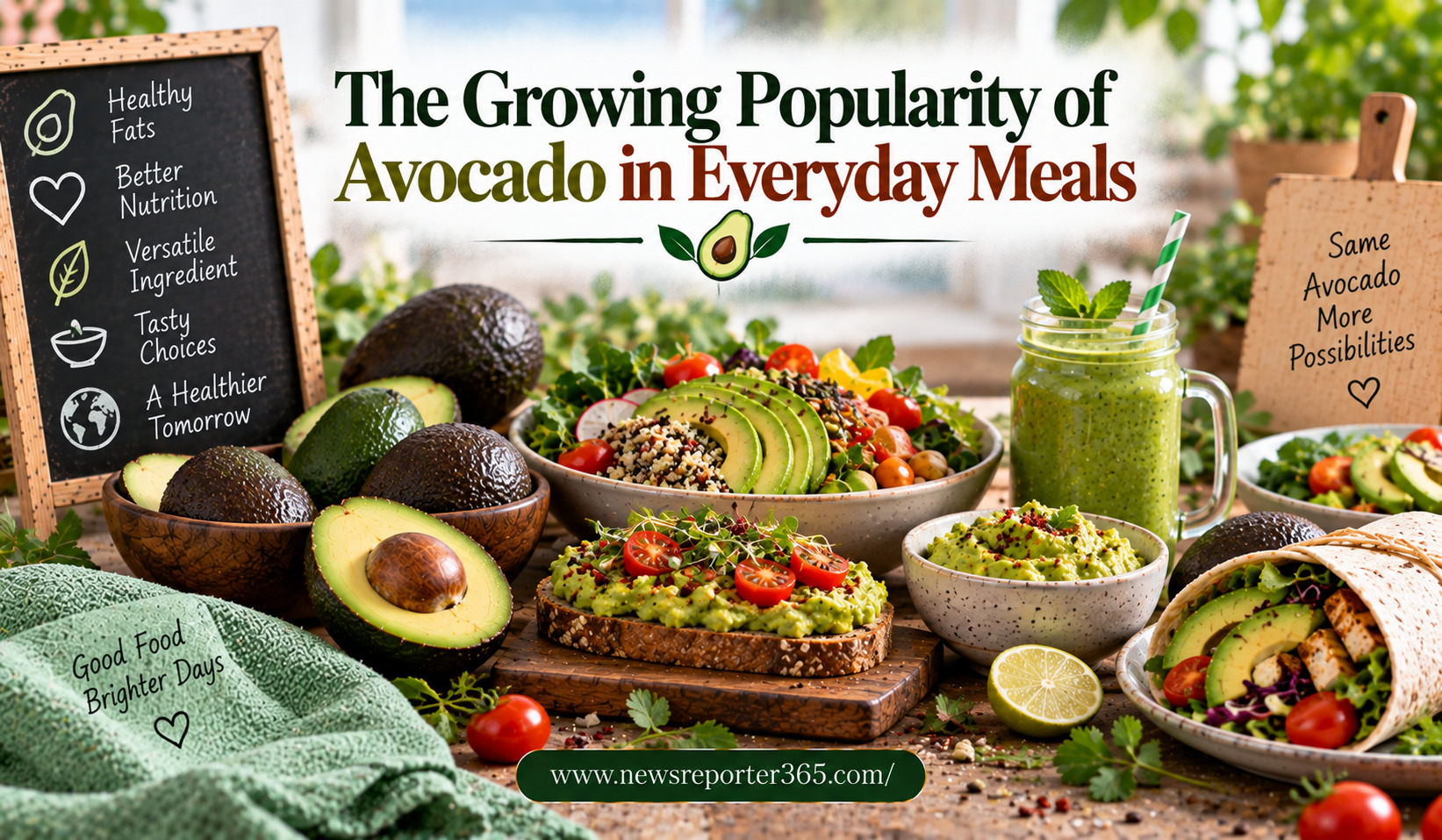
Avocado has moved well beyond its reputation as a premium or specialty food. In recent years, the creamy green fruit has become increasingly visible in everyday meals, appearing on breakfast plates, sandwiches, salads, wraps, smoothies, snacks, and restaurant menus. Its mild flavour and soft texture have made it easy to combine with both traditional and modern recipes.
The growing interest in avocado is part of a broader shift in eating habits. Consumers are increasingly interested in foods that can be used in multiple ways, provide useful nutrients, and fit conveniently into busy routines. Avocado happens to meet several of these expectations, making it an increasingly familiar ingredient in kitchens around the world.
Social media has also contributed to its visibility. Images of avocado toast, colourful breakfast bowls, salads, and guacamole have helped turn the fruit into a recognizable feature of contemporary food culture. However, its popularity is not based entirely on appearance. Its texture, versatility, and nutritional profile have helped maintain consumer interest beyond online food trends.
Why Avocado Is Appearing More Often
One reason avocado has become popular is its versatility. Many fruits are mainly consumed as snacks or desserts, but avocado can be used in savoury meals throughout the day. It can be sliced, mashed, blended, or incorporated into sauces and spreads.
For breakfast, avocado is often served with toast, eggs, vegetables, or whole-grain foods. At lunch, it can be added to salads, sandwiches, wraps, and grain bowls. Dinner recipes may use it as a topping or ingredient in Mexican-inspired dishes, while smoothies provide another way to incorporate its creamy texture.
This flexibility makes avocado particularly appealing to consumers who want ingredients that can work across several meals without requiring complicated preparation.
The Nutrition Factor
Nutrition is another major reason behind avocado’s popularity. Avocados provide dietary fibre and are a source of several vitamins and minerals. They also contain predominantly monounsaturated fat, which distinguishes them from many commonly used ingredients.
The fruit’s nutritional profile has helped it gain attention among consumers interested in balanced eating. However, avocado is relatively energy-dense compared with many fruits, largely because of its fat content. This does not make it an unhealthy food, but portion size can still matter depending on an individual’s overall dietary needs.
Rather than viewing avocado as a miracle food, nutrition-conscious consumers are increasingly treating it as one ingredient within a varied diet.
Avocado Breakfasts Become Mainstream
Perhaps the most recognizable avocado meal is avocado toast. What began as a café and food-blog trend has become a simple breakfast option in many households.
The basic combination is easy to customize. Consumers can add eggs, tomatoes, leafy greens, seeds, herbs, chilli, or other toppings according to personal preference. This adaptability has helped avocado toast move from a trend-driven meal into an everyday recipe.
Avocado can also be paired with eggs, incorporated into breakfast wraps, or blended into smoothies. Its creamy consistency can make certain dishes feel more substantial without requiring complicated cooking.
Salads and Bowls Get a Creamy Addition
Avocado has also become a popular component of salads and grain bowls. Its soft texture contrasts with crunchy vegetables, while its mild flavour works with citrus-based dressings, herbs, spices, and grains.
In a simple salad, avocado can be combined with tomatoes, cucumber, lettuce, corn, beans, or leafy greens. Grain bowls may pair it with rice, quinoa, roasted vegetables, beans, and a dressing.
This combination of texture and flavour is important because modern consumers are often looking for meals that are both nutritious and enjoyable. Avocado can contribute creaminess without requiring a heavy sauce.
Guacamole Keeps Avocado in the Spotlight
Guacamole remains one of the best-known avocado-based foods. Traditionally associated with Mexican cuisine, it has become widely recognized internationally.
The basic preparation can involve mashed avocado combined with ingredients such as lime, onion, tomato, coriander, and chilli. Its popularity has expanded beyond restaurant menus, with ready-to-eat guacamole and homemade versions becoming common.
Guacamole also illustrates avocado’s ability to function as both an ingredient and a dip. It can accompany vegetables, whole-grain snacks, wraps, sandwiches, and various main dishes.
A Useful Ingredient for Modern Home Cooking
Avocado’s popularity is closely connected to convenience. Once ripe, it requires little preparation. Consumers can cut it open, remove the seed, and use the flesh immediately.
Its versatility also reduces the need to buy several specialized ingredients. A single avocado can be used in breakfast, lunch, snacks, or dinner depending on how it is prepared.
| Meal | Common Avocado Use | Why It Works |
| Breakfast | Toast, eggs, bowls | Creamy texture and mild taste |
| Lunch | Salads, wraps, sandwiches | Adds richness and texture |
| Snacks | Guacamole, vegetable dips | Easy to combine with other foods |
| Dinner | Toppings, tacos, bowls | Works with vegetables, grains, and beans |
| Smoothies | Blended ingredient | Creates a creamy consistency |
This flexibility has helped avocado become more than a restaurant ingredient. It is increasingly being treated as a regular grocery item.
The Influence of Social Media
Food trends on social media have played a noticeable role in avocado’s rise. Avocado-based dishes are visually appealing because of their green colour and smooth texture. Brightly presented toast, bowls, salads, and guacamole can perform well in food-focused digital content.
This exposure can influence consumers who may not have previously considered avocado for everyday meals. Recipes shared through short-form videos and food blogs have also made preparation seem easier.
However, social media can sometimes create unrealistic expectations around food trends. Avocado does not need to appear in every meal to be part of a balanced diet. Its usefulness comes from its versatility rather than its status as a trendy ingredient.
Avocado in Indian Meals
The fruit is also finding new uses in Indian households, particularly among consumers who enjoy experimenting with international ingredients. Avocado can be incorporated into sandwiches, salads, wraps, smoothies, toast, and fusion recipes.
Its creamy texture can work with familiar spices and ingredients. Some home cooks use it in chutney-style preparations or pair it with Indian breads and vegetables, although these adaptations vary significantly from traditional avocado recipes.
Growing availability through supermarkets, online grocery platforms, and restaurants has also made the fruit easier for consumers to discover.
Price and Availability Still Matter
Despite its popularity, avocado is not equally accessible everywhere. Price, supply, seasonality, ripeness, and local availability can influence whether households purchase it regularly.
Consumers may also face the challenge of buying an avocado before it is fully ripe. An unripe fruit can be firm and lack the soft texture expected from a ripe avocado. On the other hand, an overripe avocado can develop brown flesh and a less appealing texture.
These factors make storage and timing important. Consumers often need to plan when they intend to use the fruit rather than treating it like a produce item that can remain at the same stage for several days.
Sustainability Becomes Part of the Conversation
As avocado consumption grows internationally, questions surrounding farming, water use, transportation, and environmental impact have also received greater attention. The environmental footprint of an avocado can vary considerably depending on where and how it is grown, agricultural practices, transportation, and other factors.
This means consumers increasingly encounter two sides of the avocado story: its popularity as a nutritious and versatile food and the wider questions associated with producing and transporting agricultural products.
There is no single environmental assessment that applies to every avocado. Production conditions differ by region, so broad claims about the fruit should be treated carefully.
Four Ways Consumers Are Using Avocado
Avocado’s everyday appeal can largely be seen through a few simple food habits:
- Breakfast: mashed or sliced avocado is commonly paired with toast, eggs, and vegetables.
- Lunch: it adds texture to salads, wraps, sandwiches, and grain bowls.
- Snacking: guacamole can be served with vegetables or other snack foods.
- Cooking experiments: home cooks are using avocado in smoothies, sauces, dips, and fusion recipes.
The common factor is flexibility. Consumers do not have to follow one specific recipe to incorporate the fruit into their meals.
Will Avocado Remain an Everyday Food?
The growing popularity of avocado appears closely connected to broader food trends rather than a single short-lived craze. Consumers are interested in versatile ingredients, plant-based foods, convenient recipes, and meals that combine taste with nutritional value.
At the same time, the fruit’s relatively high price in some markets could prevent it from becoming an everyday purchase for every household. Availability and affordability will remain important factors as demand develops.
Restaurants and packaged-food companies are also likely to continue experimenting with avocado. Ready-to-eat guacamole, avocado-based spreads, salads, sandwiches, and breakfast products can introduce the ingredient to consumers who may not regularly prepare it at home.
Conclusion
Avocado has evolved from a specialty ingredient into a familiar part of modern everyday meals. Its nutritional characteristics, creamy texture, mild taste, and ability to work across different recipes have helped drive its popularity.
From breakfast toast and salads to guacamole, smoothies, wraps, and fusion dishes, consumers are finding increasingly creative ways to use the fruit. Social media has accelerated awareness, while restaurants and grocery retailers have made avocado easier to discover.
As interest continues, affordability, availability, sourcing, and sustainability will remain important parts of the conversation. For now, avocado’s biggest strength may simply be its versatility: it can fit into many different meals without requiring complicated preparation.
FAQs
Why has avocado become so popular?
Avocado is popular because it has a creamy texture, mild flavour, and considerable versatility. It can be used in breakfast, lunch, dinner, snacks, dips, and smoothies.
Is avocado a fruit or a vegetable?
Botanically, avocado is a fruit. It is commonly used in savoury dishes, which is why many people think of it as a vegetable.
Can avocado be eaten every day?
Avocado can be included in a balanced diet, but the appropriate amount depends on an individual’s overall dietary needs. Because it is relatively energy-dense, portion size can be considered alongside the rest of the diet.
Why is avocado used in smoothies?
Avocado has a naturally creamy texture and mild flavour, which can make smoothies thicker and smoother when blended with fruits, vegetables, or other ingredients.
Why is avocado sometimes expensive?
Price can be affected by factors such as growing conditions, supply, seasonality, transportation, imports, and local demand.