

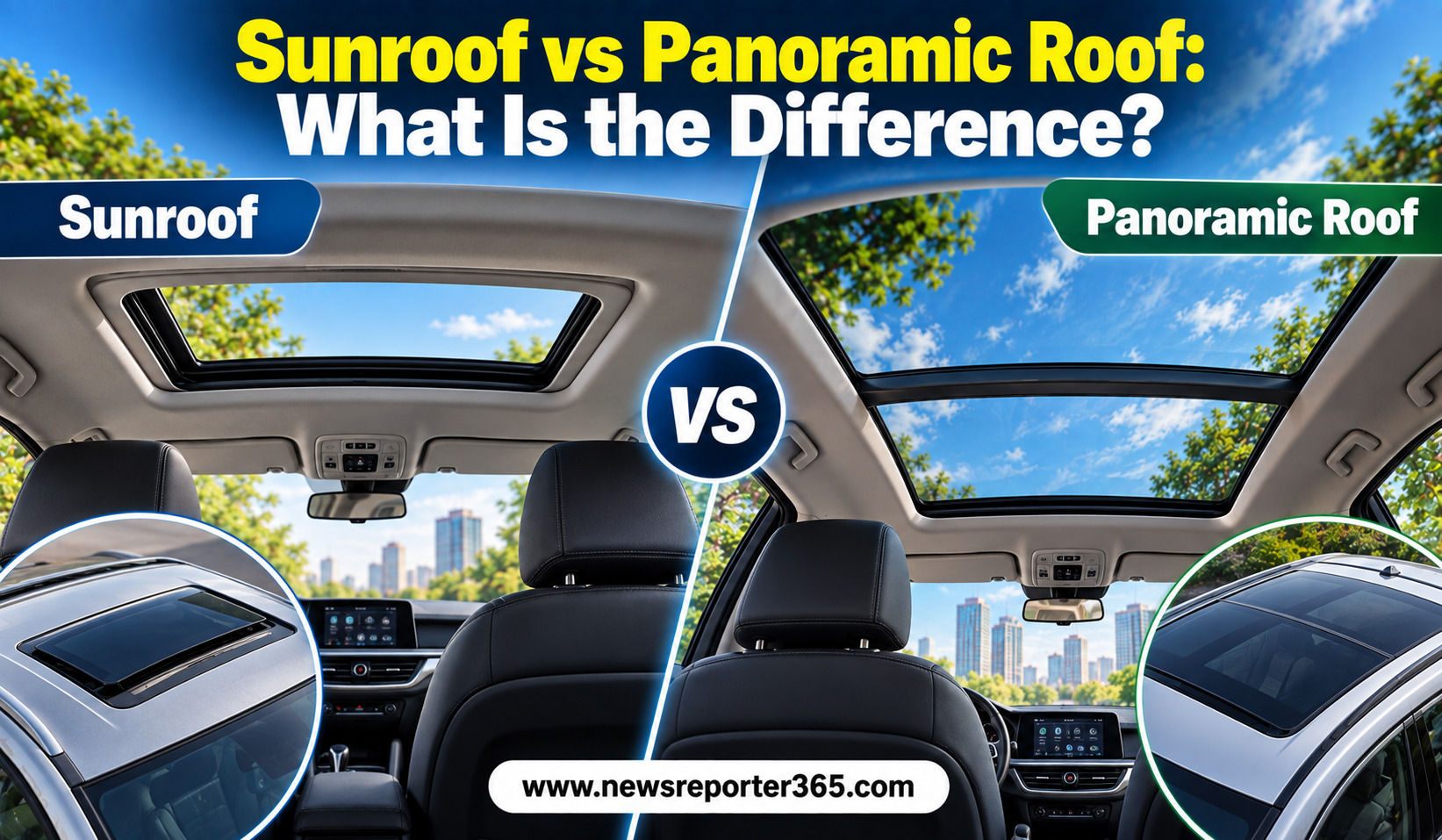
Sunroofs have become an increasingly popular feature in modern cars, particularly among buyers looking for a more premium cabin experience. What was once mostly associated with luxury vehicles is now available in a growing number of mainstream cars and SUVs. However, buyers often come across different terms such as sunroof, electric sunroof, panoramic sunroof and panoramic roof, and these terms can create confusion.
Although both a conventional sunroof and a panoramic roof allow more natural light into the cabin, they are not the same thing. Their size, construction, operation, cabin experience and cost can differ considerably. Understanding these differences is important before paying extra for a particular variant simply because it comes with a large glass roof.
For buyers comparing modern cars, the decision should not be based only on how impressive the roof looks from outside. Practical considerations such as heat, maintenance, headroom, safety, weather protection and actual usage should also be considered.
What Is a Sunroof?
A traditional sunroof is a panel built into the roof of a vehicle that can allow sunlight and fresh air into the cabin. Depending on the car, it may be manually operated or electrically controlled.
Modern cars generally use glass panels rather than the older metal-style designs. Some sunroofs tilt upwards at the rear for ventilation, while others can slide backward to create a larger opening.
The size of a conventional sunroof is generally limited. It may primarily serve the front occupants, although the exact design varies from one vehicle to another.
For many buyers, the biggest attraction of a sunroof is the additional light and open-air feeling it provides. Even when the glass remains closed, the cabin can feel brighter and more spacious.
What Is a Panoramic Roof?
A panoramic roof is substantially larger and is designed to provide a wider glass area over the cabin. In many vehicles, it extends over both the front and rear seating areas.
The exact design varies between manufacturers. Some panoramic roofs have a single large glass panel, while others use two sections separated by a structural frame. Some can open partially, while others are fixed and provide only additional light.
The main difference is therefore the amount of roof area covered by glass and the resulting visual experience inside the vehicle.
A panoramic roof can make the rear seat feel brighter and more open, which is one reason it has become particularly popular in SUVs and premium-style vehicles.
Sunroof vs Panoramic Roof: The Main Difference
The easiest way to understand the difference is to consider the size and purpose of each system. A standard sunroof is usually smaller and focuses more on providing ventilation and an open-air experience for occupants.
A panoramic roof is much larger and prioritises a wider view of the sky and greater natural light across the cabin. Depending on its design, it may also provide an opening section, but a panoramic roof does not necessarily mean that the entire glass area can be opened.
| Feature | Conventional Sunroof | Panoramic Roof |
| Glass area | Smaller | Much larger |
| Cabin coverage | Usually front-focused | Often extends toward rear seats |
| Natural light | Increased | Significantly increased |
| Opening | Often available | Depends on model |
| Open-air experience | Good | Can be more expansive |
| Cabin appearance | Premium | More premium and spacious-looking |
| Cost | Generally lower | Usually higher |
| Weight | Usually lower | Can be higher |
| Maintenance | Relatively simpler | Can be more complex |
These are general differences. The actual design and features depend on the specific car and manufacturer.
Does a Panoramic Roof Make a Car Feel More Spacious?
One of the biggest advantages of a panoramic roof is the visual effect it creates inside the cabin. More glass allows additional daylight to enter, making the interior appear brighter.
This can be particularly noticeable in the rear seat. Passengers who might otherwise sit under a conventional solid roof can get a clearer view of the sky.
However, a panoramic roof does not necessarily increase the actual dimensions of the cabin. The car’s wheelbase, roof height and interior packaging determine the available physical space.
In other words, a panoramic roof can make a cabin feel more open without actually increasing legroom or headroom.
What About Ventilation?
A sunroof that opens can provide useful ventilation, particularly when the weather is pleasant. Tilting the panel can allow air to circulate without fully opening the roof.
Panoramic roofs vary considerably in this area. Some models have an opening front section, while the rear glass may remain fixed. Others are completely fixed and are designed primarily for visibility and natural light.
Therefore, buyers should not assume that a panoramic roof automatically provides more ventilation than a conventional sunroof. The mechanism used on the specific vehicle matters more than the name given to the feature.
Heat Can Be a Concern
One of the most common concerns about large glass roofs is heat. More glass can allow significant sunlight into the cabin, particularly when the vehicle is parked outdoors.
Modern panoramic roofs generally use specially designed glass and may include blinds or shades to reduce sunlight entering the cabin. However, the effectiveness can vary between models.
In hot climates, buyers should pay attention to the quality of the roof’s glass, sunshade and cabin cooling performance. A large glass roof may look attractive during a showroom visit, but its everyday experience can be different when the vehicle is parked under strong sunlight.
A powered sunshade can be especially useful because it allows occupants to block direct sunlight when necessary.
Does a Panoramic Roof Affect Headroom?
The roof mechanism and glass structure can influence the amount of headroom available. Manufacturers have to package the glass panel, frame, motors, drainage systems and sunshade within the roof structure.
As a result, a vehicle with a panoramic roof may have slightly different headroom compared with a similar vehicle without one. The impact varies from model to model.
Tall buyers should therefore sit in both the front and rear seats before choosing a panoramic-roof variant. Specifications alone may not reveal how comfortable the seating position feels.
Safety and Structural Considerations
The roof forms part of a vehicle’s overall structure, so buyers may wonder whether replacing part of the solid roof with glass affects safety.
Modern vehicles are engineered with roof structures and safety systems designed around their particular roof configuration. A factory-fitted panoramic roof is not simply an ordinary glass panel installed after the vehicle is built.
However, buyers should distinguish between a factory-designed panoramic roof and aftermarket modifications. Structural alterations to a vehicle can have different implications and should not automatically be considered equivalent to a factory-fitted system.
The presence of a sunroof or panoramic roof should therefore not be used by itself to judge whether a car is safe. Buyers should consider the vehicle’s overall safety equipment and independent crash-test information where available.
Maintenance Can Be More Important Than It Looks
A sunroof contains moving parts, seals and drainage channels. Over time, these components may require attention.
Panoramic roofs can involve a larger glass surface and, depending on the design, additional mechanical components. Keeping the roof’s drainage system clean can be important because blocked drains can contribute to water entering the cabin.
Owners should also avoid placing excessive pressure on the glass or using unsuitable cleaning products. Any unusual noise, difficulty opening the roof or signs of water leakage should be inspected rather than ignored.
The maintenance cost depends on the vehicle and the specific roof mechanism, so buyers should ask about warranty coverage and potential repair costs before choosing the feature.
Does a Sunroof Add Resale Value?
A sunroof can make a used car attractive to certain buyers, particularly in markets where the feature is highly popular. However, it should not be assumed that the entire additional purchase cost will be recovered during resale.
The value of the feature depends on the model, variant, market demand and overall condition of the vehicle. A buyer should not spend a large amount solely because they expect the sunroof to increase resale value later.
In many cases, it is better to choose the feature because you will enjoy using it rather than treating it as a guaranteed financial investment.
Which One Is Better for Indian Driving Conditions?
There is no universal answer. A conventional sunroof may be more practical for buyers who mainly want occasional ventilation and additional light without paying significantly more for a large glass roof.
A panoramic roof can make more sense for buyers who value a brighter cabin, rear-seat ambience and a more premium interior experience.
Indian weather should also be considered. During extremely hot conditions, both systems may require the use of sunshades and strong air-conditioning. Buyers who frequently park outdoors should pay particular attention to how effectively the roof blocks heat.
Things to Check Before Choosing a Sunroof or Panoramic Roof
Before paying extra for either feature, buyers should inspect the actual vehicle rather than relying entirely on promotional images. Useful checks include:
- Sit in the front and rear seats to evaluate headroom and visibility.
- Check whether the roof opens, tilts or remains fixed.
- Test the sunshade and opening mechanism.
- Ask about warranty, drainage maintenance and repair costs.
A short test drive and cabin inspection can reveal whether the feature genuinely improves the ownership experience.
Is a Sunroof Worth Paying More For?
The answer depends heavily on personal preference. A sunroof does not necessarily improve the engine, suspension, fuel efficiency or basic practicality of a car. Its primary benefit is the cabin experience.
For some buyers, that experience is worth paying for. For others, the same money could be better spent on a higher safety variant, better tyres, useful technology or other equipment.
This is particularly important when comparing variants. Buyers should first prioritise essential safety and practical features before spending extra on a large glass roof.
Final Word
A conventional sunroof and a panoramic roof serve a similar basic purpose, but their design and cabin experience are quite different. A standard sunroof generally offers a smaller opening and can provide ventilation and extra light, while a panoramic roof uses a much larger glass area to create a brighter and more open cabin.
The larger glass area of a panoramic roof can make a car feel more premium, particularly for rear passengers. However, buyers should also consider heat management, headroom, maintenance, roof operation and the additional price.
Ultimately, neither option is automatically better for every driver. The right choice depends on how much the buyer values the feature and whether the additional cost fits comfortably within the overall car budget.
FAQs
What is the main difference between a sunroof and a panoramic roof?
The main difference is size. A conventional sunroof is generally smaller and often focuses on the front portion of the cabin, while a panoramic roof uses a much larger glass area that can extend toward the rear seats.
Does a panoramic roof always open?
No. Some panoramic roofs have an opening section, while others are fixed. Buyers should check the specific model and variant rather than assuming that every panoramic roof can be opened.
Is a panoramic roof better than a normal sunroof?
It depends on the buyer. A panoramic roof provides a larger glass area and more natural light, while a conventional sunroof can offer similar benefits at a lower cost in some vehicles.
Does a panoramic roof make the car more spacious?
It can make the cabin feel brighter and more spacious, but it does not necessarily increase actual legroom or interior dimensions.