

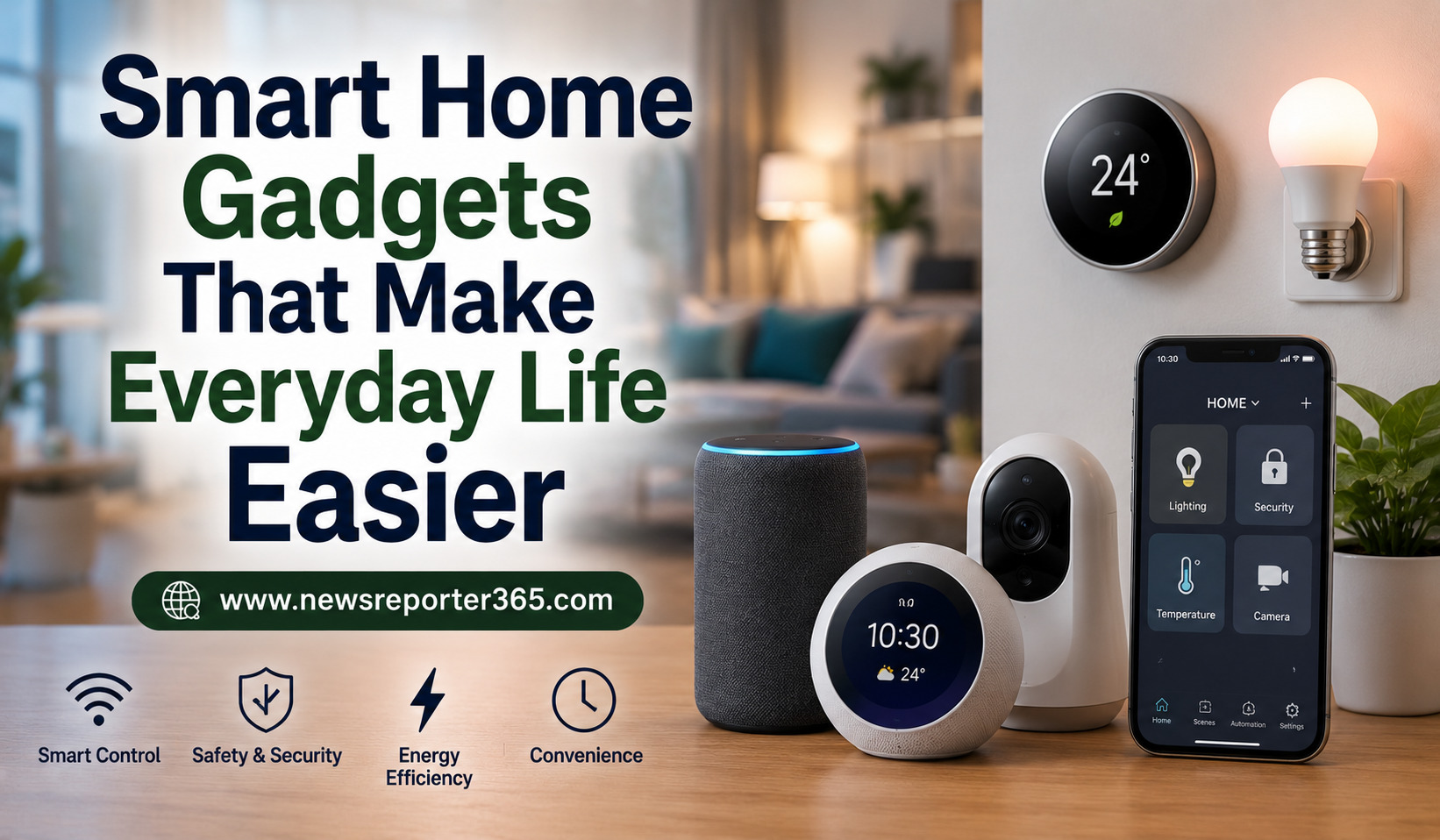
Smart home technology has moved from being a futuristic concept to something that can quietly become part of everyday life. From lights that can be controlled from a phone to robot vacuum cleaners that handle routine cleaning, connected gadgets are changing how people manage their homes.
The biggest advantage of smart home technology is not necessarily having the most advanced device. It is about reducing small daily tasks, saving time and making a home more convenient. A smart speaker can set reminders while you prepare breakfast, smart lights can be controlled without getting up, and a smart plug can automate devices that were previously switched on and off manually.
For beginners, however, the number of available gadgets can feel overwhelming. There are smart cameras, thermostats, locks, doorbells, sensors, appliances and entertainment devices, each promising to make life easier.
The good news is that you do not need to turn your entire house into a connected system. A few carefully selected gadgets can make a noticeable difference.
What Makes a Gadget “Smart”?
A smart home gadget generally connects to a network and allows users to control, monitor or automate it through a smartphone, voice assistant or another connected device.
Some gadgets can also respond automatically to conditions. A smart light might turn on at a particular time, while a smart sensor can send an alert when movement is detected.
The most useful devices are those that solve a real problem.
If you constantly forget to switch off a lamp, a smart plug may be more useful than an expensive smart appliance. If cleaning takes too much time, a robot vacuum could have a bigger impact on your daily routine.
Smart Speakers for Everyday Assistance
Smart speakers are among the easiest ways to introduce smart technology into a home.
They can answer simple questions, play music, set alarms and timers, create reminders and control compatible smart devices.
For someone preparing breakfast in the morning, a voice assistant can provide a hands-free way to manage small tasks.
Smart speakers can also become the central control point for a connected home. Once compatible lights, plugs or appliances are connected, users can control several devices through voice commands or routines.
The important consideration is compatibility. Before purchasing several smart devices, check whether they work with the voice assistant and ecosystem you already use.
Smart Lighting for Convenience and Ambience
Smart bulbs are another relatively simple upgrade.
Instead of manually switching lights on and off, you can control them through an app or voice command. Many smart lighting systems also support schedules, allowing lights to turn on or off automatically.
Smart lighting can be useful for more than convenience. Different brightness levels can create different environments for working, relaxing or entertaining.
For beginners, it is often better to start with one or two frequently used lights rather than replacing every bulb in the house.
Smart lighting can help with:
- Automated on and off schedules.
- Remote control through a smartphone.
- Adjustable brightness on compatible models.
- Creating routines for different times of day.
Smart Plugs for Ordinary Appliances
Smart plugs are among the most practical smart home accessories because they can add basic automation to existing devices.
A lamp, fan or other compatible appliance can potentially be controlled through a smart plug instead of requiring a completely new smart appliance.
For example, you might schedule a lamp to turn on in the evening or switch off a connected device automatically.
Smart plugs are particularly useful for people who want to experiment with home automation without spending a lot on new equipment.
Before using one, check the plug’s electrical rating and make sure the appliance is suitable for the type of control the smart plug provides.
Robot Vacuum Cleaners
Cleaning is one of the most time-consuming household tasks, which makes robot vacuums particularly appealing.
Modern models can navigate rooms, map areas and return to their charging stations automatically. Some higher-end models also offer features such as automatic dust collection and mopping.
The main benefit is convenience. A robot vacuum can handle routine cleaning while you focus on work, family or other activities.
However, robot vacuums are not completely maintenance-free. Dust bins, brushes and filters still need attention, and objects left on the floor can interfere with cleaning.
For homes with pets or frequent dust, the convenience can still make the device worthwhile.
Smart Doorbells for Home Awareness
Smart doorbells combine a traditional doorbell with a connected camera.
Depending on the model, they can notify you when someone approaches the door and allow you to view or communicate with visitors through a smartphone.
They can be particularly useful when you are away from home and want to know whether a delivery or visitor has arrived.
Privacy should be an important consideration when using any connected camera. Check how recordings are stored, who can access them and what privacy controls are available.
Smart Security Cameras
Smart cameras can provide additional visibility around the home.
Indoor cameras can help monitor certain areas, while outdoor cameras can provide views of entrances, driveways or other areas depending on the installation.
Many models offer motion notifications and remote viewing.
However, security cameras involve sensitive information. Strong passwords, two-factor authentication where available and regular software updates are important.
Users should also respect the privacy of household members, visitors and neighbors.
Smart Locks
Smart locks can reduce the need for traditional keys and offer additional ways to control access.
Depending on the model, users may unlock doors through a smartphone, keypad, fingerprint or other supported method.
Some systems can provide temporary access codes for guests or service providers.
Smart locks can be especially useful for people who frequently forget keys or manage rental properties.
However, they should be selected carefully because a lock is a security device. Look at the manufacturer’s security features, backup access methods and compatibility with your existing door before purchasing.
Smart Thermostats and Climate Control
Smart thermostats are particularly useful in homes where heating or cooling represents a significant portion of energy use.
They can allow users to create schedules and adjust temperature settings remotely. Some systems can learn patterns over time or respond to occupancy, depending on the model.
The potential benefit is not simply convenience. Better scheduling can help avoid heating or cooling an empty home unnecessarily.
Compatibility is extremely important because not every thermostat works with every heating and cooling system.
Smart Air Purifiers
Air purifiers have become popular among people looking for ways to monitor and improve indoor air quality.
Smart models may connect to apps and provide information about certain air-quality measurements. Some can automatically adjust their operating speed based on detected conditions.
For users who already want an air purifier, a connected model can provide additional convenience.
It is important to remember that an app reading does not necessarily provide a complete picture of indoor air quality. Follow manufacturer instructions and replace filters as recommended.
Smart Kitchen Appliances
The kitchen is another area where connected technology is becoming more common.
Smart coffee makers, ovens, refrigerators and cooking devices can offer features such as remote controls, timers or notifications.
These gadgets can be convenient, but not every smart appliance provides enough practical value to justify its price.
A useful rule is to ask whether the connected feature solves a problem you regularly experience.
If you rarely need to control an appliance remotely, paying extra for connectivity may not make much difference.
Smart Displays for Family Organization
A smart display combines a screen with voice-assistant features.
It can be useful for calendars, reminders, timers, recipes, music, video calls and controlling compatible smart devices.
In a busy household, a shared display can become a central place for schedules and reminders.
For example, a family could use a shared calendar to keep track of appointments and activities.
The usefulness depends on how well the device fits into the household’s existing routines.
Smart Sensors That Work Quietly in the Background
Smart sensors are not as exciting as smart speakers or robot vacuums, but they can be extremely practical.
Motion sensors, door sensors, water-leak detectors and temperature sensors can provide information or trigger automated actions.
A water-leak sensor placed near a washing machine or sink, for example, may provide an early alert if it detects moisture.
These small devices can be valuable because they solve specific problems without requiring constant interaction.
Smart Energy Monitoring
Energy-monitoring devices can help households understand how electricity is being used.
Some smart plugs and energy monitors can provide estimates of the electricity consumed by connected devices.
This information can help identify appliances that use significant amounts of energy and encourage more conscious usage.
Energy monitoring should be treated as an informational tool. Actual savings depend on how people respond to the information.
Smart TVs and Streaming Devices
Smart TVs are now common in many homes, providing access to streaming platforms, apps and other connected services.
A separate streaming device can also add smart features to a television that does not have them built in.
Voice search can make finding content faster, while integration with other smart devices can create a more connected entertainment setup.
The main benefit is convenience rather than automation.
Smart Blinds and Curtains
Smart blinds can automate natural light and privacy.
Depending on the system, curtains or blinds can be scheduled to open in the morning and close in the evening.
They can also be controlled remotely through a smartphone or voice assistant.
This type of gadget can be especially useful for large windows or rooms where manually adjusting blinds throughout the day becomes inconvenient.
Smart Home Gadgets by Purpose
| Need | Useful Gadget | Main Benefit |
| Lighting | Smart bulbs | Automation and remote control |
| Cleaning | Robot vacuum | Reduces routine cleaning |
| Security | Smart camera | Remote monitoring |
| Entry | Smart lock | Flexible access |
| Energy | Smart plug | Scheduling and monitoring |
| Climate | Smart thermostat | Automated temperature control |
| Organization | Smart display | Reminders and calendars |
| Safety | Water sensor | Early alerts |
| Entertainment | Streaming device | Easier media access |
The best choice depends on the problems you want to solve rather than the number of devices you own.
Creating a Smart Home Without Overspending
A common mistake is buying several gadgets at once.
Instead, start with one device that addresses a genuine inconvenience.
If your main problem is forgetting to turn lights off, begin with smart bulbs or a smart plug. If cleaning takes too much time, consider a robot vacuum.
Once you understand how your first device works, you can gradually add compatible products.
This approach also reduces compatibility problems.
Why Compatibility Matters
Smart home devices do not always work together automatically.
Different products may use different platforms, communication standards or ecosystems.
Before buying a device, check whether it works with the platform you already use.
The introduction of Matter, an industry standard designed to improve interoperability among supported smart-home devices, has also made compatibility easier to navigate in some cases. However, users should still check the exact features and compatibility listed for each device.
Buying within a compatible ecosystem can make setup considerably easier.
Smart Home Privacy and Security
Convenience should not come at the expense of security.
Connected devices can collect information about activity, routines, voice commands, locations or other aspects of home life.
Before buying a device, review its privacy policies and account-security options.
Basic smart-home security habits include:
- Use strong, unique passwords.
- Enable two-factor authentication when available.
- Keep device software and apps updated.
- Review connected accounts and permissions regularly.
Avoid connecting unnecessary devices to your network simply because they are advertised as smart.
Smart Gadgets for Different Lifestyles
Different households need different technologies.
A busy professional might benefit most from a robot vacuum, smart lights and smart plugs. A family might prefer a smart display, security cameras and smart locks.
Someone working from home may find smart lighting, climate controls and energy monitoring more useful.
The best smart home is therefore not necessarily the one with the most gadgets. It is the one designed around the people living inside it.
Are Smart Home Gadgets Worth the Money?
The answer depends on the device and the problem it solves.
A $30 smart plug that saves you from repeatedly checking whether a lamp is switched off may provide more practical value than a very expensive connected appliance with features you rarely use.
Think about frequency of use.
If a gadget saves a few minutes every day or removes a repetitive task, its value can add up over time.
However, some smart products mainly provide novelty. Before purchasing, ask whether you would still want the device if the “smart” feature were removed.
Conclusion
Smart home gadgets are most useful when they solve everyday problems.
Smart bulbs can simplify lighting, smart plugs can automate ordinary appliances, robot vacuums can reduce cleaning work and smart security devices can provide additional awareness when you are away. Smart speakers and displays can bring several functions together, while sensors can quietly monitor conditions around the home.
You do not need to purchase everything at once. Start with one or two devices that address genuine inconveniences and expand gradually.
Pay attention to compatibility, security, privacy and long-term usefulness before buying.
The smartest home is not necessarily the one filled with technology. It is the one where technology works quietly in the background and gives people more time and convenience in their everyday lives.
FAQs
What are the best smart home gadgets for beginners?
Smart bulbs, smart plugs, smart speakers and robot vacuums are among the easiest products to start with because they can provide noticeable convenience without requiring a complete home automation system.
Are smart home gadgets worth buying?
They can be, especially when they solve a problem you regularly experience. The value depends on how frequently you use the device and whether its smart features provide meaningful convenience.
Do smart home gadgets need Wi-Fi?
Many smart home gadgets use Wi-Fi, although some devices can communicate through other technologies. Always check the connectivity requirements before purchasing.
Can I create a smart home on a budget?
Yes. You can start with affordable products such as smart plugs or bulbs and gradually add more devices as needed.
What is the easiest smart gadget to install?
Smart bulbs and smart plugs are generally among the simplest options for beginners, although installation requirements vary by product.
Are smart home devices safe?
They can be safe when properly configured and maintained. Use strong passwords, enable additional security features when available and keep device software updated.