

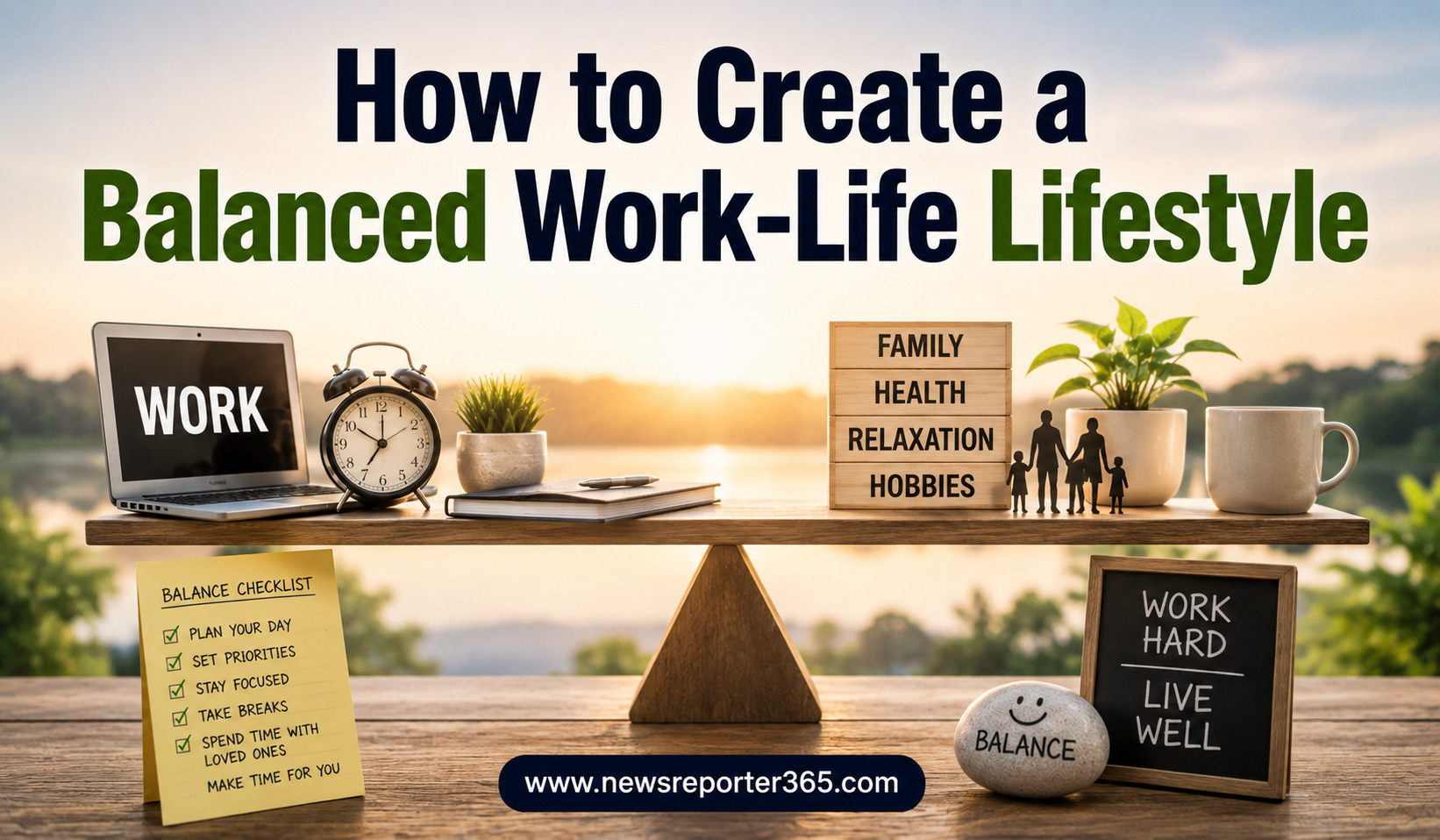
In a world where professional responsibilities can follow us home through smartphones, laptops and constant notifications, maintaining a healthy balance between work and personal life has become more challenging than ever. Many people begin their day with emails and end it by checking work messages, leaving little time for family, hobbies, relaxation or personal goals.
A balanced work-life lifestyle does not mean spending exactly the same number of hours on work and personal activities. Instead, it means creating a routine in which professional responsibilities, relationships, health, rest and personal interests can coexist without one area constantly taking over the others.
The idea of work-life balance has also changed with modern working styles. Remote jobs, flexible schedules and digital communication have provided greater freedom, but they have also blurred traditional boundaries. As a result, people increasingly need to create those boundaries for themselves.
Building a better balance does not require completely changing your career or daily schedule. Small adjustments to how you manage time, communicate with others and protect your personal hours can make everyday life more manageable.
What Does Work-Life Balance Really Mean?
Work-life balance is often misunderstood as a perfect division between professional and personal time. In reality, some days will naturally involve more work, while others may provide more time for family, friends or personal activities.
The goal is not mathematical equality. It is about creating a sustainable lifestyle in which work remains important without consistently damaging your health, relationships or personal well-being.
For example, a professional may have an extremely busy week because of an important deadline. That may be completely reasonable if there is enough opportunity to recover afterward. The problem begins when temporary pressure becomes the permanent pattern.
A balanced lifestyle should therefore provide enough flexibility to handle demanding periods while still protecting the parts of life that matter outside work.
Start by Understanding Where Your Time Goes
Before changing your schedule, it helps to understand how you currently spend your time.
Many people underestimate how much time is lost to small interruptions. Checking emails repeatedly, scrolling through social media, attending unnecessary meetings or switching between tasks can consume hours without producing meaningful results.
For one week, observe your routine without trying to change it immediately. Notice when you work, commute, use your phone, relax, exercise, spend time with others and sleep.
This simple observation can reveal patterns that are difficult to notice during a busy day.
You may discover that the problem is not necessarily having too much work. It may be that work is spread across the entire day, leaving no clear period for personal time.
Set Clear Working Hours
One of the most useful steps toward better balance is creating a clear beginning and ending to the workday.
This can be relatively straightforward in an office environment because commuting naturally creates a boundary. Remote workers, freelancers and business owners may have to create that boundary themselves.
Decide when work normally starts and when it should finish. There will be exceptions, but having a general schedule makes it easier to recognize when the working day is over.
When possible, avoid continuing to check work messages throughout the evening. If your role requires after-hours availability, establish realistic periods when you are available rather than remaining mentally connected to work all night.
A clear stopping point can help the mind transition from professional responsibilities to personal life.
Learn to Prioritize Instead of Doing Everything
A major source of stress is the belief that every task deserves immediate attention.
In reality, tasks have different levels of importance. Some contribute directly to major goals, while others can be delayed, delegated or removed entirely.
Start each day by identifying the work that genuinely needs your attention. Completing a smaller number of meaningful tasks can be more valuable than spending the entire day responding to minor requests.
This approach also creates space for personal activities. When important work is organized efficiently, it becomes easier to leave work without feeling that everything is unfinished.
A simple way to prioritize work is to ask:
- Does this task need to be completed today?
- Does it contribute to an important goal?
- Can someone else handle it?
- What happens if it is postponed?
These questions can prevent low-value activities from consuming your best hours.
Create Boundaries With Digital Devices
Technology has made work more flexible, but it has also made it difficult to disconnect.
A message received at 9 p.m. can create the feeling that you need to respond immediately, even when the matter could easily wait until the next morning.
Creating digital boundaries can make a significant difference. Turn off non-essential work notifications after your working hours and avoid checking professional communication simply out of habit.
This does not mean ignoring important responsibilities. If your role requires urgent communication, establish a system for genuine emergencies while keeping routine communication within normal working hours.
The same principle applies to personal screen use. Excessive social media or entertainment can also consume time that could be spent resting, exercising or connecting with others.
Protect Your Personal Time
Personal time should not only happen when every work task has been completed.
If you wait until everything is finished before relaxing, there may never be enough time left.
Instead, treat personal activities as legitimate parts of your schedule. A family dinner, evening walk, gym session, hobby or quiet reading period can be planned just like a professional meeting.
This does not make life rigid. It simply communicates that personal well-being deserves attention.
The activities do not need to be lengthy. Even 30 minutes spent doing something meaningful can provide a valuable break from work.
Make Time for Relationships
Career goals can be important, but relationships are also a major part of a fulfilling lifestyle.
Busy schedules can make people physically present but mentally distracted. Someone may sit with family while continuing to answer work messages or attend a dinner while thinking about tomorrow’s deadlines.
Quality time requires attention.
Try creating periods when work devices are put aside and conversations can happen without constant interruptions. This could be during dinner, a weekend activity or a short evening conversation.
Relationships do not necessarily require elaborate plans. Consistent small interactions often matter more than occasional large events.
Prioritize Physical Health
Work-life balance becomes difficult to maintain when physical health is consistently ignored.
Long periods of sitting, irregular meals, insufficient sleep and a lack of movement can gradually affect energy and daily functioning.
Physical activity does not need to involve an intensive fitness program. Walking, cycling, stretching, swimming, sports or other enjoyable activities can be incorporated according to individual preferences and abilities.
Food and hydration also matter. Regular, balanced meals can make it easier to maintain energy during busy days.
The objective is not to create another demanding responsibility. It is to build health-supporting habits into the existing routine.
Protect Your Sleep
Sleep is often sacrificed when work becomes demanding. People stay up late to finish tasks and then start the next day early to catch up.
Occasionally, this may be unavoidable. As a permanent pattern, however, it can make both work and personal life more difficult.
A consistent sleep schedule can support energy, concentration and recovery. Creating a reasonable bedtime and allowing enough time for rest should be treated as part of the daily routine rather than an optional activity.
A productive employee who is constantly exhausted is not necessarily more effective than someone who works fewer hours but has enough energy to concentrate.
Learn to Say No
Saying yes to every request can quickly overwhelm your schedule.
People may accept additional projects, meetings, invitations or responsibilities because they are worried about disappointing others. Over time, however, this can leave little space for important priorities.
Learning to say no respectfully is a valuable skill.
You do not need to reject every request. Instead, consider whether the commitment fits your current workload and priorities.
If you cannot take something on, a simple explanation can be enough. Setting boundaries is not necessarily a sign of being unhelpful. It can demonstrate that you understand your capacity.
Avoid the Myth of Constant Productivity
Modern productivity culture sometimes suggests that every free minute should be used for improvement.
People are encouraged to learn another skill, exercise, work on a side project, read more books and optimize every part of their day.
Personal growth can be valuable, but constant optimization can become exhausting.
There is nothing wrong with spending an evening watching a movie, talking with friends or simply doing nothing.
Rest does not have to produce a measurable result to be worthwhile.
A sustainable lifestyle includes periods when you are not trying to accomplish anything.
Use Your Commute as a Transition
For people who travel to work, commuting can become more than simply transportation.
It can provide a psychological transition between professional and personal roles.
Listening to music, a podcast or an audiobook may help some people mentally move away from work. Others may prefer silence after a busy day.
If you work from home, create your own transition. A short walk after finishing work, changing clothes or closing your laptop and leaving the workspace can provide a similar signal.
The purpose is to create a clear separation between work mode and personal mode.
Make Weekends About Recovery and Enjoyment
Weekends can easily become extensions of the working week.
People may spend Saturday catching up on emails, completing unfinished projects or thinking about Monday. While occasional work may be necessary, using every weekend for professional responsibilities can prevent genuine recovery.
Try to protect at least some weekend time for activities that have nothing to do with work.
This might involve spending time with family, meeting friends, exploring a nearby place, pursuing a hobby or simply staying home and relaxing.
It should provide enough freedom to recover from the demands of the previous week.
Organize Household Responsibilities
Work-life balance is not only about the relationship between your job and relaxation. Household responsibilities also take time and energy.
Cooking, cleaning, shopping, bills and family responsibilities can become overwhelming when they are left until the last minute.
Simple organization can reduce this pressure.
Preparing meals in advance, sharing responsibilities within the household and setting specific times for routine tasks can prevent them from constantly interrupting personal time.
It is to reduce unnecessary last-minute stress.
Create a Practical Weekly Plan
Daily planning is useful, but a weekly overview can provide a bigger picture.
At the beginning or end of each week, look at important work commitments, personal activities, appointments and responsibilities.
This allows you to identify particularly busy days and plan recovery time around them.
For example, if you know that Wednesday contains several important meetings, you may choose a lighter personal schedule that evening rather than adding additional commitments.
A balanced weekly plan can include:
- Major work deadlines and meetings.
- Exercise or outdoor activities.
- Family and social commitments.
- Personal time and hobbies.
The objective is not to schedule every minute. It is to understand where your time is going.
Use Technology to Reduce Work, Not Extend It
Technology can either improve work-life balance or make it worse.
Calendar tools, task-management apps, automation and communication platforms can reduce repetitive work and improve organization. However, using too many tools can create another layer of notifications and responsibilities.
Choose technology based on whether it genuinely saves time.
For example, automatic reminders may prevent you from constantly remembering small tasks. Calendar blocks can protect focused work and personal commitments.
The best technology is often the technology you do not have to think about constantly.
Recognize When Your Routine Needs to Change
Work-life balance is not a one-time achievement.
A routine that works today may become unsuitable after a promotion, job change, family responsibility or change in working hours.
Regularly review how your lifestyle feels.
If you are consistently exhausted, rarely spending time with people you care about or thinking about work throughout the evening, something may need to change.
The solution could involve better time management, clearer workplace boundaries, delegating responsibilities or discussing workload expectations with a manager.
In some situations, the problem may not be solvable through personal organization alone. Workplace culture and workload can have a significant influence on balance.
Work-Life Balance Looks Different for Everyone
A young professional may prioritize career development, while a parent may prioritize family time. Someone running a business may have periods of intense work followed by quieter periods.
The important question is whether your current routine supports the areas you consider important.
Balance can also change throughout the year. Certain periods may naturally be more work-focused, while holidays or quieter seasons may provide more personal time.
Rather than comparing your schedule with someone else’s, focus on whether your lifestyle is sustainable for you.
Example of a Balanced Daily Schedule
| Time | Activity | Focus |
| 6:30 AM | Wake up and personal routine | Health |
| 7:30 AM | Breakfast and family time | Personal |
| 9:00 AM | Start work | Professional |
| 1:00 PM | Lunch and short break | Recovery |
| 2:00 PM | Focused work | Professional |
| 5:30 PM | Finish work | Transition |
| 6:00 PM | Walk or exercise | Health |
| 7:00 PM | Dinner and family time | Relationships |
| 8:30 PM | Hobby or relaxation | Personal |
| 10:30 PM | Prepare for sleep | Recovery |
This schedule is only an example. Actual working hours, commuting requirements, family responsibilities and personal preferences will determine what works best.
Signs That Your Work-Life Balance May Need Attention
Sometimes the need for change becomes clear through everyday patterns.
If you are constantly checking work messages during personal time, regularly cancelling plans because of work, struggling to sleep because of professional thoughts or feeling guilty whenever you are not working, your current boundaries may need attention.
Another warning sign is losing interest in activities you previously enjoyed because there is never enough time or energy.
These experiences do not necessarily mean you need to make dramatic changes immediately. They can simply be signals to review your routine and identify where adjustments are possible.
Build Balance Through Small Changes
Trying to completely redesign your lifestyle overnight can create more pressure.
Instead, choose one area that currently causes the most difficulty.
If work follows you home, begin by creating a clear end-of-day boundary. If you never have time for exercise, schedule short periods of movement. If your weekends disappear into unfinished work, decide which responsibilities can be completed during the week.
Small improvements are easier to maintain.
Over time, several small changes can create a significant difference in how your days feel.
Conclusion
Creating a balanced work-life lifestyle is not about reducing ambition or avoiding hard work. It is about making sure professional responsibilities do not permanently consume the time and energy needed for health, relationships, rest and personal interests.
The foundation is simple: understand where your time goes, establish realistic working boundaries, prioritize meaningful tasks, control unnecessary digital distractions and protect personal time.
Balance also requires flexibility. Some weeks will be demanding, and some periods of life will naturally require greater attention to work. What matters is making sure those periods do not become the permanent definition of your lifestyle.
A balanced routine should support both achievement and well-being. It should leave room for productive work while also allowing you to step away from responsibilities, connect with people, enjoy personal interests and recover properly.
The most successful approach is usually not a dramatic lifestyle transformation. It is a collection of small decisions repeated consistently. By creating clearer boundaries and paying attention to what genuinely matters, it is possible to build a lifestyle that feels productive without becoming overwhelming.
FAQs
What is a balanced work-life lifestyle?
A balanced work-life lifestyle is one where professional responsibilities and personal priorities can coexist in a sustainable way. It includes time for work, health, relationships, rest and personal interests.
How can I improve my work-life balance?
Start by identifying where work is taking more time than necessary. Set clear working hours, prioritize important tasks, reduce unnecessary distractions and protect personal time.
Does work-life balance mean working fewer hours?
Not necessarily. Balance is not simply about the number of hours worked. It is about whether your overall routine leaves enough space for recovery, relationships and personal well-being.
How can remote workers maintain work-life balance?
Remote workers can create clear start and finish times, use a dedicated workspace when possible, turn off work notifications after working hours and create a transition between work and personal time.
How do I stop thinking about work after hours?
Create a clear end-of-day routine. Review unfinished tasks, write down priorities for tomorrow, close your work devices and move into an activity that helps you mentally transition away from work.
Should I check work emails after working hours?
That depends on your role. If immediate availability is not required, limiting routine email checks after work can help protect personal time. If your job requires availability, establish clear expectations around urgent communication.