

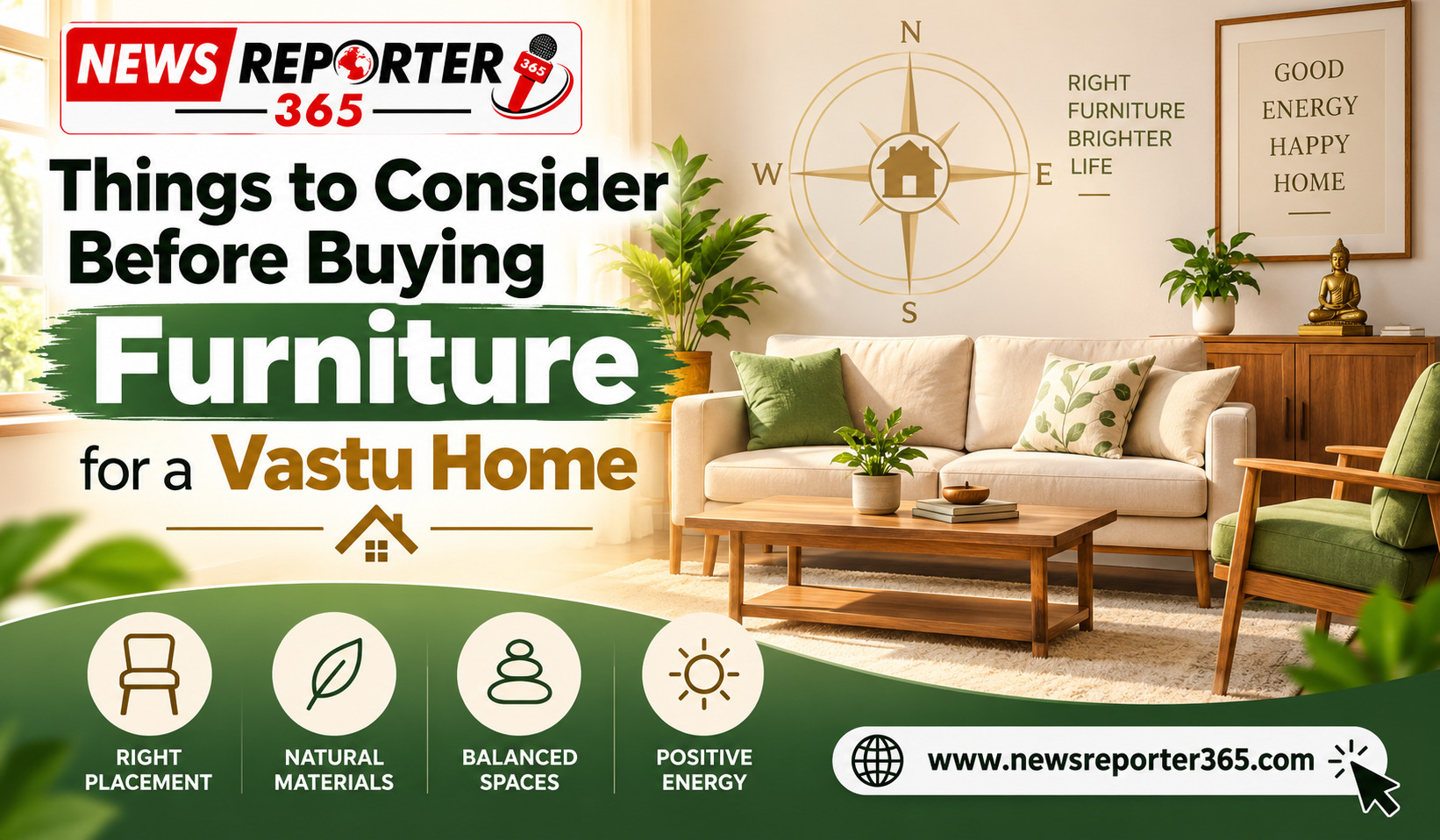
When you are furnishing your home, you probably think about comfort, appearance, size, and price before anything else. But if you want your home to follow Vastu principles, there is one more thing worth considering: Furniture Buying Before Consider Vastu.
Vastu Shastra is traditionally used to create a balanced and harmonious living environment by considering directions, placement, shapes, materials, and the flow of energy within a home. While furniture obviously needs to look good and serve a practical purpose, its size, design, weight, and placement can also play an important role in how your rooms feel.
You do not necessarily need to completely redesign your home around Vastu. Instead, you can make thoughtful furniture choices that complement your existing space while keeping Vastu principles in mind.
Here are some important things you should consider before buying furniture for a Vastu-friendly home.
1. Understand the Direction of Your Room
Before you start shopping for a sofa, bed, dining table, or storage unit, take a moment to understand the directions in your home.
According to traditional Vastu principles, different directions are associated with different energies and functions. This can influence where you eventually place heavier furniture.
For example, heavier furniture is often recommended toward the southwest, west, or south areas of a home, while lighter and more open spaces are generally preferred in the north and northeast.
You don’t have to follow these principles rigidly. However, knowing the direction of your rooms can help you make better decisions when choosing large furniture pieces.
Before purchasing anything, measure your room and identify where the furniture can realistically go. This prevents you from buying a beautiful piece that later blocks an important passage or creates an awkward layout.
2. Choose Furniture According to the Size of Your Room
One of the biggest mistakes you can make is buying furniture based only on how attractive it looks in a showroom or online photograph.
A massive sectional sofa might look luxurious, but if it occupies almost the entire living room, it can make the space feel crowded. Similarly, an oversized wardrobe can make a bedroom feel uncomfortable and restrict movement.
For a Vastu-conscious home, maintaining a sense of openness is particularly important. You want to avoid unnecessary clutter and allow comfortable movement around the room.
Before buying furniture, measure:
- Room length and width
- Door and window positions
- Walking space
- Furniture dimensions
- Distance between major furniture pieces
- Available wall space
A simple measuring tape can save you from an expensive mistake.
3. Pay Attention to Heavy Furniture Placement
Heavy furniture deserves special attention when you are planning a Vastu-oriented home.
Large wardrobes, bookshelves, cabinets, sofas, storage units, and other bulky pieces can visually and physically dominate a room. Traditionally, heavier furniture is often preferred in the south, west, or southwest portions of the home.
For example, you may consider placing a large wardrobe along the southern or western side of your bedroom rather than occupying the lighter northeast area.
However, practicality should still come first. Never force a furniture arrangement that blocks windows, electrical points, doors, ventilation, or emergency exits simply because of Vastu.
A balanced approach works better: follow Vastu where practical without compromising safety and functionality.
4. Consider the Shape of Your Furniture
The shape of furniture is another factor you can consider before making a purchase.
Furniture with clean, balanced, and proportionate designs can make a room feel more organized. Traditionally, regular shapes such as rectangles and squares are often preferred in Vastu-based interiors.
You can choose rectangular dining tables, square or rectangular coffee tables, and furniture with balanced proportions.
That does not mean you have to avoid every curved piece of furniture. A rounded accent chair or circular side table can still work beautifully in a modern home.
The key is to avoid creating a room filled with too many mismatched shapes. Your furniture should work together visually and leave enough open space around it.
5. Think Carefully About Your Sofa Placement
The sofa is usually one of the largest pieces of furniture in a living room, so its placement deserves attention.
If possible, you can consider positioning the main sofa against a strong wall, particularly toward the south or west side of the room. This can provide a sense of stability while leaving the central area relatively open.
When buying a sofa, don’t just focus on its colour or upholstery. Look at its:
- Overall size
- Back support
- Height
- Shape
- Material
- Number of seats
- Distance from other furniture
You should also make sure that the sofa does not obstruct the entrance or create a narrow walkway.
A comfortable living room should feel welcoming as soon as you walk into it.
6. Choose Your Bed With Both Comfort and Vastu in Mind
Your bed is another major furniture investment.
According to traditional Vastu practices, the southwest area is often considered suitable for the master bedroom. A solid bed with a sturdy headboard can also create a grounded appearance.
When selecting a bed, consider where its headboard will sit and whether the room allows enough space around the bed.
Avoid choosing a bed that is so large that you have barely any walking space left.
Storage beds can be useful in smaller homes, but keep the storage area organized. Avoid allowing old, unused, or broken items to accumulate underneath the bed.
Whether you follow Vastu strictly or simply want a peaceful bedroom, keeping the area around your bed clean and uncluttered can make the room feel considerably more relaxing.
7. Don’t Ignore Furniture Material
The material you choose can dramatically change the atmosphere of your home.
Wooden furniture is a popular choice for Vastu-inspired interiors because it gives rooms a warm and natural appearance. Solid wood, engineered wood, metal, glass, and upholstered furniture can all be used, depending on your interior style.
If you prefer a traditional look, natural wooden furniture can complement Vastu-inspired décor particularly well.
At the same time, you shouldn’t assume that every piece needs to be made from expensive solid wood. Quality engineered wood can be a practical alternative when your budget is limited.
Your priority should be durability, safety, maintenance, and suitability for the room.
8. Keep the Centre of the Home as Open as Possible
One of the simplest ideas you can apply while furnishing your home is to avoid overcrowding the centre of rooms.
A room doesn’t need furniture in every available corner.
For example, instead of filling your living room with multiple chairs, tables, cabinets, and decorative units, choose a few useful pieces and leave some breathing space between them.
An open centre can make your home feel larger and easier to move around in.
This is especially useful in apartments where space is limited.
Before purchasing another piece of furniture, ask yourself: Do I actually need it?
If the answer is no, leaving the space empty may be the better choice.
9. Be Selective With Storage Furniture
Storage is essential in modern homes, but excessive storage can quickly make a room feel heavy and crowded.
Before buying cabinets or storage units, evaluate what you actually need to store.
Choose furniture that gives you useful storage without consuming unnecessary floor space. Tall wardrobes and cabinets can be practical, but make sure they don’t make smaller rooms feel closed in.
You should also regularly clean and organize your storage furniture.
From a practical perspective, clutter makes everyday life harder. From a Vastu perspective, keeping your home organized is often associated with maintaining a more positive and balanced environment.
10. Consider Colours Before You Buy
Furniture colour can influence the overall mood of a room.
If you want a Vastu-inspired interior, you can consider softer, natural, and balanced shades rather than filling every room with very dark colours.
Wood tones, beige, cream, white, light green, pastel shades, and other subtle colours can create a calm atmosphere.
However, colour choices should also complement your walls, flooring, curtains, lighting, and existing décor.
You don’t have to follow a strict colour rule for every furniture item. Instead, aim for a combination that feels comfortable and visually balanced.
11. Avoid Buying Furniture Only for Decorative Purposes
Beautiful furniture is tempting, especially when you’re furnishing a new home. But buying too many decorative pieces can eventually create clutter.
Instead, look for furniture that combines functionality and style.
A coffee table can provide both decoration and useful surface space. An ottoman can work as seating and storage. A console table can enhance an entrance while giving you a place to keep everyday items.
This approach allows you to maintain a stylish home without filling every corner.
12. Check Furniture Quality Before Making the Final Purchase
Vastu shouldn’t be the only factor influencing your decision.
You are going to use your furniture every day, so quality matters.
Check the frame, joints, hinges, handles, upholstery, finishing, and overall construction before buying. For online purchases, carefully check dimensions, customer reviews, warranty information, return policies, and product specifications.
A Vastu-friendly piece of furniture isn’t useful if it breaks after a few months.
Your ideal furniture should provide comfort, durability, functionality, and aesthetic appeal while fitting naturally into your home’s layout.
13. Don’t Compromise on Natural Light and Ventilation
Furniture should never block important windows or ventilation points simply to achieve a particular arrangement.
Natural light can make a home feel brighter and more spacious. Good ventilation can also improve comfort.
When planning furniture placement, leave sufficient space around windows and avoid positioning tall cabinets where they unnecessarily block sunlight.
This is one area where practical interior planning and the desire for a Vastu-friendly environment can work together naturally.
14. Think About Your Lifestyle
Finally, remember that your home should work for you.
If you have children, pets, elderly family members, or frequent guests, your furniture choices should reflect that lifestyle.
For a family with young children, rounded edges and durable upholstery may be more useful. If you work from home, you may need a dedicated desk in addition to traditional furniture.
If you entertain frequently, a larger dining table or flexible seating arrangement might make more sense.
Vastu can guide your choices, but your home still needs to be comfortable and functional.
Final Thoughts
When it comes to Furniture Buying Before Consider Vastu, you don’t need to sacrifice modern design or personal taste. The goal is to create a home where furniture feels naturally integrated with the space rather than making every decision based on a rigid set of rules.
Start by understanding your home’s directions, measuring every room, and thinking about how you use each space. Pay attention to the placement of heavier furniture, keep important areas uncluttered, choose balanced shapes and colours, and prioritize comfort and quality.
Most importantly, don’t buy furniture simply because it is considered “Vastu-friendly.” A good furniture choice should fit your room, suit your lifestyle, last for years, and make you feel comfortable every time you come home.
With a little planning before you shop, you can create a home that looks stylish, feels spacious, and reflects the principles you value.