

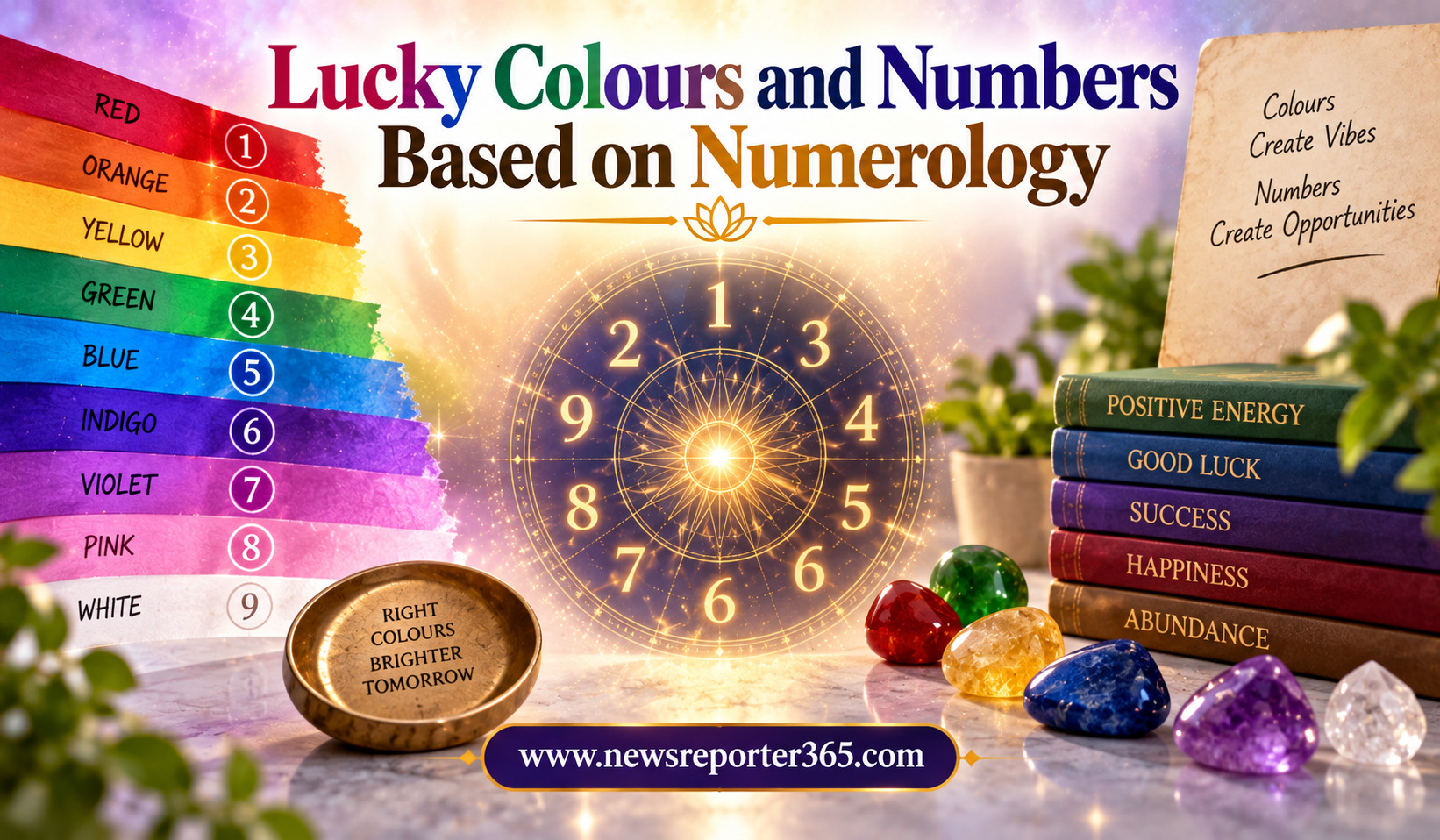
Colours and numbers are often given special meaning in different cultures and belief systems. In numerology, numbers are traditionally associated with particular personality traits, energies, and life themes. Some numerology followers extend these interpretations to colours, believing that certain shades may complement specific numbers and create a stronger sense of harmony.
The idea of using lucky colours and numbers has become increasingly popular among people interested in spirituality, self-development, astrology, and numerology. From choosing clothing for an important occasion to selecting colours for a workspace or considering meaningful numbers, people often look for simple ways to incorporate these traditions into everyday life.
Numerology does not have scientific evidence proving that a particular colour or number can bring luck or change a person’s future. However, these traditions can have personal and symbolic value. Understanding the traditional associations can help people explore numerology without treating it as a guaranteed prediction system.
What Are Lucky Numbers in Numerology?
In numerology, a lucky number generally refers to a number believed to have positive symbolic qualities for a particular individual. Rather than assuming that one number is universally lucky, numerologists often calculate numbers from a person’s birth date or name.
The Birth Number and Life Path Number are two commonly discussed calculations. The Birth Number is usually derived from the day of birth, while the Life Path Number uses the complete date of birth. A person’s Name Number can also be calculated by assigning numerical values to the letters in their name.
For example, a person born on the 16th may calculate their Birth Number as:
1 + 6 = 7
The resulting number is 7. Numerology traditions commonly associate 7 with knowledge, reflection, spirituality, and introspection.
How Colours Are Connected With Numbers
Colours do not have one universally accepted meaning in numerology. Different practitioners and traditions may associate different colours with the same number. Nevertheless, certain combinations appear frequently in popular numerology interpretations.
The basic idea is that each number represents particular qualities, while colours are believed to symbolically reinforce those qualities. Someone associated with a number representing communication, for example, might choose a colour traditionally connected with creativity or expression.
These associations are best understood as symbolic preferences rather than fixed rules. A person does not need to avoid a particular colour simply because it is not considered lucky according to one numerology system.
Numerology Numbers and Their Traditional Colour Associations
The following table provides a general overview of commonly discussed associations. Interpretations can vary between numerologists and cultures.
| Number | Traditional Qualities | Commonly Associated Colours |
| 1 | Leadership, independence, initiative | Red, orange |
| 2 | Balance, cooperation, sensitivity | White, light green |
| 3 | Creativity, communication, expression | Yellow, purple |
| 4 | Stability, discipline, organization | Blue, grey |
| 5 | Freedom, change, adaptability | Green, turquoise |
| 6 | Family, care, harmony | Pink, light blue |
| 7 | Spirituality, knowledge, reflection | Violet, dark blue |
| 8 | Ambition, authority, achievement | Black, dark blue |
| 9 | Compassion, generosity, completion | Red, maroon |
These colour associations should not be considered universal. A numerologist may use a different system based on the method they follow.
Number 1 and Its Lucky Colours
Number 1 is traditionally connected with independence, leadership, confidence, and new beginnings. People associated with this number may be encouraged by numerology practitioners to explore bold colours such as red and orange.
Red is often linked with energy, action, confidence, and determination. Orange can symbolize enthusiasm and creativity. For someone who follows numerology, these colours may be used when they want to feel more energetic or confident.
However, wearing red does not automatically create success. Its value is primarily symbolic and may also depend on an individual’s personal connection with the colour.
Number 2 and Its Colour Associations
Number 2 is generally associated with cooperation, relationships, diplomacy, balance, and sensitivity. White and softer shades of green are sometimes connected with this number.
White can represent peace and clarity, while green is often associated with harmony and growth. People who identify with the qualities of number 2 may choose softer colours for occasions where they want to create a calm or balanced atmosphere.
This association can also be applied creatively to home interiors, clothing, stationery, or personal accessories.
Number 3 and Creative Colours
Number 3 is commonly connected with communication, creativity, optimism, and self-expression. Yellow and purple are frequently mentioned in popular numerology interpretations for this number.
Yellow has strong associations with happiness, energy, and communication, while purple is often linked with imagination and creativity. Professionals working in communication, entertainment, writing, or creative fields may find these symbolic associations particularly interesting.
Again, the colour itself is not responsible for professional achievement. Skills, preparation, and experience remain the practical factors that influence results.
Number 4 and Stability
Number 4 is traditionally associated with structure, discipline, organization, practicality, and stability. Blue and grey are sometimes considered suitable colours for this number.
Blue can represent calmness, reliability, and trust, while grey is often viewed as a neutral and balanced shade. These qualities can make the colour associations particularly relevant to people who prefer a professional and organized visual identity.
A person interested in numerology might incorporate these colours into a workspace or professional wardrobe while maintaining their own personal style.
Number 5 and the Energy of Change
Number 5 is often associated with freedom, adventure, curiosity, communication, and adaptability. Green and turquoise are commonly linked with this number in popular numerology traditions.
Green can symbolize growth and renewal, while turquoise is often associated with openness and freshness. These colours may appeal to people who enjoy change and new experiences.
Numerology followers sometimes use the number 5 for occasions connected with travel, exploration, or trying something different.
Number 6 and Family Harmony
Number 6 is traditionally connected with family, responsibility, care, beauty, and emotional harmony. Pink and light blue are among the colours often associated with this number.
These softer shades are sometimes interpreted as representing affection, calmness, and nurturing qualities. People who strongly identify with family-oriented values may find the symbolism appealing.
Number 6 is also commonly discussed in relationship and home-related numerology because of its association with care and responsibility.
Number 7 and Spiritual Colours
Number 7 has a strong connection with introspection, knowledge, spirituality, analysis, and personal reflection in numerology traditions. Violet and dark blue are frequently associated with it.
These darker or deeper shades are often interpreted as representing mystery, wisdom, and contemplation. People interested in meditation, spirituality, or learning may feel naturally attracted to these colours.
The association is symbolic rather than a claim that wearing a particular colour will increase spiritual ability.
Number 8 and Colours of Ambition
Number 8 is commonly associated with ambition, authority, organization, financial matters, and achievement. Black and dark blue are sometimes considered suitable colours.
Black can represent strength, seriousness, and authority, while dark blue is often connected with confidence and professionalism. These qualities also explain why such colours are widely used in business environments regardless of numerology.
For entrepreneurs and professionals, numerology may therefore overlap with existing ideas about professional colour psychology.
Number 9 and Powerful Warm Shades
Number 9 is traditionally linked with compassion, generosity, wisdom, humanitarian thinking, and completion. Red and maroon are sometimes associated with this number.
These colours can represent energy, passion, and emotional strength. People connected with number 9 may choose such shades when they want their appearance or surroundings to reflect confidence and warmth.
The broader meaning of number 9 is often focused on helping others and completing important cycles.
How People Use Lucky Colours and Numbers
Numerology followers incorporate their preferred numbers and colours into daily life in many different ways. The choices are generally personal rather than mandatory.
Some common uses include:
- Wearing a preferred colour during an important event.
- Choosing a meaningful number for a personal project.
- Using colours associated with a number in home or workspace decoration.
- Selecting dates or numbers that have personal significance.
These practices can serve as reminders of personal goals. For example, someone who associates number 1 with confidence may use it as a motivational symbol when beginning a new project.
Lucky Numbers, Colours and Personal Belief
One important point about numerology is that the concept of luck is subjective. A colour that is considered favourable in one numerology system may have a completely different association in another.
Personal experiences can also influence how people perceive colours and numbers. Someone may have a favourite number because it appears repeatedly in meaningful life events. Another person may associate a particular colour with a positive memory.
Therefore, personal comfort should remain important. Numerology can provide guidance within its traditional framework, but there is no reason to avoid colours that someone genuinely enjoys.
Can Lucky Colours Really Change Your Luck?
There is no scientific evidence demonstrating that wearing a specific colour or using a particular number can directly change a person’s luck or determine an outcome.
The possible benefit may instead come from psychology and personal symbolism. If someone believes that a particular colour represents confidence, wearing it may make them feel more comfortable or motivated. That emotional effect can influence how they approach a situation, even though the colour itself has no proven supernatural effect.
This distinction is important when discussing numerology responsibly. It can be appreciated as a belief system without presenting it as a scientifically established fact.
How to Use Numerology Without Overdependence
People interested in lucky colours and numbers can use them as an optional part of their lifestyle rather than allowing them to control important decisions.
For major choices such as career moves, investments, education, medical treatment, or business decisions, practical information should take priority. Numerology can remain a personal tradition or source of reflection.
A balanced approach can make numerology enjoyable without creating unnecessary fear about supposedly unlucky numbers or colours.
Conclusion
Lucky colours and numbers based on numerology continue to attract interest because they offer a simple way to connect everyday choices with symbolic meanings. From Birth Numbers and Life Path Numbers to colour associations, numerology provides followers with a framework for thinking about personality, goals, and personal preferences.
Each number is traditionally linked with different qualities, and certain colours are believed to complement those characteristics. However, these interpretations vary between numerology systems and should not be treated as universal facts.
Frequently Asked Questions
What is a lucky number in numerology?
A lucky number is a number that numerology traditions associate with favourable qualities for an individual. It may be calculated from a person’s birth date or name.
Which colour is associated with number 1?
Red and orange are commonly associated with number 1 in popular numerology interpretations because the number is traditionally connected with leadership, energy, and initiative.
What colour is considered lucky for number 7?
Violet and dark blue are commonly associated with number 7, which is traditionally connected with spirituality, knowledge, and introspection.
Is number 8 considered lucky for money?
Number 8 is often associated with ambition, authority, business, and material achievement in numerology. However, this does not scientifically mean that the number guarantees financial success.
Can I use my lucky colour every day?
Yes. If a particular colour has personal or symbolic meaning for you, you can incorporate it into clothing, accessories, your workspace, or other areas of daily life.