

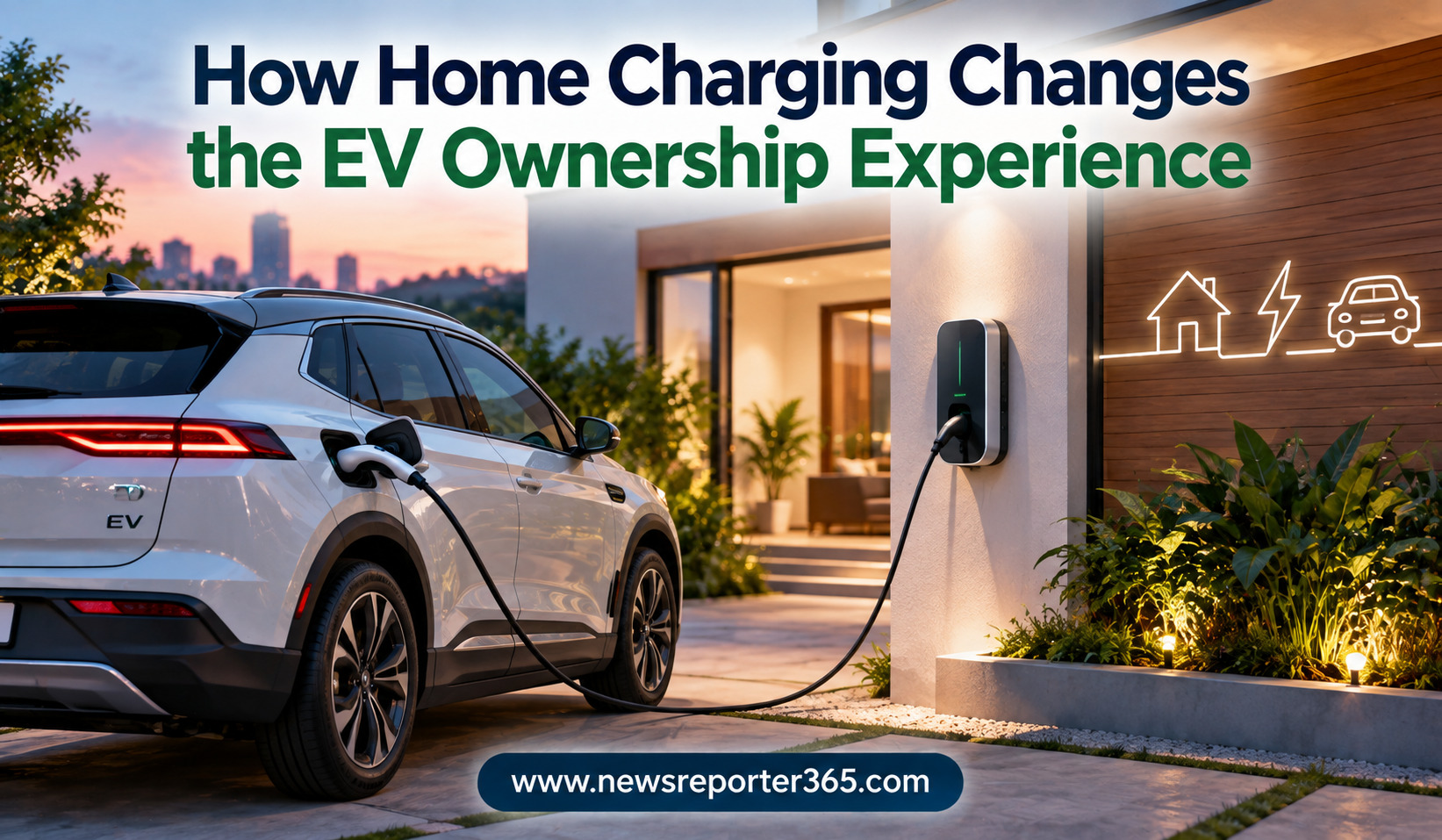
The experience of owning an electric vehicle can be very different depending on where and how it is charged. While public charging stations continue to expand, access to home charging can make everyday EV ownership considerably more convenient. For many electric-car owners, the ability to plug in at home turns charging from a separate task into a routine part of daily life.
Unlike a petrol or diesel car, an EV does not need to visit a fuel station every time its energy level gets low. If a suitable charger is available at home, the vehicle can be connected after returning from work and charged while it is parked. The next morning, the car can be ready for another commute without requiring a separate charging stop.
However, home charging is not equally straightforward for everyone. Apartment residents, people without dedicated parking and households with limited electrical capacity may face additional challenges. Understanding these factors before buying an EV can help prospective owners decide whether home charging will genuinely improve their ownership experience.
Charging at Home Changes the Daily Routine
One of the biggest advantages of home charging is convenience. With a petrol car, refuelling normally requires a dedicated stop at a fuel station. EV owners with home charging can instead connect their vehicle when they return home.
This can be particularly useful for people who follow predictable daily routines. A commuter may arrive home in the evening, plug in the car and leave it charging overnight. There is no need to wait for a charging station to become available during the morning commute.
The experience can feel similar to charging a smartphone. The vehicle is parked for several hours anyway, so charging can happen during a period when the car is not being used.
This does not mean every EV needs to be charged every night. Charging frequency depends on battery size, driving distance, efficiency and the owner’s preferred charging level.
Overnight Charging Can Reduce Charging Stress
For many EV owners, overnight charging is one of the most practical benefits of having a home charger. A vehicle that is parked for several hours provides a relatively long charging window.
Instead of waiting until the battery is nearly empty, owners can adopt a more flexible routine. For example, a driver may plug in after returning from work even if a substantial amount of range remains. The vehicle can then start the next day with a higher charge level.
This approach can reduce range-related anxiety because drivers have greater control over their energy supply. However, owners should still understand their vehicle’s recommended charging practices and use suitable equipment installed according to manufacturer and electrical-safety requirements.
Home Charging Can Make EV Running Costs Easier to Understand
Electricity costs and petrol prices work differently, but home charging can provide greater predictability for some EV owners. Instead of depending entirely on public charging rates, owners with a home charger can use electricity from their household supply.
The actual cost depends on electricity tariffs, vehicle efficiency, charging losses and driving distance. Some households may also have different electricity rates depending on their tariff structure or time of use.
It is therefore useful to calculate the approximate cost per kilometre rather than comparing only the price of a charging session with a fuel bill.
| Factor | Home Charging | Public Charging |
| Convenience | High for suitable homes | Depends on station location |
| Charging time | Usually longer | Faster options available |
| Waiting | Generally none | May occur at busy stations |
| Cost predictability | Often easier to estimate | Rates can vary |
| Installation | Requires suitable setup | No home installation needed |
| Best use | Overnight and regular charging | Long trips and quick top-ups |
| Parking requirement | Dedicated space usually needed | Charger-based parking |
Installation Is an Important Part of EV Ownership
Buying an EV does not automatically mean a home charger can be installed anywhere. The parking arrangement and electrical infrastructure need to be considered.
Independent houses with dedicated parking can generally provide a simpler environment for charger installation. Apartment residents may need permission from housing societies, landlords or property managers, depending on the building’s rules and electrical setup.
The distance between the electrical connection and the parking location can also affect installation requirements. Cable routing, protection, electrical load and charger placement should be assessed by a qualified professional.
A proper installation is important because EV charging can involve significant electrical loads over extended periods. Owners should avoid improvised wiring or unsuitable extension arrangements.
Apartment Living Can Make Home Charging More Complicated
For people living in apartments, home charging can be one of the biggest questions before buying an EV. Having a parking slot does not necessarily mean having an accessible electrical connection.
Some modern residential developments may already provide EV charging infrastructure, while older buildings may require additional planning. A shared charger can also create questions about availability, payment and scheduling.
Buyers should speak with the housing society or property management before purchasing an EV if they are unsure whether charging can be installed. Finding out after buying the car that dedicated charging is not possible can create unnecessary inconvenience.
Home Charging Does Not Eliminate Public Charging
Even drivers with home chargers may use public charging stations. The two systems serve different purposes.
Home charging is particularly suitable for routine energy replenishment, while public fast chargers can be valuable during long-distance journeys. A driver travelling between cities may not have enough time to wait for a slower home-style charging setup and may therefore depend on a faster charger along the route.
This creates a useful two-part charging routine. Home charging can cover most daily driving, while public infrastructure provides additional flexibility when travelling beyond the normal range.
Charging Speed Should Be Matched to Usage
A common misconception is that the fastest possible home charger is always the best option. In reality, charging requirements depend on how far the vehicle is driven each day and how long it remains parked.
If a car is used for a relatively short daily commute and remains at home overnight, a slower charging setup may provide sufficient energy by the following morning.
A driver covering long distances every day may have different requirements. Before selecting a charger, owners should consider the vehicle’s onboard charging capability, electrical supply and typical parking duration.
The charger should therefore be selected based on actual usage rather than simply choosing the highest available power rating.
Smart Charging Can Add More Convenience
Connected charging technology is becoming increasingly common in EVs. Depending on the vehicle and charger, owners may be able to schedule charging, monitor energy consumption or check charging progress through an application.
Scheduled charging can be useful for households that want to manage when the vehicle draws electricity. It can also make it easier to have the car ready at a particular time.
However, these features should be viewed as conveniences rather than essential requirements. A reliable basic charger can still provide an excellent ownership experience if it meets the driver’s daily needs.
Solar Power Can Change the Equation Further
Some homeowners with rooftop solar may consider using solar-generated electricity for EV charging. This can create an additional opportunity to use renewable electricity for transportation.
The practical benefits depend on the home’s solar generation, electricity consumption, battery storage and charging schedule. Solar production may also occur primarily during the daytime, while many vehicles are parked at home overnight.
A smart energy-management system can potentially help coordinate solar generation, household consumption and EV charging. However, the economics depend on the individual installation and electricity tariff.
Home Charging Can Reduce Dependence on Public Infrastructure
Public charging networks are important to EV adoption, particularly for people who cannot install chargers at home. However, drivers with reliable home charging may have less dependence on public infrastructure for everyday travel.
This can be especially valuable in areas where public chargers are limited or busy. A driver who begins most mornings with sufficient charge may only need public infrastructure occasionally.
It also changes how drivers think about EV range. Instead of treating the battery as something that must always be filled at a charging station, owners can think in terms of regular top-ups while the car is parked.
There Are Still Costs to Consider
Home charging improves convenience, but it is not completely cost-free. Installation can involve electrical work, equipment, mounting and other requirements.
The final cost varies depending on the charger, parking arrangement, wiring distance and electrical infrastructure. Owners should also consider electricity consumption when calculating total running costs.
Despite these expenses, home charging can provide considerable practical value over several years, particularly for drivers who use their EV regularly.
Four Things to Check Before Installing an EV Charger
Before purchasing or installing a home charger, buyers should pay attention to a few practical areas:
- Parking access: Confirm that the vehicle can remain parked near the proposed charging point.
- Electrical capacity: Have the electrical system assessed to determine whether it can safely support the charger.
- Permission: Apartment residents should confirm approval requirements before installation.
- Vehicle compatibility: Check the EV’s charging specifications and the charger’s connector and power compatibility.
These checks can prevent installation problems later.
Home Charging Can Make EV Ownership Feel More Convenient
The biggest change created by home charging is not necessarily charging speed. It is the way charging fits into everyday life.
For a commuter, the vehicle can become part of a simple routine: drive during the day, park at home, connect the charger and start the next morning with a useful amount of energy. This can remove one of the major differences between EVs and conventional cars—the need to make dedicated refuelling stops.
At the same time, home charging should not be considered a universal solution. Apartment parking, electrical limitations and installation permissions can affect whether it is practical.
Final Word
Home charging can significantly change the EV ownership experience by making everyday charging more convenient and predictable. For owners with dedicated parking and suitable electrical infrastructure, overnight charging can become a simple part of their routine rather than a separate task.
Public chargers will still have an important role, particularly for long-distance travel and drivers without access to private charging. The strongest EV ownership experience may therefore come from combining both options rather than relying entirely on one.
Before buying an electric car, prospective owners should think beyond the vehicle itself. Where the car will be parked, how frequently it will be driven, how much charging is required and whether a suitable charger can be installed are all important parts of the ownership decision.
For many EV buyers, having a dependable place to charge at home can be just as valuable as the car’s battery range or technology features.
FAQs
1. Is home charging necessary for EV ownership?
No. EVs can be charged using public charging stations, but reliable home charging can make everyday ownership significantly more convenient.
2. Can I charge my EV overnight?
Yes, provided the vehicle and charging equipment are installed and used according to the manufacturer’s recommendations and appropriate electrical-safety requirements.
3. Is home EV charging cheaper than public charging?
It can be, depending on the household electricity tariff, charging losses, vehicle efficiency and public charging rates. Owners should compare actual energy costs in their area.
4. Can apartment residents install an EV charger?
It depends on the building, parking arrangement, electrical infrastructure and applicable society or property-management permissions.
5. Do I need a fast charger at home?
Not necessarily. The appropriate charging speed depends on daily driving distance, the vehicle’s charging capability and how long it remains parked.