

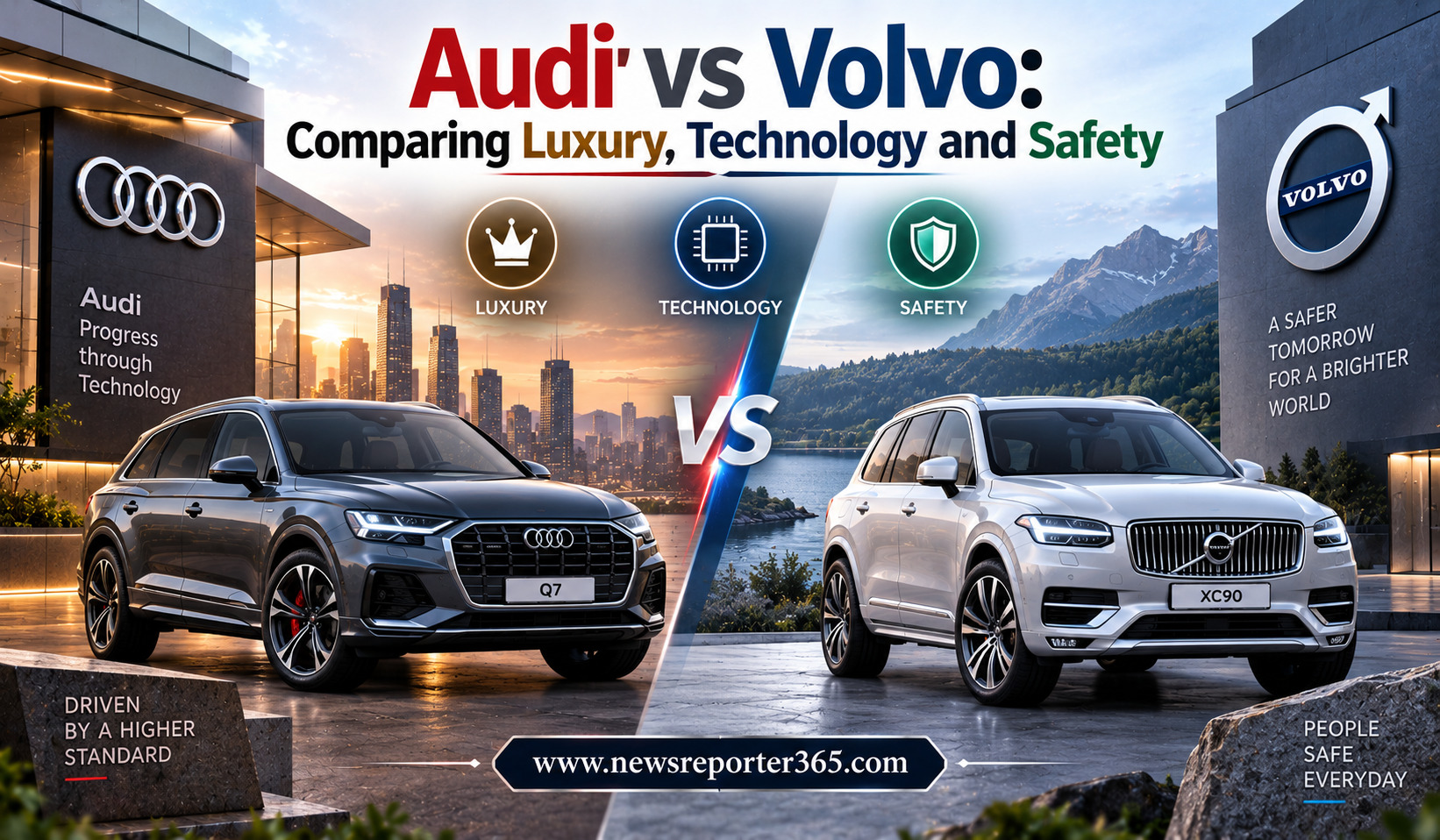
When buyers enter the premium car market, the choice is no longer limited to comparing engine power or exterior design. Luxury car customers increasingly want a vehicle that combines comfort, advanced technology, safety and everyday practicality. Two brands that often attract attention for these qualities are Audi and Volvo.
Audi has built its reputation around sophisticated styling, premium interiors, driving technology and a strong connection with German engineering. Volvo, meanwhile, has developed a distinctive identity based on Scandinavian design, comfort and a long-standing focus on occupant safety. Both brands offer premium SUVs, sedans and electric vehicles, but their approach to luxury is noticeably different.
So, when comparing Audi vs Volvo, which brand offers the better overall package? The answer depends on what a buyer values most.
Audi vs Volvo: Different Approaches to Luxury
Audi generally follows a modern and technology-focused interpretation of luxury. Its cabins typically feature clean layouts, high-quality materials and a strong emphasis on digital displays. Models such as the Audi Q3, Q5, Q7 and A4 have helped establish the brand among premium buyers who want a combination of comfort and a more dynamic driving experience.
The appeal of Audi is also strongly connected to its road presence. Sharp exterior styling, signature lighting and a refined cabin give many Audi models a sophisticated appearance without being overly traditional. The brand’s interiors often feel contemporary, particularly in higher variants equipped with larger digital screens and additional convenience features.
Volvo takes a different route. Its Scandinavian design philosophy emphasizes simplicity rather than visual complexity. The cabin environment tends to feel calm and uncluttered, with an emphasis on comfortable seats, premium materials and practical design.
Volvo’s XC40, XC60 and XC90 SUVs demonstrate this philosophy particularly well. Instead of filling every part of the dashboard with controls, Volvo generally tries to create a cleaner environment. For buyers who prefer understated luxury, this can be a major attraction.
Interior Comfort and Everyday Experience
Luxury is not only about leather seats and large screens. The quality of the driving environment becomes especially important when a car is used every day.
Audi has traditionally performed strongly in areas such as seat comfort, cabin insulation and overall interior finish. Depending on the model and variant, buyers can get features such as multi-zone climate control, premium audio systems, electrically adjustable seats, ambient lighting and panoramic sunroofs.
Volvo’s interiors are equally focused on comfort, but the experience feels different. The seats are one of the brand’s major strengths, and Volvo has spent decades developing a reputation for supportive seating. The cabin design also uses a minimalist approach that can make longer journeys feel relaxed.
For buyers who want a sporty premium atmosphere, Audi may have the advantage. Those looking for a quieter, more relaxed and minimalist environment may find Volvo more appealing.
Technology: Audi’s Digital Advantage Meets Volvo’s Simplicity
Technology has become one of the most important areas of competition among luxury car manufacturers. Modern buyers expect more than an infotainment screen. They want smartphone connectivity, connected services, digital instrument displays, navigation and driver-assistance technology.
Audi has invested heavily in digital cabin technology. Its Virtual Cockpit concept helped popularize fully digital instrument displays in the premium segment, while newer Audi models continue to offer advanced infotainment and connectivity systems.
The technology experience in an Audi can therefore feel particularly attractive to buyers who enjoy having information and vehicle functions presented through digital interfaces.
Volvo has also embraced connected-car technology, particularly across its newer generation of vehicles and electric models. Google-based infotainment systems are available in several markets and models, providing access to navigation, voice assistance and selected apps.
However, Volvo’s technology strategy tends to focus more on making the driving experience simple rather than overwhelming the driver with numerous functions. This difference is important because two cars can offer similar technology while delivering completely different user experiences.
Safety: Volvo’s Biggest Strength
Safety is probably the area where Volvo has the strongest brand identity.
For decades, Volvo has positioned vehicle safety as one of its central priorities. The company has introduced or popularized several safety developments over the years, and modern Volvo vehicles continue to feature a wide range of active and passive safety systems.
Depending on the model and market, Volvo vehicles can include technologies such as collision avoidance assistance, lane-keeping assistance, blind-spot monitoring, adaptive cruise control and pedestrian or cyclist detection.
Audi also takes vehicle safety seriously and offers a broad collection of driver-assistance technologies. Higher-specification models can include systems designed to assist with parking, maintaining distance from other vehicles, monitoring surrounding traffic and helping drivers respond to potential hazards.
It is important, however, to avoid judging safety purely by brand reputation. Safety equipment and crash-test results can vary between individual models, model years and markets. Buyers should always check the latest safety rating and equipment for the exact vehicle they are considering.
Driving Experience: Audi Feels More Dynamic
Audi tends to appeal to drivers who want their luxury car to feel engaging behind the wheel. Many Audi models offer a composed ride, precise steering and strong highway stability. Some variants also provide performance-oriented powertrains and all-wheel-drive technology.
This makes Audi particularly attractive for people who see driving enjoyment as an important part of owning a premium vehicle.
Volvo generally places greater emphasis on smoothness and comfort. Its SUVs are designed to provide a relaxed driving experience, making them well suited to family use and long journeys.
This does not mean Volvo vehicles lack performance. Modern Volvo models, including its electric vehicles, can deliver impressive acceleration. However, the overall character is usually more comfort-oriented than aggressively sporty.
Electric Vehicles Change the Comparison
The luxury-car competition is changing rapidly as electric vehicles become more important. Audi and Volvo both have electric models and are expanding their electric line-ups.
Audi’s electric vehicles are positioned around premium design, technology and performance. Models from the e-tron family have helped the company compete in the growing luxury EV segment.
Volvo has also made electrification a major part of its product strategy. The brand’s electric SUVs and newer EV offerings combine Scandinavian design with quiet operation and strong electric performance.
For EV buyers, the comparison should go beyond brand name. Range, charging capability, battery warranty, charging infrastructure, boot space and actual driving requirements are all important factors.
Audi vs Volvo: Key Differences
| Factor | Audi | Volvo |
| Luxury style | Modern and technology-focused | Minimalist and Scandinavian |
| Interior | Premium, digital and sophisticated | Comfortable, clean and understated |
| Technology | Strong digital cockpit and infotainment focus | Connected and simplified technology |
| Safety reputation | Strong safety technology | Exceptional safety-focused brand identity |
| Driving character | More dynamic and performance-oriented | More comfort-focused |
| SUV range | Broad premium SUV portfolio | Strong SUV and family-car focus |
| Electric vehicles | Growing premium EV range | Strong focus on electrification |
| Design | Sporty and sharp | Elegant and minimalist |
Which Brand Is Better for Indian Buyers?
In India, Audi and Volvo compete in a premium market where buyers often consider design, brand image, features and ownership experience alongside price.
Audi has a broad presence in India’s luxury-car market and offers several SUVs that appeal to buyers looking for a premium vehicle with a sporty image. Its product range also gives customers multiple options across different sizes and price categories.
Volvo has a smaller product portfolio but has built a strong following among customers who appreciate Scandinavian styling and safety-focused engineering. Its SUV range is particularly relevant for Indian buyers looking for a premium family vehicle.
Running costs, service availability, warranty coverage and resale value should also be considered before making a purchase. Premium-car ownership can involve higher maintenance expenses than mainstream vehicles, so the purchase decision should not be based solely on the showroom price.
Audi or Volvo: Which One Should You Choose?
There is no universal winner between Audi and Volvo because the two brands target slightly different preferences.
Audi could be the stronger choice for buyers who prioritize a sporty design, digital technology, premium cabin experience and engaging driving characteristics. It is particularly suitable for customers who want their luxury vehicle to feel modern and performance-oriented.
Volvo may be better suited to buyers who place greater importance on safety, comfort, understated styling and a relaxed driving environment. Its Scandinavian design also gives the brand a distinctive identity in a crowded luxury market.
Ultimately, the best approach is to compare specific models rather than judging the brands alone. An Audi Q5 and Volvo XC60, for example, may appeal to similar buyers but have different strengths. The same applies when comparing larger SUVs or electric vehicles.
What Buyers Should Check Before Buying
Before making a final decision, buyers should pay attention to:
- The exact variant and standard equipment
- Safety ratings and available driver-assistance features
- Engine or electric powertrain performance
- Warranty and service coverage
- Real-world fuel economy or EV range
- Long-term maintenance and ownership costs
A test drive is equally important. A vehicle that looks impressive on paper may not necessarily feel comfortable or intuitive on the road.
Final Verdict
The Audi vs Volvo comparison shows that modern luxury has several definitions. Audi focuses strongly on digital technology, sophisticated styling and a dynamic driving experience, while Volvo emphasizes Scandinavian simplicity, comfort and safety.
For technology enthusiasts and drivers who enjoy a sportier premium experience, Audi can be a compelling choice. For families and buyers who put safety and relaxed comfort at the top of their list, Volvo offers a distinctive alternative.
Neither brand can be called the outright winner for every buyer. The better choice depends on the model, budget, intended use and features that matter most to the individual customer.
FAQs
1. Is Audi better than Volvo?
Audi and Volvo have different strengths. Audi generally appeals to buyers looking for sporty luxury and digital technology, while Volvo is particularly attractive for safety, comfort and minimalist design.
2. Which is safer, Audi or Volvo?
Both brands offer extensive safety technologies, but Volvo has a particularly strong reputation for vehicle safety. Buyers should still check the latest crash-test rating and safety equipment of the specific model.
3. Which has better interiors, Audi or Volvo?
Audi typically offers a modern, technology-rich interior, while Volvo focuses on minimalist Scandinavian design and comfortable seating. The better interior largely depends on personal preference.
4. Is Volvo good for family use?
Yes. Volvo’s SUV range, particularly its larger models, is designed with comfort, practicality and safety in mind, making the brand attractive to families.
5. Is Audi good for long-distance driving?
Audi’s refined cabins, highway stability and comfortable interiors can make its vehicles well suited to long-distance travel, although the experience varies by model and variant.