

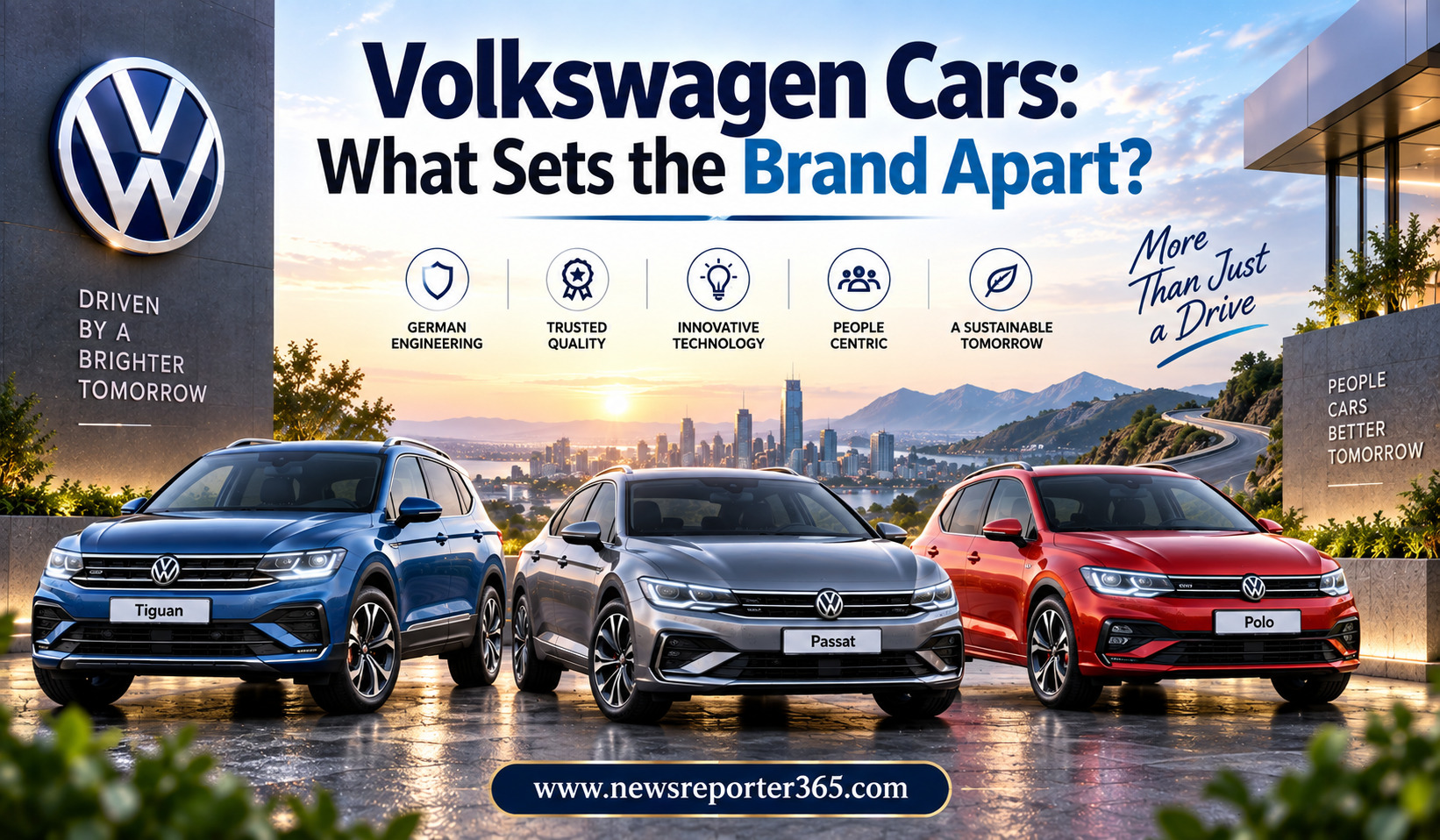
Volkswagen has built a strong reputation in the global automobile industry by focusing on a combination of engineering, practicality, driving experience and understated design. The German carmaker is known for producing vehicles that aim to balance everyday usability with a more refined driving character.
For many buyers, Volkswagen stands out because its cars often feel different from mainstream alternatives. Instead of relying only on bold styling or a long list of features, the brand has traditionally placed considerable emphasis on road manners, cabin quality, driving dynamics and engineering.
The automotive market has changed significantly in recent years, with buyers increasingly expecting advanced technology, safety equipment and premium interiors even in relatively affordable vehicles. Volkswagen has had to adapt to these changing expectations while maintaining the characteristics that have contributed to its identity.
So, what actually sets Volkswagen cars apart from other manufacturers? The answer lies in several areas, including design philosophy, driving behaviour, build quality, safety and the overall ownership experience.
A Distinctive German Design Philosophy
One of the first things many people notice about Volkswagen cars is their design approach. Volkswagen generally follows a relatively clean and restrained styling philosophy rather than using excessive exterior detailing.
The design is often intended to remain recognisable without becoming overly complicated. Sharp lines, balanced proportions and a relatively uncluttered appearance are common elements across the brand’s vehicles.
This approach can appeal to buyers who prefer a mature and sophisticated appearance. While styling preferences are subjective, Volkswagen has managed to develop a visual identity that can make its cars recognisable without relying on dramatic design elements.
The understated approach can also help some models age well visually. A design that does not depend heavily on short-lived styling trends may continue to look contemporary several years after purchase.
Focus on Driving Dynamics
Driving experience is one of the areas where Volkswagen has traditionally tried to differentiate itself. The company has a long history of developing vehicles with an emphasis on stability, predictable handling and a confident feel on the road.
For everyday drivers, this does not necessarily mean aggressive performance. Instead, it can mean that the car feels composed when changing lanes, taking corners or travelling at higher speeds.
Steering response, suspension tuning and braking behaviour all contribute to this character. A vehicle can have impressive specifications on paper but still feel less engaging or confidence-inspiring on the road. Volkswagen’s engineering philosophy has often focused on how these components work together.
This can make its cars appealing to buyers who enjoy driving but still need a practical vehicle for everyday use.
Build Quality and Solid Cabin Feel
Another characteristic commonly associated with Volkswagen is the solid feel of its vehicles. Door operation, switchgear, dashboard construction and general cabin ergonomics can contribute to a perception of quality.
The idea of build quality goes beyond using expensive materials. A well-designed interior should feel logically arranged and remain comfortable after years of regular use.
Volkswagen’s cabin philosophy has traditionally focused on a clean layout and practical placement of controls. Depending on the model and variant, buyers may also find premium touches in areas such as upholstery, dashboard materials and interior detailing.
However, equipment and material quality can vary between models and variants. Buyers should therefore assess the specific car rather than assuming that every Volkswagen offers the same level of interior finish.
Safety as a Major Consideration
Safety has become one of the most important factors in the modern car-buying process. Volkswagen has historically placed significant emphasis on vehicle safety, combining structural engineering with electronic safety systems.
Modern Volkswagen vehicles can include a range of active and passive safety technologies depending on the model and market. These may include airbags, electronic stability control, braking assistance, parking sensors, cameras and other driver-support systems.
Safety cannot be judged by the number of features alone. Vehicle structure, restraint systems, electronic controls and real-world crash performance all contribute to overall protection.
For buyers comparing cars, it is important to check the safety equipment and relevant crash-test information for the exact model and variant under consideration.
Engines Designed for Different Driving Needs
Volkswagen has offered a variety of petrol, diesel and electrified powertrains across different markets and generations. The exact engine choices vary according to the country, model and model year.
The brand’s engine philosophy has often focused on balancing performance with efficiency. Turbocharged engines, for example, can provide useful torque without requiring a very large engine.
For city users, strong low- and mid-range responses can make a car easier to drive through traffic. For highway users, stable performance and comfortable cruising can become more important.
The best powertrain therefore depends on how the vehicle will actually be used. Buyers should consider fuel costs, transmission behaviour, service requirements and driving patterns rather than selecting an engine purely because of its power figure.
Transmission Technology and Driving Comfort
Volkswagen has used different transmission technologies across its product range. Automatic transmissions can make urban driving easier, while well-matched gear ratios can help the engine deliver power smoothly.
The transmission has a major influence on how a vehicle feels. Quick shifts may appeal to some drivers, while others may prioritise smoothness during slow-moving traffic.
A test drive is therefore particularly important when evaluating a Volkswagen. It allows buyers to understand how the engine and gearbox behave during acceleration, braking, parking and congested traffic.
Technology Without Losing Practicality
Modern car buyers expect more technology than previous generations did. Infotainment screens, smartphone connectivity, digital displays, connected-car functions and advanced driver-assistance features are increasingly common throughout the industry.
Volkswagen has incorporated many of these technologies into its newer vehicles, although availability depends on the model and variant.
Technology is most useful when it improves the driver’s everyday experience. A responsive infotainment system, clear instrument display and convenient smartphone integration can make regular journeys easier.
At the same time, technology should not overshadow practical considerations. Buyers should check whether the controls are easy to operate and whether the features they value are included in the particular variant they intend to purchase.
Volkswagen’s Balance Between Comfort and Handling
One of the interesting aspects of Volkswagen’s product philosophy is the effort to balance comfort with driving stability. A car designed entirely around comfort may feel soft and less controlled during quick manoeuvres, while a heavily performance-focused setup may become uncomfortable on poor roads.
A balanced suspension setup can offer a more versatile experience. This is especially important for buyers who use their cars for both city commuting and longer highway trips.
Ride comfort will naturally differ between models, wheel sizes and suspension configurations. Local road conditions also play a major role, so a test drive remains essential.
What Makes Volkswagen Different?
| Area | Volkswagen’s typical approach |
| Design | Clean, restrained and recognisable styling |
| Driving | Stable handling and composed road manners |
| Interior | Practical layouts with an emphasis on solid feel |
| Safety | Focus on structural and electronic safety systems |
| Engines | Balance of performance and efficiency |
| Technology | Modern infotainment and connected features |
| Comfort | Designed to balance ride quality and stability |
| Brand identity | German engineering and understated character |
A Brand for Buyers Who Value the Driving Experience
Not every car buyer looks for the same thing. Some prioritise maximum features, while others focus mainly on mileage or low purchase price. Volkswagen tends to attract buyers who also consider how a vehicle feels from behind the wheel.
The brand’s combination of steering response, suspension tuning, seating position and overall stability can appeal to drivers who want a more engaging experience without moving into a dedicated performance-car category.
This is particularly relevant for buyers who regularly travel on highways. A car that feels stable and predictable at higher speeds can provide an additional sense of confidence during longer journeys.
Practicality Remains Important
Despite its emphasis on engineering and driving dynamics, practicality remains an important part of Volkswagen’s appeal. Cabin space, boot capacity, storage areas and passenger comfort all influence the usefulness of a vehicle.
Families should evaluate rear-seat space and luggage requirements before making a purchase. Similarly, city users should consider exterior dimensions and parking convenience.
A car may have an impressive design and driving experience, but it still needs to work with the owner’s everyday lifestyle. Volkswagen’s different vehicle categories allow buyers to choose according to their space and usage requirements.
Ownership and Maintenance Considerations
Buying a car is only the beginning of ownership. Fuel, insurance, servicing, tyres, repairs and depreciation all contribute to the long-term cost.
Volkswagen buyers should therefore research the expected maintenance schedule and service costs for the specific model. Parts availability, warranty coverage and the location of authorised service facilities can also influence ownership convenience.
A premium-feeling interior or enjoyable driving experience can be attractive, but buyers should make sure the complete ownership cost fits their budget.
Volkswagen Versus the Mainstream Competition
Volkswagen competes with a wide range of established carmakers, many of which have their own strengths. Some competitors may focus heavily on features, others on efficiency, affordability, comfort or reliability.
Volkswagen’s differentiation is often found in the overall package rather than one particular specification. The combination of design, road manners, cabin feel, safety and engineering can create a distinct ownership experience.
This does not mean Volkswagen will automatically be the right choice for every buyer. A comparison should include purchase price, features, performance, efficiency, service costs, resale expectations and personal preferences.
What Should Buyers Check Before Buying a Volkswagen?
Before choosing a Volkswagen, buyers should first identify the purpose of the vehicle. Daily city commuting, family use, highway travel and mixed driving can all require different priorities.
A proper evaluation should cover the following areas:
- Engine and transmission behaviour in real traffic
- Rear-seat comfort and boot space
- Safety equipment and available driver-assistance features
- Service schedule, warranty and expected ownership costs
It is also worth comparing different variants carefully. Sometimes a particular feature may be limited to a higher trim, making the actual price difference more significant than it initially appears.
Final Word
Volkswagen’s identity has been shaped by an approach that combines understated design, engineering, driving dynamics, practicality and safety. While the automotive industry continues to move toward greater electrification, connectivity and advanced driver assistance, these traditional characteristics remain relevant to many buyers.
The brand may not appeal to someone who simply wants the maximum number of features at the lowest possible price. Instead, Volkswagen can be attractive to buyers who place importance on how a car feels, how it is built and how confidently it performs in everyday conditions.
Ultimately, the right Volkswagen depends on the individual model, variant, powertrain and intended use. Buyers should compare the complete package rather than relying only on brand reputation. A careful test drive and ownership-cost comparison can help determine whether Volkswagen’s approach matches their expectations.
FAQs
1. What is Volkswagen best known for?
Volkswagen is widely associated with German engineering, understated design, practical vehicles and a focus on driving dynamics and build quality.
2. Are Volkswagen cars good for city driving?
Many Volkswagen models can work well for city use, particularly when their dimensions, engine and transmission are suited to urban traffic. Buyers should choose based on their specific commuting requirements.
3. Does Volkswagen focus more on performance or comfort?
Volkswagen generally aims to balance comfort and driving stability. The exact character varies considerably between models and variants.
4. Are Volkswagen interiors premium?
Many Volkswagen vehicles emphasise a solid, practical cabin feel, although interior materials and features differ between models and variants.
5. Are Volkswagen cars safe?
Safety equipment varies by model and market, but Volkswagen places significant emphasis on vehicle safety. Buyers should check the exact safety specifications and crash-test information for the vehicle they are considering.