
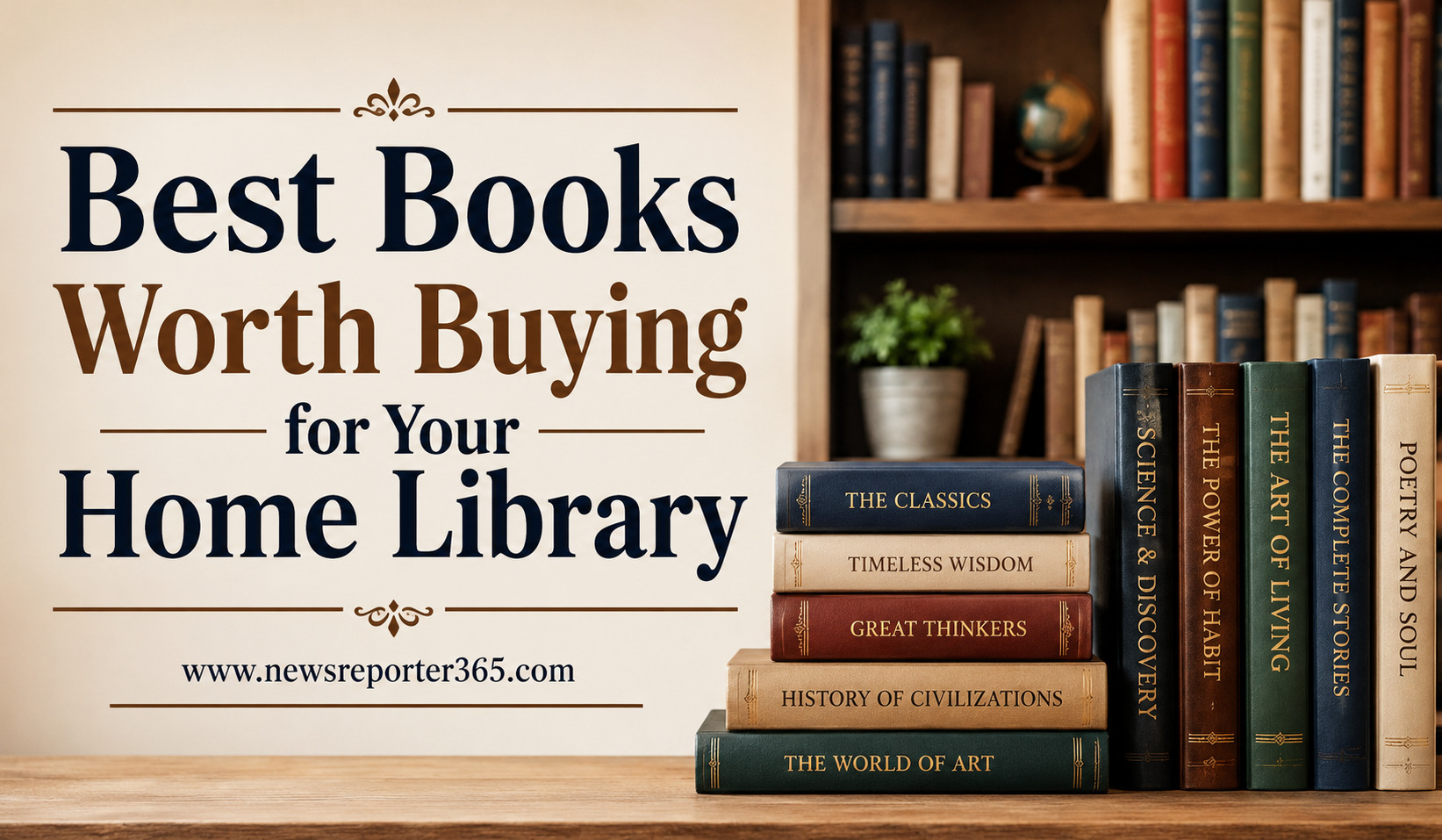
A home library does not need to occupy an entire room or contain thousands of books. A carefully chosen collection of books can be just as valuable as a large one. The best home libraries bring together titles that you genuinely enjoy, books you expect to revisit, and works that add knowledge, imagination, or beauty to your living space.
Buying books for a home library is different from choosing something to read once. When you purchase a book for your personal collection, you are making a long-term choice. You may return to it years later, recommend it to a guest, use it for reference, or simply enjoy seeing it on your shelf.
The ideal collection should therefore contain a mixture of fiction, nonfiction, classics, practical books, and titles connected to your personal interests. This guide explores some of the best types of books worth buying and how to build a home library that remains useful and enjoyable for years.
Why Build a Home Library?
A home library creates a dedicated space for curiosity. In a world where much information is consumed quickly through screens, physical books provide a different experience. They allow you to slow down, focus, and return to ideas whenever you want.
Books can also become part of your home’s personality. A shelf filled with novels, art books, biographies, history, and travel writing tells visitors something about your interests without saying a word.
More importantly, a home library does not have to be built in one shopping trip. It can grow gradually. You can buy one or two meaningful books whenever you discover something worth owning and eventually develop a collection that reflects your tastes.
Classic Books Every Home Library Can Benefit From
Pride and Prejudice by Jane Austen
Pride and Prejudice remains a valuable addition to a personal library because it combines sharp observation, memorable characters, humor, romance, and social commentary.
Jane Austen’s exploration of relationships and social expectations continues to feel relevant. It is also the type of novel that can become more enjoyable when reread because different details stand out at different stages of life.
1984 by George Orwell
George Orwell’s 1984 is another book worth owning rather than simply reading once. Its themes surrounding surveillance, information, political power, language, and individual freedom give readers plenty to consider.
A permanent copy makes sense because books dealing with major social questions often feel different when revisited years later.
To Kill a Mockingbird by Harper Lee
To Kill a Mockingbird examines justice, prejudice, childhood, morality, and compassion through a memorable coming-of-age story.
It is the kind of book that can serve multiple purposes in a home library: it can be read for pleasure, discussed with family members, or revisited when you want to reflect on its themes.
Essential Fiction for a Well-Rounded Collection
A home library should not consist only of famous classics. Contemporary fiction can bring different voices, settings, and perspectives into your collection.
The Great Gatsby by F. Scott Fitzgerald
This relatively short novel explores wealth, ambition, identity, love, and the pursuit of an idealized future. Its concise length makes it easy to revisit, while its symbolism and themes offer plenty of material for reflection.
The Book Thief by Markus Zusak
The Book Thief combines historical fiction with an unusual narrative approach. Set during World War II, it explores friendship, loss, courage, books, and the power of words.
It can appeal to readers who want fiction that is emotionally engaging while also encouraging reflection on history and human behavior.
Nonfiction Books Worth Owning
Nonfiction often provides some of the greatest long-term value in a home library. Unlike a book that is read purely for entertainment, a useful nonfiction title may be consulted repeatedly.
Books about history, science, psychology, economics, philosophy, and personal development can become reference points when you want to explore a topic further.
Sapiens by Yuval Noah Harari
Sapiens offers a broad exploration of human history, examining how societies, cultures, institutions, and ideas developed over time.
It is a useful addition for readers who enjoy big-picture questions and want a book that encourages them to think about humanity from a wider perspective.
Atomic Habits by James Clear
A home library should ideally include a few practical books that can be revisited when needed. Atomic Habits focuses on the development of routines and the effect of small behavioral changes.
Because its ideas can be applied to work, health, learning, organization, and personal goals, it is the kind of nonfiction book that may become more useful over time.
Man’s Search for Meaning by Viktor E. Frankl
This book combines personal experience with psychological reflection. It explores suffering, purpose, resilience, and the search for meaning.
It is a thoughtful choice for a home library because it encourages reflection rather than simply providing information. It is the type of book that readers may return to during different periods of their lives.
Books That Make Your Library More Personal
A great home library should not look like a generic list of “important books.” It should represent you.
If you love cooking, your shelves should contain cookbooks that you actually use. If you enjoy photography, include photography collections. If travel is important to you, consider travel writing and books about places you want to explore.
Personal-interest books can include:
- Cookbooks and food writing.
- Travel guides and travel memoirs.
- Art, photography, architecture, and design books.
- Books related to hobbies, sports, crafts, or collecting.
These books often become some of the most frequently opened items in a home library because they connect directly to everyday interests.
Coffee-Table Books for Style and Inspiration
Not every book on a shelf needs to be read from beginning to end. Large-format books about art, architecture, nature, photography, fashion, cars, travel, or design can add visual interest to a room.
A well-chosen coffee-table book can serve two purposes. It can contribute to the appearance of your space while also providing something interesting for you and your guests to browse.
When purchasing one, choose the subject carefully. A beautiful cover may attract attention, but the contents should still reflect something you genuinely care about.
How to Build a Balanced Home Library
A useful library should contain variety. If every book belongs to the same genre, you may eventually feel limited by your collection.
| Category | Purpose |
| Classic fiction | Literary foundation and rereading |
| Contemporary fiction | Modern perspectives and storytelling |
| History | Understanding the past |
| Science | Learning about the natural world |
| Biography and memoir | Personal experiences and inspiration |
| Personal development | Practical ideas |
| Art and photography | Visual interest |
| Hobbies | Personal enjoyment |
You do not need an equal number of books in every category. The balance should reflect your interests. Someone fascinated by history may naturally have more history books, while an art enthusiast might build a collection dominated by visual works.
How Many Books Should a Home Library Have?
There is no ideal number. A library can contain 30 books or 3,000 books.
Instead of counting titles, consider whether each book deserves the space it occupies. Ask yourself whether you have read it, plan to read it, expect to use it for reference, or genuinely value owning it.
This approach prevents shelves from becoming storage areas for books you purchased impulsively and never intend to open.
A smaller collection of meaningful books can be more satisfying than shelves filled with titles chosen simply because they were popular.
Tips for Buying Books for Your Library
Building a collection can become expensive if you purchase every title that catches your attention. A little planning can help.
First, create a wish list. Whenever you discover a book that interests you, add it instead of buying immediately. Review the list periodically and prioritize titles you still genuinely want.
Second, consider buying used books. Older editions can have character, and second-hand books can make it possible to build a substantial library without spending as much.
Finally, think about quality when purchasing books you expect to keep for decades. A durable hardcover edition may be worthwhile for a title you know you will reread.
A few simple principles can keep your collection intentional:
- Buy books you expect to read, use, or revisit.
- Choose quality editions for long-term favorites.
- Mix new purchases with second-hand discoveries.
- Leave some shelf space for future additions.
Frequently Asked Questions
What books should every home library have?
There is no universal collection that belongs in every home. However, a balanced library can include a few classics, contemporary novels, nonfiction, biographies, practical books, and titles connected to personal interests.
Is it better to buy hardcover or paperback books?
It depends on how you intend to use the book. Hardcovers are often more durable and can look attractive on shelves, while paperbacks are lighter and usually more affordable. For books you expect to reread for years, a durable edition may be worth considering.
How do I start a home library on a small budget?
Start slowly. Buy a few books that genuinely interest you, explore used bookstores, look for quality second-hand editions, and avoid purchasing books simply to fill empty shelves. Your library can grow naturally over time.
Should I keep books I have already read?
Yes, if you enjoyed them or expect to revisit them. Books that influenced you can become meaningful parts of your collection even after you have finished reading them.
What is the most important type of book to include in a home library?
The most important books are those that you value. A library should support your curiosity and interests rather than follow someone else’s definition of an impressive collection.
Final Thoughts
Building a home library is a long-term project rather than a race to collect as many books as possible. The best shelves contain books that tell stories, answer questions, encourage curiosity, provide practical knowledge, and remind you of different periods in your life.
Begin with the classics and contemporary books you genuinely want to read. Add nonfiction that expands your understanding of the world, practical books that remain useful, and personal-interest titles that reflect who you are.
Over time, your shelves will become more than storage for books. They will become a record of your interests, discoveries, ambitions, and experiences.
The best home library is not the one with the most impressive collection. It is the one where every book has a reason to be there.