

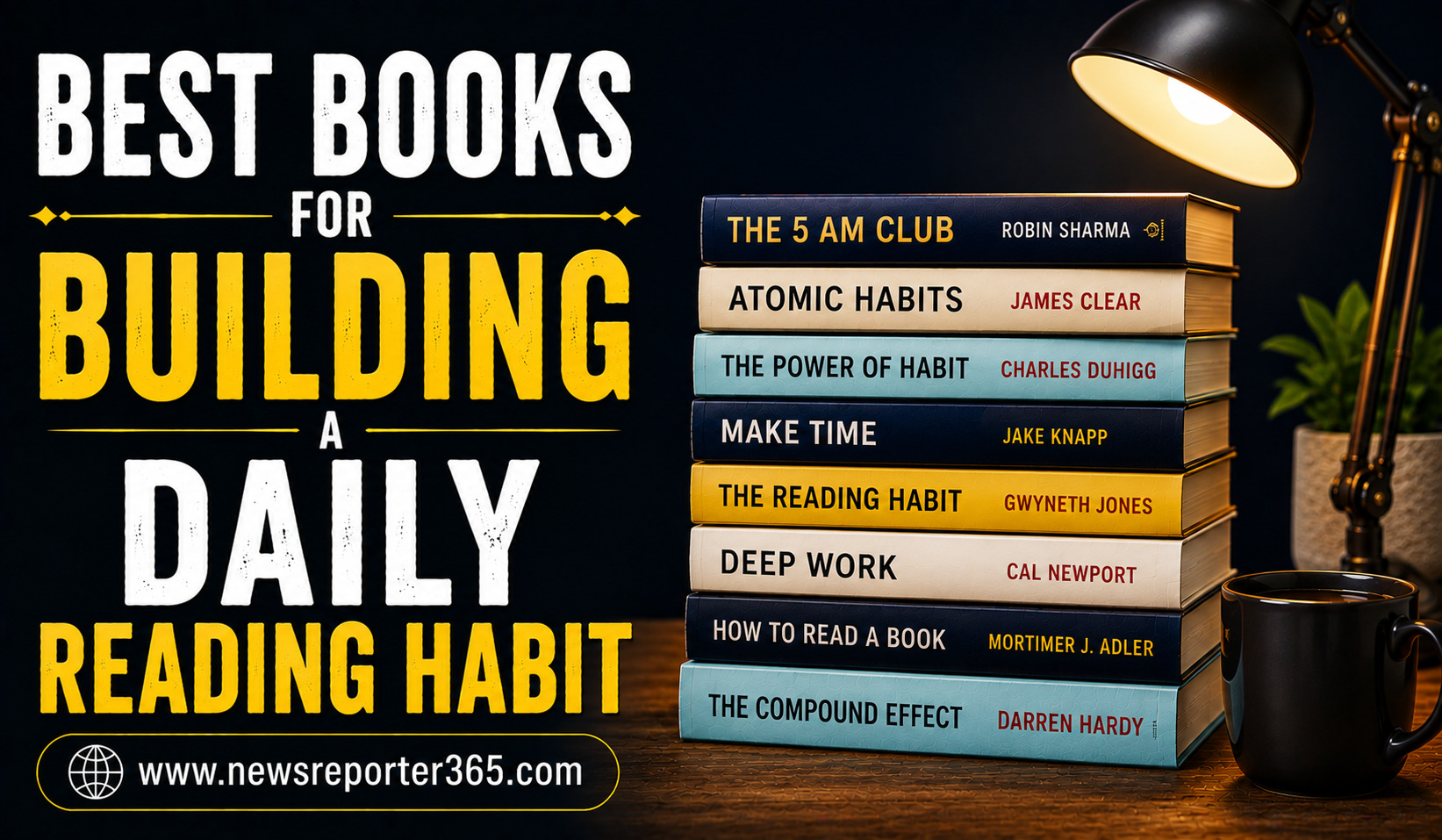
Building a daily reading habit sounds simple: choose a book, open it, and read every day. Yet many people struggle to turn that intention into a consistent routine. Busy schedules, social media, entertainment, work, and everyday responsibilities can quickly push reading to the bottom of the priority list.
The good news is that you do not need to become a bookworm overnight. The right books can make reading enjoyable enough that you naturally want to return to them each day. Choosing accessible, engaging books is especially important when you are trying to establish consistency.
Whether you are starting from scratch or attempting to return to reading after a long break, this guide explores some of the best types of books to choose, along with specific titles that can help make daily reading easier and more enjoyable.
Why the Right Book Matters When Building a Reading Habit
A common mistake is beginning a reading habit with a book that feels like homework. Perhaps it is extremely long, difficult to understand, or simply outside your interests. When every reading session feels like an obligation, skipping the next session becomes easy.
An enjoyable book creates the opposite effect. You become curious about what happens next, want to spend time with the characters, or look forward to discovering another idea. That natural curiosity can turn reading from a task into a habit.
When selecting your first few books, consider your current attention span rather than your ideal attention span. A 200-page novel that you actually finish is more valuable for habit-building than an ambitious 700-page book that remains unfinished.
Best Books for Beginners Who Want to Read Every Day
The Alchemist by Paulo Coelho
The Alchemist is often recommended to readers who want a relatively short and accessible novel. Its straightforward storytelling makes it easy to pick up even when you are not accustomed to reading regularly.
The book follows a young shepherd who travels in search of a treasure and discovers lessons about ambition, uncertainty, courage, and personal purpose along the way. Its simple structure makes it suitable for short daily reading sessions.
The Little Prince by Antoine de Saint-Exupéry
Despite its compact size, The Little Prince offers plenty to think about. The story is easy to read, but its themes surrounding friendship, responsibility, loneliness, love, and human behavior give it depth.
Because it is short, it can provide an early confidence boost to someone who has struggled to finish books. Completing a book can be surprisingly motivating when you are trying to establish a new habit.
Tuesdays with Morrie by Mitch Albom
If you prefer nonfiction or reflective writing, Tuesdays with Morrie can be an excellent choice. The book explores conversations between a former student and his professor, focusing on relationships, priorities, aging, kindness, and the meaning of life.
Its conversational style makes it approachable, while its relatively short chapters make daily reading feel manageable.
Books That Keep You Turning the Pages
Once you have started reading regularly, the best way to maintain momentum is often to choose books that create strong curiosity.
Harry Potter and the Philosopher’s Stone by J.K. Rowling
A highly engaging story can make reading sessions feel effortless. Harry Potter and the Philosopher’s Stone introduces readers to a magical world filled with friendship, discovery, school life, challenges, and adventure.
The narrative is especially useful for habit-building because each chapter encourages you to continue. If you enjoy fantasy and imaginative storytelling, a book like this can make the transition from occasional reading to daily reading much easier.
The Hunger Games by Suzanne Collins
For readers who prefer fast-paced fiction, The Hunger Games offers a strong combination of suspense, action, and emotional tension.
Its quick-moving plot encourages readers to find out what happens next. This is particularly useful when your biggest problem is not a lack of time but a lack of motivation.
The Hobbit by J.R.R. Tolkien
The Hobbit is another strong option for readers who enjoy adventure and fantasy. The journey of Bilbo Baggins combines humor, danger, friendship, and exploration.
Although the book introduces a richly developed world, its central adventure keeps the story approachable. It can also serve as a gateway to longer fantasy novels for readers who eventually want to take on more challenging books.
Books That Encourage Personal Growth
Reading does not always have to be about escaping into fictional worlds. Some books can encourage you to think about your routines, decisions, goals, and relationships.
Atomic Habits by James Clear
Atomic Habits is a natural choice for anyone interested in building better routines. Its central idea is that small improvements repeated consistently can produce significant results over time.
For someone trying to develop a reading habit, the principles can be applied directly. Instead of deciding to read for two hours every day, you might begin with ten pages or ten minutes. The goal is to make reading so manageable that there is little resistance to starting.
The Power of Habit by Charles Duhigg
Another useful choice is The Power of Habit, which examines how habits develop and how patterns of behavior can be changed.
Reading this type of book while building a reading routine can create an interesting feedback loop. You are learning about habits while simultaneously practicing one.
Deep Work by Cal Newport
Modern distractions are one of the biggest obstacles to sustained reading. Deep Work explores the value of focused attention and reducing distractions while working on demanding tasks.
Although the book is not specifically about reading, its ideas can be applied to creating uninterrupted reading sessions. Putting your phone away and giving a book your complete attention can make even 20 minutes of reading feel much more productive.
Choose Books According to Your Reading Personality
There is no universal book that will magically turn everyone into a daily reader. Your choice should match the way you naturally enjoy consuming stories and information.
| If you enjoy… | Try… |
| Adventure | Fantasy or action novels |
| Real-life experiences | Memoirs and biographies |
| Practical knowledge | Self-improvement books |
| Mystery | Crime and detective fiction |
| Emotional stories | Literary fiction |
| Short reading sessions | Essays and short stories |
Understanding your preferences is more important than following popular reading lists. If you love mysteries, there is no reason to force yourself to begin with philosophy. If you enjoy biographies, you may find novels less motivating.
How to Make Reading Part of Your Everyday Routine
The book itself is only one part of developing a reading habit. Your environment and schedule matter just as much.
Start by choosing a consistent time. You might read after breakfast, during your commute, during a lunch break, or before going to bed. A fixed reading period reduces the need to decide when you will read every day.
Keep your book easy to access. If it is sitting inside a drawer while your phone is beside you, the phone will probably win. Put your book on your desk, bedside table, or another place where you will naturally see it.
A simple daily routine might look like this:
- Choose a specific reading time.
- Put your phone on silent or keep it away.
- Read for at least 10–20 minutes.
- Stop at a natural point or continue if you are enjoying the book.
- Record your progress if tracking motivation helps you.
The objective is consistency, not perfection. Missing one day does not mean the habit has failed. Simply return to the routine the next day.
Do Not Make Your Reading Goal Too Difficult
Many new readers make the mistake of setting an impressive target. They decide to read 50 books in a year without considering how much time they realistically have.
A smaller goal is often more effective. Reading ten pages each day may appear insignificant, but it adds up. At roughly 300 pages per month, you could finish several average-length books over the course of a year.
You can increase your reading time naturally once the habit becomes established. There is no need to begin with an ambitious schedule.
Mix Short and Long Books
Another useful strategy is alternating between books of different lengths and difficulty levels. After completing a demanding nonfiction book, you might choose a short novel or collection of stories.
This prevents reading fatigue and gives you regular opportunities to finish books. Finishing something can create a sense of progress that motivates you to begin another title.
You can also combine formats. Reading a physical book at night and listening to an audiobook while traveling or exercising can help you consume more books without forcing additional hours into your schedule.
Frequently Asked Questions
What is the best book to start a daily reading habit?
There is no single answer, but The Alchemist, The Little Prince, and Tuesdays with Morrie are approachable choices for beginners. The best starting point is a book that genuinely interests you and does not feel intimidating.
How many minutes should I read every day?
Start with 10 to 20 minutes if you are new to daily reading. Once reading becomes automatic, you can gradually increase the duration. Consistency is more important than spending a large amount of time on a single day.
Should I read one book at a time?
You can, but you do not have to. Some readers enjoy keeping a novel for bedtime and a nonfiction book for daytime reading. Having options can prevent boredom and make it easier to continue reading.
What should I do if I lose interest in a book?
Give yourself permission to stop. If you repeatedly avoid picking up a book, it may simply not be the right choice for you. Try another genre or a shorter title rather than abandoning your reading habit altogether.
Is reading every day better than reading for several hours once a week?
For habit formation, daily reading is generally easier to maintain because repetition helps establish a routine. Even a short daily session can be more useful for building consistency than one long reading session followed by several days without reading.
Final Thoughts
Building a daily reading habit is less about finding the world’s greatest book and more about finding books that make you want to read again tomorrow.
Start with something accessible, interesting, and enjoyable. Keep your daily target small enough that you can maintain it even on busy days. As your confidence grows, explore longer books, more complex subjects, and unfamiliar genres.
Most importantly, do not treat reading as a race. A good reading habit should add something positive to your day. Whether you read ten pages before bed or spend an entire Sunday afternoon with a novel, every session is a step toward becoming a more consistent reader.
The perfect reading routine is not the one that looks impressive. It is the one you can continue.