

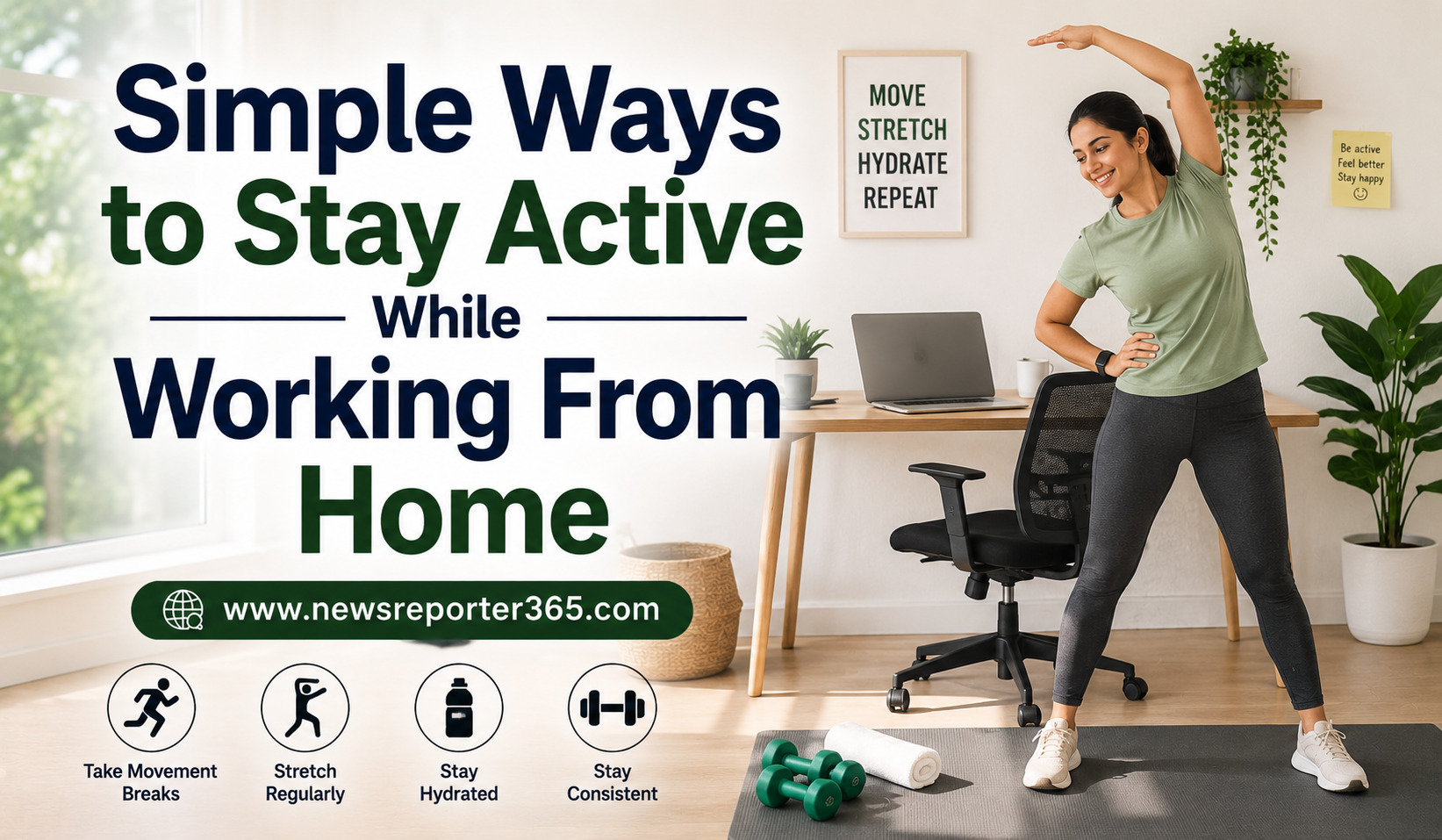
Working from home has changed the way millions of people manage their professional and personal routines. Remote work offers flexibility, eliminates daily commuting and can make it easier to manage household responsibilities. At the same time, spending most of the day at a desk can quietly reduce physical activity. Long meetings, extended screen time and short breaks can turn an otherwise productive workday into hours of sitting.
Staying active while working from home does not necessarily require a gym membership or a complicated workout schedule. Small movements throughout the day can make a meaningful difference. From taking short walking breaks to stretching between meetings, simple changes can help people build more movement into their regular routine without disrupting their work.
Why Staying Active During Remote Work Matters
When people work in an office, movement often happens naturally. Walking to a meeting room, getting a cup of coffee, using the stairs or travelling to and from work can add activity to the day. At home, many of these movements disappear.
A person may wake up, walk a few steps to their workspace and remain there for several hours. Even when someone exercises before or after work, extended periods of sitting can still dominate the rest of the day.
Regular movement can help support general fitness, mobility and energy levels. It can also provide a useful mental break from demanding tasks. A few minutes away from the screen may help workers return to their tasks feeling refreshed rather than mentally exhausted.
The goal is not to turn every workday into a fitness programme. Instead, the focus should be on reducing long periods of inactivity and making movement a normal part of the working routine.
Start the Day With Movement
One of the easiest ways to become more active while working from home is to avoid starting the day immediately at the desk. A short morning walk, gentle stretching or a few minutes of bodyweight movement can help create a clear transition between personal time and work time.
Morning movement does not need to be intense. Walking around the neighbourhood, performing simple mobility exercises or even doing household chores can get the body moving before work begins.
For people who struggle to maintain a separate workout routine, this approach can be particularly useful. Instead of waiting for a large block of free time, they can use small windows of opportunity throughout the day.
Turn Short Breaks Into Active Breaks
A five-minute break does not always have to mean checking social media or looking at another screen. It can become an opportunity to stand up and move.
After completing a task, workers can walk around the room, stretch their legs or refill their water bottle. These small actions may appear insignificant individually, but repeating them throughout the workday can substantially increase overall movement.
A useful approach is to connect movement with existing habits. For example, after finishing a meeting, stand up and walk for a few minutes before starting the next task. This makes activity easier to remember because it becomes part of the workflow rather than another item on a long to-do list.
Simple Active Break Ideas
- Walk around the house for a few minutes.
- Perform gentle shoulder, neck and leg stretches.
- Refill your water bottle while walking around.
- Stand while taking a short phone call.
Walk During Phone Calls
Phone calls can create an easy opportunity for movement. If a meeting does not require a camera or computer screen, walking while talking may be possible.
Instead of sitting at the desk during a routine audio call, workers can walk around their home or, where appropriate, step outside. Even a short walk can break up a long period of sitting.
Of course, this depends on the nature of the conversation. Important meetings requiring concentration, note-taking or screen sharing may still require sitting at the workstation. The idea is simply to identify calls where movement will not interfere with work.
Create a Walking Routine Around Meetings
Remote workers often have several online meetings scheduled throughout the day. These meetings can be used to establish a simple movement routine.
For example, someone might take a five-minute walk immediately after every major meeting. Another person may walk before joining a call or use the time between two meetings to move around the house.
This approach works because it connects physical activity with an existing part of the working schedule. Rather than asking, “When will I exercise today?” the person already has specific moments when movement can happen.
Try Desk-Friendly Exercises
People working from home can also introduce simple exercises without leaving their workspace. Depending on individual fitness levels and available space, movements such as chair squats, calf raises, standing leg lifts and wall push-ups can be performed during short breaks.
These activities should be approached gradually, particularly by people who are not accustomed to exercise. The purpose is to add movement, not to turn a work break into an exhausting workout.
A few repetitions performed several times during the day can be easier to maintain than attempting a long session when energy and time are limited.
Improve Your Work-From-Home Workspace
The physical setup of a home office can influence how often someone moves. A workspace that encourages people to remain seated for hours may contribute to an inactive routine.
If possible, workers can alternate between sitting and standing. A height-adjustable desk can make this easier, although it is not essential. Even without specialised equipment, changing position regularly can help break up prolonged sitting.
The computer monitor should be positioned comfortably, and the chair should provide appropriate support. The objective is to create a workspace that allows comfortable movement rather than forcing the body into one position for the entire day.
Small Workspace Changes
- Keep frequently used items slightly away from the desk so you need to stand to reach them.
- Place your water bottle where you need to get up regularly to refill it.
- Consider alternating between sitting and standing when practical.
- Keep enough open space for simple stretching.
Use Household Chores as Movement Opportunities
Working from home means household tasks are often close by. Instead of seeing every chore as an interruption, some activities can become opportunities to move.
Folding clothes, cleaning a room, watering plants or organising shelves involves standing and walking. These activities do not replace structured exercise, but they can contribute to daily movement.
Short household tasks can also be useful between work sessions. For example, after completing a project task, a person could spend a few minutes tidying the workspace before returning to the computer.
This approach makes movement feel less separate from everyday life and can be particularly helpful for people with unpredictable work schedules.
Make Lunch Breaks More Active
Lunch is another opportunity to step away from the desk. Eating lunch while continuing to work may save a few minutes, but it also removes a valuable chance to change position and mentally disconnect.
After eating, a short walk can be an easy way to add movement to the middle of the day. People who cannot go outside can simply walk around their home or spend a few minutes doing light stretching.
A proper break can also create a clearer separation between the first and second half of the working day. This can be useful for maintaining concentration when afternoon work begins.
Set Realistic Movement Goals
One reason people struggle with exercise is that they set goals that are difficult to maintain. Someone who has been inactive for months may decide to exercise for an hour every day, only to abandon the plan after a busy week.
A better strategy is to begin with achievable targets. This could mean taking several short walking breaks each day or standing up regularly between tasks.
Once the habit becomes comfortable, the amount of activity can gradually increase. The most effective routine is often the one that can be maintained consistently rather than the one that looks impressive on paper.
Use Technology as a Reminder
Technology can sometimes contribute to sedentary behaviour, but it can also be used to encourage movement. Calendar reminders, phone alarms and activity trackers can remind workers to stand, stretch or walk.
A reminder is particularly useful for people who become deeply focused on their work and lose track of time. Instead of relying entirely on memory, a simple notification can create a regular cue to move.
However, reminders should remain practical. Too many notifications can become distracting, so workers should choose a schedule that fits naturally into their working pattern.
Take the Stairs and Walk Short Distances
When working from home, people may have fewer opportunities to use stairs or walk to nearby destinations. Small decisions can help bring some of that movement back.
If a shop is within a comfortable walking distance, walking instead of driving can add activity. Similarly, choosing stairs when practical can turn routine travel into a small movement opportunity.
These choices may seem minor, but physical activity often comes from many small actions rather than one large workout.
Build an After-Work Transition
One challenge of remote work is that the boundary between professional and personal life can become unclear. A person may finish work and immediately move from the desk to the sofa.
Creating an active end-of-work routine can provide a useful transition. A short walk after shutting down the computer, a few minutes of stretching or a simple home workout can signal that the working day has ended.
This routine can also help prevent work from extending unnecessarily into the evening. Once the workday is finished, physically leaving the workspace can create a stronger psychological separation.
Easy Ways to Add More Movement
- Take a short walk before starting work.
- Stand up during suitable phone calls.
- Walk for a few minutes after lunch.
- Stretch between long periods of computer work.
How Much Movement Should You Aim For?
There is no single routine that works for every remote worker. Fitness level, age, work schedule, available space and personal preferences all influence how much activity is realistic.
Instead of focusing only on a daily workout, it can be useful to think about movement across the entire day. A person who spends eight hours at a desk can benefit from adding several short periods of activity, even if they also complete a separate workout.
The key is consistency. Building regular movement into everyday habits is more practical for many people than depending entirely on occasional intense exercise sessions.
| Part of the Workday | Simple Activity |
| Before work | Short walk or stretching |
| Morning break | Walk around the house |
| Between meetings | Stand and move |
| Lunch break | Short walk after eating |
| Afternoon | Light stretching or desk exercises |
| After work | Walk or home workout |
Make Movement Social
Staying active can become easier when other people are involved. Remote workers can schedule walking calls with colleagues when appropriate, take a walk with family members during breaks or participate in online fitness sessions with friends.
A social element can provide motivation and make movement more enjoyable. It can also reduce the feeling that physical activity is another task that must be completed alone.
For workplace teams, occasional walking meetings or short movement challenges can encourage employees to take breaks without affecting productivity, provided participation remains voluntary and suitable for the work environment.
Avoid the All-or-Nothing Approach
A busy workday does not have to mean a completely inactive day. If someone misses a planned workout, that does not mean the entire day’s effort is lost.
A person can still take a few short walks, stretch between tasks or complete some household activities. Similarly, an unexpectedly free day does not require an extremely intense workout.
The most sustainable approach is flexible. Some days may include a full exercise session, while other days may contain only short periods of movement. Both can be part of a healthy routine.
Conclusion
Staying active while working from home does not have to involve complicated workout plans or significant changes to the working day. The most effective approach can be as simple as standing regularly, walking during suitable calls, taking active breaks and creating a habit of moving between tasks.
Remote work offers flexibility, and that flexibility can be used to create a healthier daily routine. A short morning walk, an active lunch break or a few minutes of movement between meetings can gradually add up over the course of a week.
The goal is not to make every minute of the workday physically demanding. It is to avoid spending the entire day in one position and make movement a natural part of working from home. With realistic goals and consistent habits, even small changes can help create a more active and balanced workday.
Frequently Asked Questions
1. How can I stay active while working from home?
Start by adding short movement breaks throughout the day. Walking during suitable phone calls, stretching between meetings, taking a short walk after lunch and standing regularly can help reduce long periods of sitting.
2. Do I need gym equipment to stay active at home?
No. Many simple activities, including walking, stretching, bodyweight exercises and household chores, require little or no equipment. The important factor is choosing activities that are safe and realistic for your fitness level.
3. How often should you take movement breaks while working from home?
It is a good idea to avoid sitting continuously for long periods. Try to stand up, stretch, or walk around briefly at regular intervals during the workday. Even short movement breaks between tasks or meetings can help break up prolonged sitting and make your work routine more active.
4. Is walking during a phone call a good way to exercise?
Walking during suitable audio calls can be a convenient way to add movement. However, it may not be appropriate for meetings requiring concentration, note-taking or screen sharing.
5. Can household chores count as physical activity?
Household chores involve standing, walking and other movements, so they can contribute to overall daily activity. They should complement, rather than necessarily replace, other forms of physical activity.