

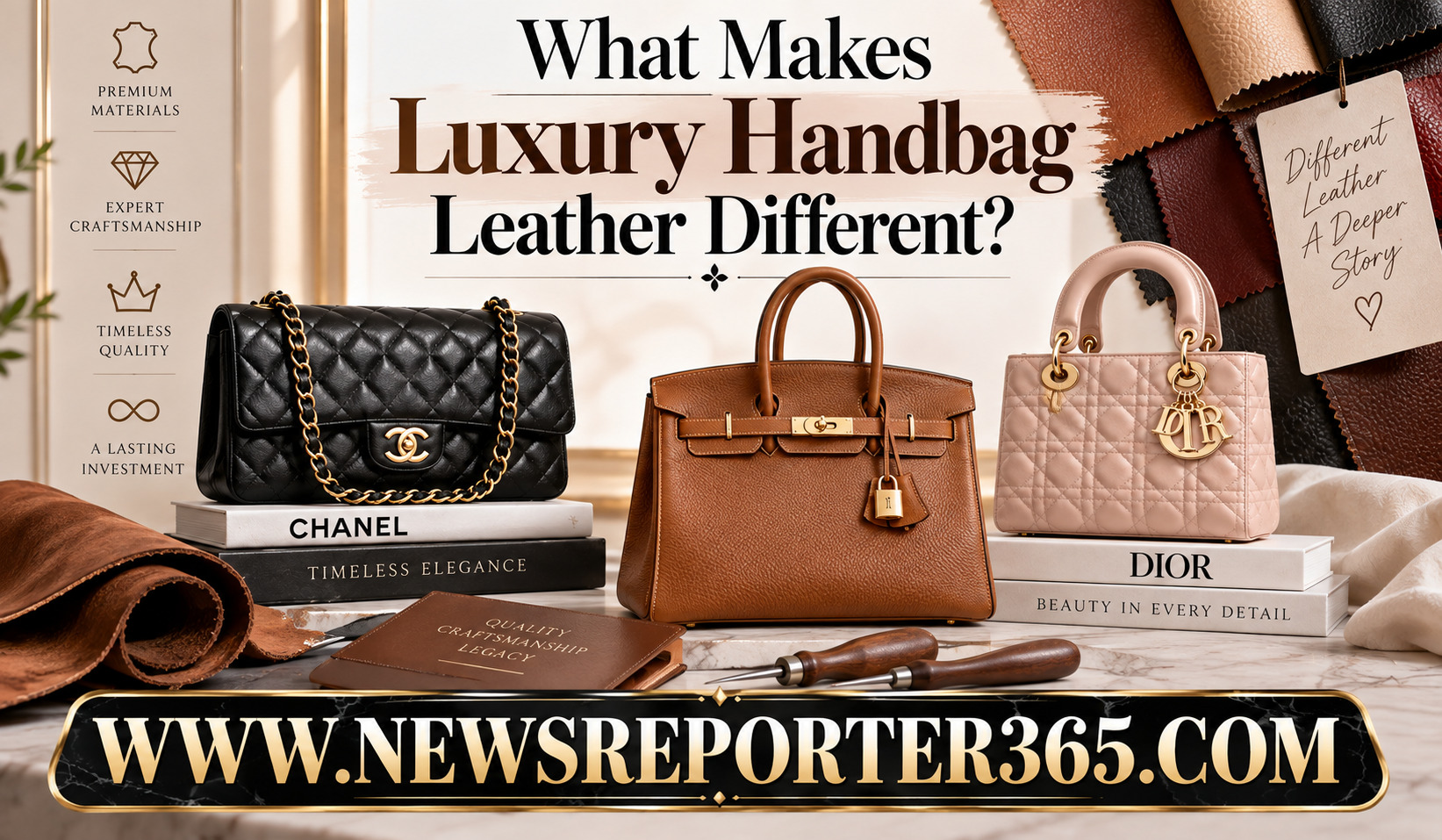
Introduction
You run your hand across a designer bag and instantly understand why the price tag looks the way it does. That reaction is not just marketing, it comes from real, measurable differences in luxury handbag leather compared to the material used in mass produced bags.
Leather quality affects everything from how a bag feels on day one to how it looks after a decade of use. This article breaks down what actually separates high quality leather from the rest, and how to recognize those differences yourself.
What Actually Separates Luxury Leather From Standard Leather
Not all leather starts from the same place, and the differences begin long before a hide ever reaches a workshop. Luxury leather generally comes from carefully raised animals, selected hides, and controlled tanning processes designed to preserve natural strength and texture.
Standard leather, by comparison, often comes from lower grade hides that include more natural imperfections, such as scars, insect bites, or uneven thickness. Manufacturers then rely on heavy processing, including sanding and thick coatings, to hide these flaws.
This difference in starting material shapes everything that follows. A high quality hide needs far less correction, which allows its natural texture and durability to remain intact throughout production.
Full Grain, Top Grain, and Why the Difference Matters
Leather grading plays a major role in determining both quality and price, yet many buyers never learn what the terms actually mean. Understanding these categories makes it much easier to judge a handbag’s true material quality.
Full Grain Leather
Full grain leather uses the entire outer layer of the hide, including its natural grain pattern, without sanding or buffing away imperfections. This layer is the strongest and most durable part of the hide, and it develops a rich patina as it ages.
Most top tier luxury handbags use full grain leather specifically because of this durability and aging quality. It typically costs more, since fewer hides qualify at this level without significant natural flaws.
Top Grain Leather
Top grain leather comes from the same layer as full grain but has its surface lightly sanded to remove minor imperfections. This process creates a more uniform appearance, though it sacrifices some of the natural texture and long term aging character found in full grain leather.
Many mid tier luxury bags use top grain leather as a practical balance between quality and cost. It remains a genuine, quality material, simply positioned a step below full grain in terms of durability and character.
Genuine and Bonded Leather
Genuine leather, despite the reassuring name, sits near the bottom of the quality scale and often comes from lower layers of the hide. Bonded leather goes even further, combining scraps and leather fibers bound together with adhesive, resulting in a material with little of the strength or aging quality found in higher grades.
How Tanning Methods Shape Quality
Tanning transforms raw animal hide into usable leather, and the method chosen significantly affects the final product’s feel, durability, and environmental impact. Luxury handbag production often favors specific tanning methods that prioritize quality over speed.
Vegetable Tanning
Vegetable tanning uses natural tannins extracted from tree bark and plant materials, a process that can take weeks to complete. This method produces leather with a firm structure and a distinctive ability to age into a rich patina over time.
Chrome Tanning
Chrome tanning uses chromium salts and completes the process far faster than vegetable tanning, often within a single day. While efficient, this method typically produces a softer, more uniform leather that ages differently and shows less natural character over time.
Luxury handbag makers often choose their tanning method based on the intended style and durability goals of a specific bag, rather than defaulting to whichever process is fastest or cheapest.
The Role of Sourcing and Hide Selection
Where a hide comes from, and how carefully it gets selected, plays a significant role in the final quality of luxury leather. Reputable tanneries inspect hides individually, rejecting those with excessive scarring, uneven thickness, or poor fiber density.
A few sourcing factors that affect quality:
- The age and breed of the animal, which affects hide thickness and fiber structure.
- The living conditions of the animal, since scarring often comes from rough terrain or insect exposure.
- The specific section of the hide used, since some areas naturally offer denser, more consistent fibers than others.
Luxury brands often work directly with select tanneries, sometimes maintaining long term relationships that span decades. This consistency allows brands to maintain a recognizable leather quality across collections and years of production.
Why Luxury Leather Ages Better Over Time
One of the clearest signs of quality leather is how it changes with use rather than simply wearing out. High quality leather develops what is known as patina, a gradual darkening and softening that many collectors consider a desirable, almost decorative effect.
What Causes Patina to Develop
Patina forms through a combination of natural oils from handling, exposure to light, and the leather’s own aging chemistry. Full grain and vegetable tanned leathers tend to develop the richest, most attractive patina, since their natural fiber structure remains largely intact.
Lower quality leather, especially heavily coated or bonded types, generally does not age the same way. Instead of developing character, it tends to crack, peel, or simply look worn down rather than improved by time.
This aging difference explains why certain luxury handbags remain desirable and functional decades after their original purchase. The leather itself becomes part of the bag’s ongoing story rather than a material that simply degrades.
How to Recognize Quality Leather Yourself
Learning to judge leather quality does not require professional training, though it does require paying attention to a few specific details. These checks work well whether shopping in person or evaluating a bag through detailed photos.
Practical ways to assess leather quality:
- Look closely at the grain pattern, since natural variation suggests full grain leather rather than a uniform printed texture.
- Press gently on the surface to see how it responds, since quality leather typically springs back rather than staying dented.
- Smell the material, since genuine, well tanned leather carries a distinct natural scent different from synthetic alternatives.
- Check the edges of straps and panels, since quality leather often shows a slightly textured, natural edge rather than a perfectly uniform painted one.
I always tell people to trust their hands as much as their eyes when evaluating leather. A slightly imperfect, natural feeling hide is often a better sign than one that looks flawless and slightly too uniform.
Key Takeaways
- Grading matters significantly: Full grain leather offers the highest durability and best aging potential.
- Tanning method shapes character: Vegetable tanning produces richer aging compared to faster chrome tanning.
- Sourcing affects consistency: Careful hide selection reduces flaws and improves overall quality.
- Patina signals genuine quality: Well made leather develops character with age rather than simply wearing out.
- Simple checks reveal a lot: Grain pattern, smell, and edge finishing all offer clues to real leather quality.
FAQs
Is full grain leather always better than top grain leather?
Generally yes for durability and aging, though top grain still offers solid quality at a more accessible price.
Does genuine leather actually mean high quality?
No, genuine leather is often a lower grade material despite the reassuring sound of the name.
Why does vegetable tanned leather cost more than chrome tanned leather?
It requires a much longer, more labor intensive process, which raises both time and production costs.
Can leather quality really be judged by smell?
Yes, natural leather carries a distinct scent that synthetic or heavily treated materials typically lack.
Does higher quality leather always mean a stiffer feel?
Not necessarily, since quality depends more on fiber structure and tanning than simple stiffness alone.
Conclusion
Understanding luxury handbag leather changes how you evaluate a bag, moving beyond brand names toward the actual material driving long term value. Grading, tanning method, and careful sourcing all combine to create leather that looks better and lasts longer with age. Learning to recognize these differences turns every future handbag purchase into a far more informed decision.