

Introduction
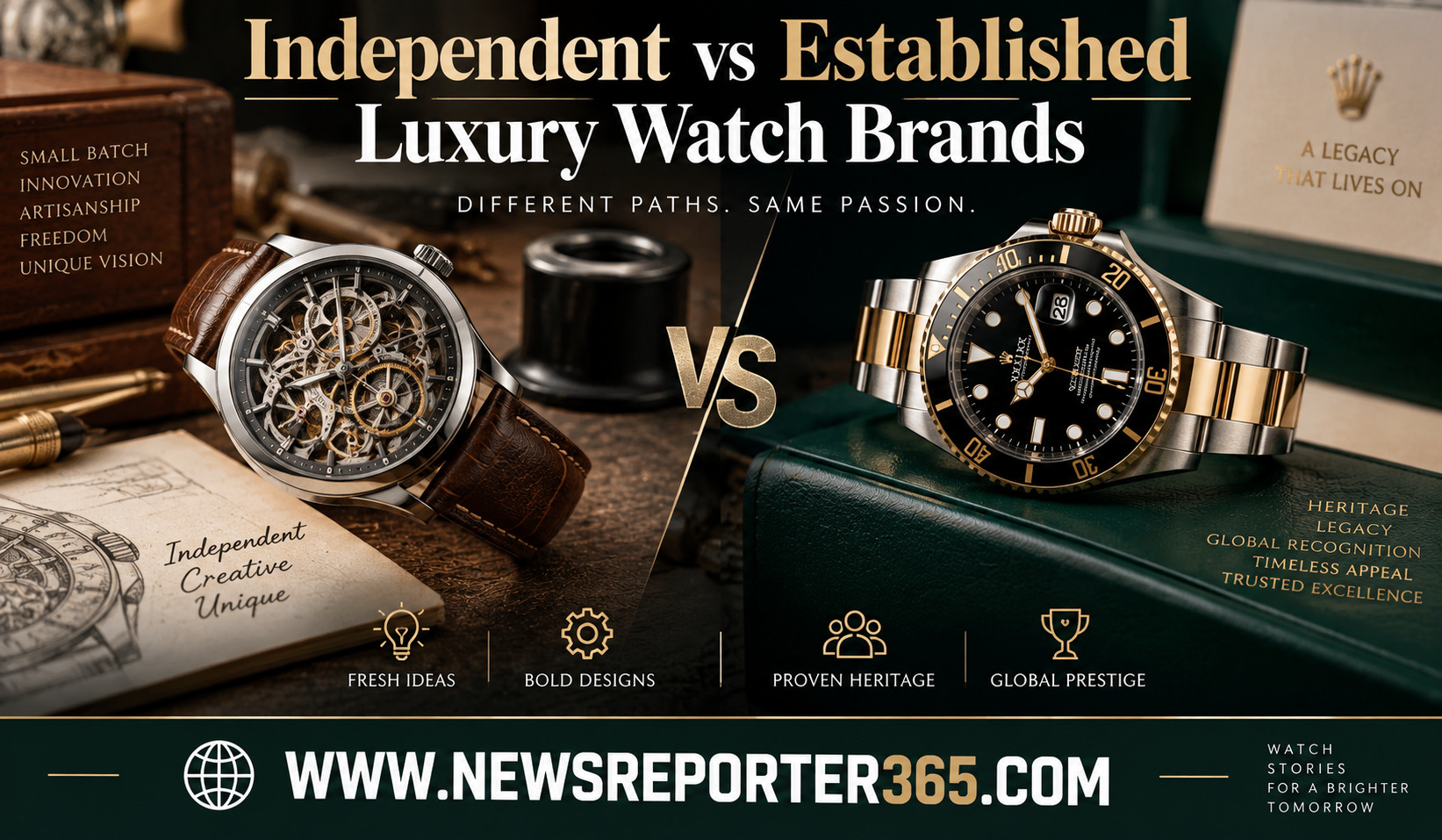
A tiny workshop with only a handful of watchmakers can sometimes outshine a centuries-old brand in pure creativity. This is the strange appeal at the center of choosing between independent and established luxury watch brands. Established houses offer history, infrastructure, and instant recognition, while independent makers offer rare designs and closer ties to the people who built them. This article compares both paths across the factors that matter most to buyers.
Defining the Two Categories
Established brands are large houses with long histories, wide distribution, and significant manufacturing scale. Many operate their own factories, movement production, and global boutique networks.
Independent brands are typically small, often family-run or founder-led, producing far fewer watches each year. Some independents still buy or modify outside movements rather than building every part in-house.
Heritage and Brand Recognition
Established brands carry decades or even centuries of history behind their name. This recognition often matters at resale, at social events, and in casual conversation with strangers.
Independent brands rarely offer that instant recognition. Their value comes from a smaller, more dedicated following that understands the story behind the name.
| Factor | Established Brands | Independent Brands |
| Public recognition | High | Low to moderate |
| Production history | Decades to centuries | Often a few years to a few decades |
| Boutique network | Global | Limited or online only |
| Waitlists for popular models | Common | Sometimes even longer relative to output |
Production Scale and Exclusivity
Established brands produce anywhere from thousands to hundreds of thousands of watches per year. This scale keeps supply steady, though popular references can still face long waitlists.
Independent brands often produce only dozens or a few hundred pieces annually. That scarcity alone makes owning one feel more personal and exclusive.
- Established brands: Wide availability, though hit models still see waitlists
- Independent brands: Extremely limited production, often sold out for years in advance
- Established brands: Consistent year-over-year output
- Independent brands: Output can shrink or grow based on founder capacity
Design Freedom and Innovation
Independent brands answer to fewer stakeholders, which often allows bolder design choices. A small founder-led team can experiment without needing approval from a large corporate structure.
Established brands tend to protect a consistent design language built over generations. Innovation still happens, though it usually moves more carefully to protect a brand’s existing identity.
Where Innovation Often Appears First
Many unusual case shapes, movement finishes, and complications first appear from independent makers before larger brands adopt similar ideas years later.
Resale Value and Market Demand
Established brands generally hold value more predictably due to wide demand and easy comparison across the secondary market. Buyers can quickly check what similar models have sold for recently.
Independent brands can behave unpredictably in resale. A hyped independent piece might sell for far above retail, while a lesser known one may struggle to find a buyer at all.
Service, Support, and Longevity
Established brands typically offer wide service networks with authorized centers across many countries. Replacement parts are usually easier to source decades later.
Independent brands may rely on the founder or a small team for all servicing. This can mean longer wait times and more risk if the brand eventually closes.
Key Takeaways
- Recognition: Established brands offer instant recognition, while independents rely on niche reputation.
- Scale: Independent brands produce far fewer pieces, creating natural scarcity.
- Design: Independent makers often move faster on bold or unusual designs.
- Resale: Established brands hold value more predictably than most independents.
- Support: Established brands offer stronger long-term service networks.
FAQs
Are independent luxury watch brands a safe investment?
Independent brands can be riskier investments due to less predictable resale demand and smaller service networks.
Do independent brands make their own movements?
Some independent brands build movements entirely in-house, while others modify outside calibers to fit their design.
Why do some independent watches cost more than established brand models?
Extreme scarcity and hand finishing can push independent watch prices above similar established models.
Is it harder to get a watch serviced from a small independent brand?
Servicing an independent brand watch can take longer since fewer authorized centers typically support it.
Do established brands ever collaborate with independent watchmakers?
Some established brands do collaborate with independent designers or workshops, though this remains uncommon.
Conclusion
Choosing between an independent and established luxury watch brand depends on whether a buyer values recognition and stability or rarity and creative freedom. Established houses offer steady infrastructure and easier resale, while independents reward collectors chasing something few others own. Neither path is objectively better, since both can lead to a deeply satisfying purchase.