

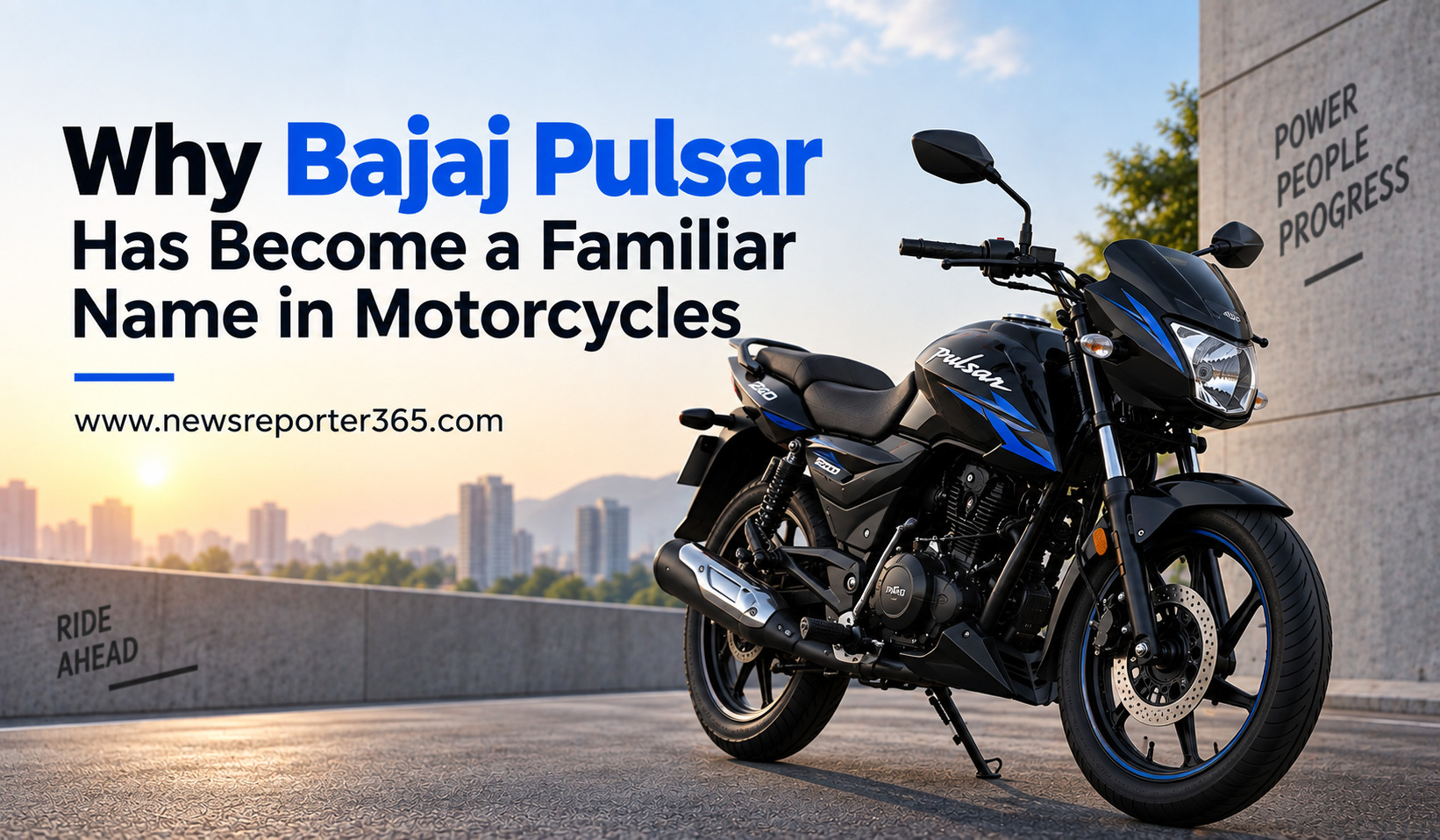
Few motorcycle names have become as recognizable on Indian roads as Bajaj Pulsar. From busy city streets to highways and college parking lots, the Pulsar name has remained closely associated with sporty styling, accessible performance and everyday usability. What makes the brand particularly interesting is that it has managed to remain relevant while motorcycle preferences, technology and competition have changed significantly.
The Pulsar story began in 2001, when performance motorcycles were still developing as a mainstream category in India. Instead of treating motorcycles only as practical transportation, Bajaj Auto positioned Pulsar around a stronger emotional appeal. Its muscular styling, responsive performance and distinctive road presence helped create a new identity for Indian riders.
More than two decades later, the Pulsar range covers several engine capacities and riding preferences. From smaller commuter-friendly models to performance-oriented motorcycles, the family continues to give the Pulsar name a broad presence in the Indian motorcycle market.
A Motorcycle Brand That Helped Change Indian Riding Culture
Before the Pulsar became popular, many Indian motorcycle buyers primarily looked at fuel efficiency, reliability, affordability and practicality. These factors remain important, but Pulsar helped demonstrate that a motorcycle could offer everyday usefulness while also having a sporty personality.
The early Pulsar models introduced a muscular appearance that stood apart from conventional commuter motorcycles. The large fuel tank design, sporty graphics and distinctive headlamp treatment gave the motorcycle a stronger visual identity.
That approach connected particularly well with younger riders. A motorcycle was no longer simply a means of getting from one place to another. It could also represent personal style and enthusiasm for riding.
This combination became one of the foundations of the Pulsar brand and continues to influence how newer models are designed.
A Wide Range for Different Types of Riders
One major reason the Pulsar name remains familiar is the size of its product family. Bajaj Auto has developed different Pulsar motorcycles rather than relying on a single model to serve every customer.
The current range includes motorcycles such as the Pulsar 125, Pulsar 150, Pulsar NS125, Pulsar N160, Pulsar NS160, Pulsar NS200, Pulsar N250, Pulsar 220F, Pulsar RS200 and Pulsar NS400Z.
This spread gives the brand a presence across multiple price and performance categories. A rider looking for a relatively accessible 125cc motorcycle can consider a Pulsar 125 or NS125, while someone wanting stronger performance can move toward models such as the NS200, N250 or NS400Z.
The important point is that these motorcycles still share a recognizable Pulsar identity. Their designs and equipment differ, but the underlying idea of combining everyday riding with a sportier character remains consistent.
The Pulsar 125 and 150 Keep the Core Identity Alive
The smaller-displacement Pulsar motorcycles are particularly important because they connect the performance-oriented image of the brand with everyday motorcycle requirements.
The current Pulsar 125 uses a 124.38cc engine and produces 11.8 PS, while the Pulsar 150 uses a 149.50cc engine producing 14 PS. These figures place them in a practical range for riders who want more personality than a basic commuter motorcycle without immediately moving into larger-engine categories.
The latest generation of the Pulsar 125 and Pulsar 150 also shows how Bajaj is updating established products rather than simply relying on their historical reputation. Modern equipment, refreshed styling and updated technology help these motorcycles remain relevant to contemporary buyers.
The Pulsar 150, in particular, has become one of the most recognizable names in India’s 150cc motorcycle segment. Its long presence has allowed several generations of riders to become familiar with the model.
Sporty Performance Without Making the Range Too Specialized
Another important part of the Pulsar formula is balance. The brand has traditionally tried to provide performance without making its motorcycles too difficult to use every day.
For example, the Pulsar N160 combines a sporty naked-bike appearance with a 164.82cc engine. The NS160 takes a more aggressive approach, while the NS200 moves further toward performance with its 199.5cc liquid-cooled engine and 24.5 PS output.
This progression allows riders to move through the Pulsar family as their expectations change.
A new rider may begin with a smaller model and later become interested in a more powerful motorcycle. Because the Pulsar name remains consistent across different models, that transition does not require moving away from a familiar brand identity.
Styling Has Always Been an Important Part of Pulsar
The visual character of Pulsar motorcycles has played a major role in their popularity.
Muscular fuel tanks, sharp bodywork, sporty graphics and distinctive lighting have traditionally helped Pulsar motorcycles stand out in traffic. While the exact design language has changed over the years, Bajaj has generally avoided making the motorcycles look completely disconnected from their predecessors.
That continuity matters. A successful motorcycle name needs to be recognizable without becoming visually outdated.
Newer Pulsar motorcycles increasingly use LED lighting, digital displays, Bluetooth connectivity and other modern features. These additions make the motorcycles feel contemporary while maintaining the aggressive styling associated with the family.
Technology Has Become Part of the Pulsar Experience
Modern motorcycle buyers expect more than engine performance. Features related to connectivity, safety and convenience are increasingly influencing purchasing decisions.
Bajaj has responded by introducing technology across different Pulsar models. Depending on the motorcycle and variant, buyers can find features such as digital instrument displays, Bluetooth connectivity, navigation functions, multiple riding modes, ABS-related technology and modern lighting systems.
The updated Pulsar NS200, for example, combines its performance-focused engine with features such as an all-LED lighting setup, Bluetooth-enabled digital instrumentation, navigation and ABS modes.
This evolution demonstrates how the Pulsar brand has moved with changing expectations instead of depending entirely on its earlier reputation.
Performance Remains Central to the Brand
Despite becoming more technology-focused, Pulsar has not abandoned its performance identity.
The Pulsar N250 uses a 249.07cc engine producing 24.5 PS and 21.5 Nm, giving riders a noticeable step up from the smaller Pulsar models. At the higher end, the Pulsar NS400Z brings a 349.13cc engine and 40 PS output into the family.
These motorcycles show how the Pulsar name has expanded beyond its traditional 100cc-to-150cc-era identity.
Performance also contributes to the emotional appeal of the brand. Buyers often choose a motorcycle not only because it can complete a daily commute but because they enjoy the acceleration, handling and overall riding experience.
Pulsar has consistently attempted to occupy that space between practicality and excitement.
Everyday Usability Still Matters
Although the Pulsar brand is associated with sporty motorcycles, everyday usability remains an important reason for its popularity.
Indian riders frequently need one motorcycle to handle commuting, errands, weekend travel and occasional highway trips. A motorcycle that is enjoyable but inconvenient for routine use can become difficult to justify.
The Pulsar range addresses this by offering different engine sizes, riding positions and equipment levels. Riders can select a motorcycle according to their commuting distance, performance expectations and budget rather than being restricted to a single type of machine.
This flexibility has helped the Pulsar name stay relevant to a wide audience.
Strong Brand Recognition Across Generations
One of Pulsar’s biggest advantages is familiarity. A motorcycle brand that has remained visible for more than two decades naturally becomes part of popular motorcycle culture.
Many current riders grew up seeing older Pulsar motorcycles on Indian roads. Some may have learned to ride on one, while others may have owned an earlier-generation model before moving to a newer motorcycle.
That familiarity creates a strong connection between generations. New models can benefit from the reputation built by older ones, while updated technology and styling allow the brand to attract younger customers.
Bajaj Auto has stated that more than 20 million Pulsar motorcycles have been sold across more than 40 countries, demonstrating how far the name has travelled beyond its original Indian market.
Why Pulsar Continues to Matter
The success of Bajaj Pulsar is not based on one particular motorcycle or one specification. It comes from the brand’s ability to evolve while maintaining a recognizable identity.
Pulsar helped make sporty motorcycles more accessible to Indian buyers. It introduced a stronger focus on styling and performance, built a broad family of motorcycles and gradually adopted modern technology as customer expectations changed.
Today’s Pulsar range is very different from the motorcycle that appeared in 2001, but the central idea remains familiar: give riders a motorcycle that feels exciting while remaining suitable for real-world use.
That balance explains why the Pulsar name continues to appear so frequently on Indian roads. It has moved from being a new performance motorcycle brand to becoming a long-established part of India’s motorcycle culture.
As the market continues to change, the challenge for Bajaj will be to keep the Pulsar identity recognizable while adapting to new expectations around technology, safety, efficiency and performance. If its history is any indication, evolution rather than complete reinvention is likely to remain an important part of the Pulsar formula.