

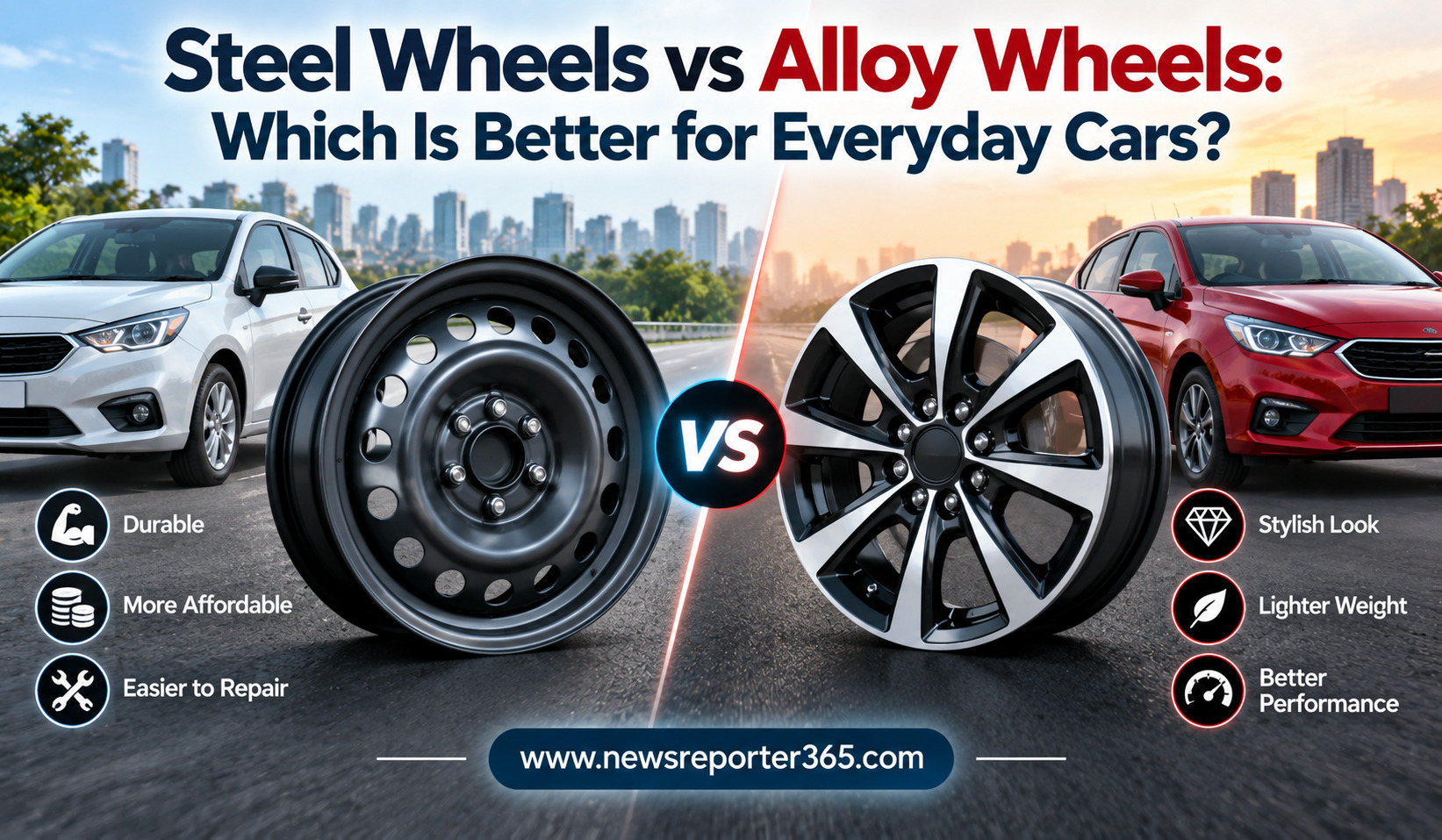
When buying a new car or replacing wheels, most buyers focus on tyre size, design and price. However, the type of wheel fitted to a car can also affect its appearance, driving experience, maintenance and long-term ownership costs. Steel wheels and alloy wheels are the two most common options found on everyday passenger cars, and both have their own advantages.
Steel wheels are generally known for their toughness and affordability, while alloy wheels are popular for their lighter construction, attractive designs and premium appearance. The better choice ultimately depends on how the car is used, road conditions, driving habits and the buyer’s priorities.
What Are Steel Wheels?
Steel wheels are made primarily from pressed or stamped steel. They have a simple construction and are commonly used on entry-level cars, commercial vehicles and models designed with practicality and cost control in mind. Their straightforward appearance is often covered by plastic wheel covers, although some cars use exposed steel wheels for a more utilitarian look.
One of the biggest advantages of steel wheels is durability. They can handle rough roads, potholes and occasional impacts reasonably well. Instead of cracking under a heavy impact, steel wheels are more likely to bend. In many cases, a bent steel wheel can be repaired, depending on the severity of the damage and the condition of the wheel.
Their relatively low manufacturing cost also makes them attractive to car manufacturers and budget-conscious owners. Replacement steel wheels are generally less expensive than comparable alloy wheels, which can make them practical for drivers who frequently travel on poor roads.
What Are Alloy Wheels?
Alloy wheels are generally manufactured using aluminium alloys, sometimes combined with other metals to achieve the required strength and characteristics. They are available in a wide range of designs and finishes, making them particularly popular among buyers who want their cars to look more premium.
The major advantage of alloy wheels is that they can be lighter than equivalent steel wheels. Reducing unsprung weight can have an effect on how a car responds to steering and road surfaces. Depending on the specific wheel and vehicle, lighter wheels may contribute to more responsive handling and a slightly more refined driving experience.
Alloy wheels also provide manufacturers with greater freedom in creating different spoke patterns and shapes. This is why they are common on mid-range, premium and sportier variants.
Steel Wheels vs Alloy Wheels: Key Differences
The choice becomes easier when the major differences are considered together.
| Feature | Steel Wheels | Alloy Wheels |
| Construction | Pressed/stamped steel | Aluminium-based alloy |
| Weight | Generally heavier | Generally lighter |
| Appearance | Simple and practical | More stylish and premium |
| Durability | Strong and suitable for rough use | Strong but can be more vulnerable to severe impacts |
| Repairability | Often easier to repair after bending | Cracks may require replacement depending on damage |
| Cost | Usually more affordable | Generally more expensive |
| Design options | Limited | Wide variety |
| Corrosion resistance | Requires protective coating | Generally good, depending on finish and material |
| Handling | Adequate for everyday use | May offer more responsive handling due to lower weight |
The actual difference varies between individual wheel designs. A lightweight steel wheel and a heavy alloy wheel, for example, may not have the weight difference buyers expect.
Why Steel Wheels Make Sense for Everyday Driving
For many everyday cars, steel wheels remain a practical choice. Drivers who regularly encounter potholes, broken roads, construction zones or uneven surfaces may appreciate their robust nature. This is particularly relevant for vehicles used for frequent commuting or longer journeys where avoiding road damage is not always possible.
Cost is another important consideration. Steel wheels are generally cheaper to manufacture and replace. For owners who prioritise practicality over styling, spending extra money on alloy wheels may not provide enough benefit.
Steel wheels can also be useful as a second set of wheels. Some owners keep one set for regular use and another for specific seasonal or tyre requirements. Their relatively simple design makes cleaning and maintenance straightforward.
However, the heavier construction can be a disadvantage. Extra unsprung weight may affect steering response and ride characteristics, although the difference may not be significant for an ordinary city car.
Why Alloy Wheels Are Popular With Modern Car Buyers
Alloy wheels have become increasingly common because modern buyers often expect a combination of appearance, comfort and driving appeal. Even a relatively affordable car can look significantly different when equipped with well-designed alloy wheels.
Weight is another factor. Lighter wheels can reduce unsprung mass, which can help suspension components respond more effectively to changes in the road surface. This may contribute to sharper steering and improved handling, particularly when the vehicle is driven enthusiastically.
There is also a practical benefit in terms of heat management. Alloy materials generally conduct heat well, which can help transfer heat away from the braking system. The real-world effect depends on the wheel’s design, brake system and driving conditions, so buyers should not expect a dramatic braking improvement simply by switching wheels.
The biggest drawback is usually cost. Alloy wheels can be considerably more expensive to purchase and replace. Certain designs may also be more difficult or expensive to repair after serious impact damage.
What About Potholes and Rough Roads?
Road conditions should be one of the most important factors when choosing between steel and alloy wheels. A driver who frequently travels on roads with potholes needs to consider both wheel strength and tyre sidewall.
Steel wheels have a reputation for handling impacts well because they tend to bend rather than crack. This does not mean they are impossible to damage, but their construction can make them suitable for demanding everyday conditions.
Alloy wheels can also be durable, but their response to a severe impact depends on the alloy composition, wheel design, tyre profile and intensity of the impact. A strong impact can result in bending or cracking. Low-profile tyres can further increase the risk of wheel damage because they provide less sidewall cushioning.
Therefore, buyers should consider the complete wheel-and-tyre combination rather than judging the wheel material alone.
Do Alloy Wheels Improve Fuel Economy?
The relationship between wheel type and fuel economy is often misunderstood. Alloy wheels can be lighter than steel wheels, but not every alloy wheel is lightweight. Large-diameter alloys with wider tyres can actually add weight and increase rolling resistance.
For everyday driving, tyre choice, tyre pressure, vehicle weight, driving style and traffic conditions generally have a much greater influence on fuel consumption than the simple choice between steel and alloy wheels.
If fuel efficiency is a priority, buyers should compare the actual weight and tyre specifications rather than assuming that every alloy wheel will automatically deliver better mileage.
Maintenance and Long-Term Ownership
Steel wheels are generally straightforward to maintain. Their appearance may not be as sophisticated as alloys, but they can be practical for owners who are more concerned about function than styling.
Alloy wheels require a little more attention if the owner wants to preserve their finish. Brake dust, road grime and harsh cleaning chemicals can affect certain finishes over time. Scratches and kerb damage can also be more visible, especially on polished or painted designs.
For both types, regular inspection is important. A damaged wheel can affect tyre sealing, vehicle stability and overall driving safety. Any wheel that has suffered a major impact should be checked professionally.
Which Wheel Type Is Better for City Cars?
For a typical city car used mainly for commuting, there is no universal winner. Steel wheels can be the smarter option when affordability, durability and easy replacement are the main priorities. They are especially suitable for drivers who regularly travel over poor-quality roads.
Alloy wheels may be preferable for buyers who want better styling, potentially lower unsprung weight and a more premium appearance. They can make a significant visual difference without changing the basic character of the vehicle.
The decision should also take the original manufacturer specifications into account. Changing wheel diameter, width or offset without proper consideration can affect handling, tyre clearance and ride quality.
Four Things to Check Before Choosing Wheels
Before buying a different set of wheels, drivers should consider:
- Wheel size and compatibility: Make sure the diameter, width, bolt pattern, offset and centre bore are appropriate for the vehicle.
- Road conditions: Frequent potholes and rough roads may make a durable wheel-and-tyre combination more important than appearance.
- Total cost: Consider the price of the wheels, tyres, installation, balancing and possible future replacement.
- Tyre profile: A suitable tyre sidewall can be just as important as the wheel material when it comes to comfort and protection from road impacts.
Steel or Alloy Wheels: Which Should You Choose?
Steel wheels are a sensible choice for buyers who want dependable performance without spending heavily on styling. They work particularly well for practical everyday cars and drivers who regularly encounter rough roads.
Alloy wheels are better suited to buyers who place greater importance on appearance, wheel design and potentially sharper driving characteristics. They can give a car a more premium look and, when lightweight, may offer benefits in handling.
For most everyday drivers, however, the best choice is not simply about steel versus alloy. The correct wheel size, tyre specification, wheel quality and compatibility with the vehicle are equally important.
Conclusion
Steel and alloy wheels each have a clear place in the automotive market. Steel wheels offer affordability, simplicity and dependable durability, while alloy wheels provide styling flexibility, potentially lower weight and a more premium appearance.
For drivers dealing with rough roads and looking to keep ownership costs under control, steel wheels can be an excellent practical solution. For those who want their everyday car to look more stylish and potentially feel more responsive, quality alloy wheels can be worth considering.
Ultimately, the best wheel is one that matches the vehicle, tyres, road conditions and owner’s priorities rather than simply choosing the more expensive option.
FAQs
Are steel wheels stronger than alloy wheels?
Steel wheels are generally known for their ability to withstand impacts and bend rather than crack. However, strength varies according to the design and construction of both steel and alloy wheels.
Do alloy wheels improve car performance?
Lightweight alloy wheels can reduce unsprung weight and may improve steering response and handling. However, the actual benefit depends on the wheel, tyre and vehicle setup.
Are steel wheels cheaper than alloy wheels?
In most cases, steel wheels are more affordable to purchase and replace. This makes them attractive for budget-focused vehicle owners.
Are alloy wheels suitable for pothole-filled roads?
They can be, but the wheel design and tyre profile are important. A severe pothole impact can damage any wheel, and low-profile tyres may provide less protection.
Which wheels are better for fuel efficiency?
Neither material automatically guarantees better fuel economy. Actual wheel weight, tyre width, tyre pressure, vehicle weight and driving conditions all influence efficiency.