

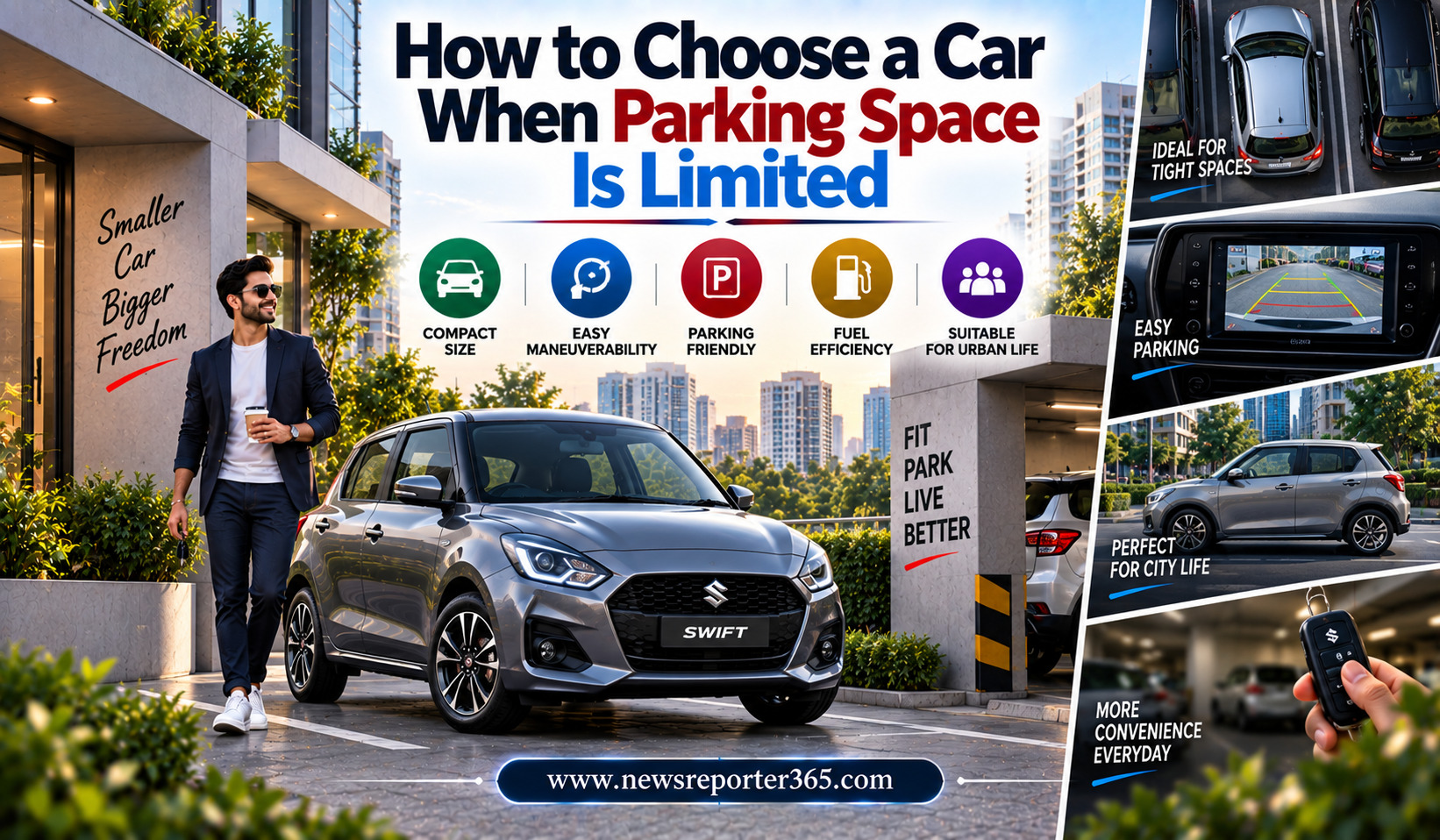
Buying a car is often influenced by price, mileage, safety and features, but parking space can be just as important for urban buyers. In many cities, homes and apartment complexes have limited parking areas, while older buildings may have narrow ramps, tight turns and compact parking slots. Choosing a vehicle without considering these restrictions can make everyday ownership unnecessarily difficult.
For buyers with limited parking space, the smallest car available is not automatically the best choice. Dimensions, turning radius, visibility, door opening space, camera systems and seating requirements all need to be considered together. A vehicle that fits into the parking slot on paper may still be inconvenient if there is barely enough room to open the doors or manoeuvre around it.
The right approach is to measure the available space first and then select a vehicle that provides a comfortable margin rather than choosing a car that fits exactly.
Start by Measuring Your Parking Space
Before visiting a showroom, car buyers should understand the actual dimensions of their parking area. Measuring only the length and width of the marked slot may not be enough. Pillars, walls, neighbouring vehicles, ramps and entrance gates can reduce usable space.
The width of the entrance should also be checked. A parking slot may appear sufficiently large once the car is inside, but a narrow entrance can make entering and exiting difficult. Apartment parking areas can be particularly challenging because of sharp turns and pillars positioned close to the driving path.
It is sensible to measure the space at several points and note any permanent obstacles. Buyers should also consider how much room they need to comfortably enter and exit the car.
Vehicle Dimensions Matter More Than Appearance
A car’s overall length and width are two of the most important specifications for buyers dealing with restricted parking. However, these numbers should be considered alongside the vehicle’s shape.
A long bonnet, wide rear section or bulky body can make a vehicle feel larger than its official dimensions suggest. Compact hatchbacks are often easier to position in tight areas because of their shorter overall length, while some compact SUVs may provide a higher driving position without becoming excessively large.
Width deserves particular attention. A vehicle that is only slightly wider than another model can feel significantly more difficult to park in a narrow slot, especially when neighbouring cars are parked close by.
Don’t Ignore the Turning Radius
Turning radius is an often-overlooked specification that can make a major difference in tight parking areas. A car with a smaller turning circle can require fewer steering adjustments when navigating narrow ramps, basement corners or confined spaces.
This is particularly important for apartment parking where the driver may need to make several turns before reaching the assigned slot. A car that is easy to manoeuvre can reduce stress and lower the risk of touching walls or nearby vehicles.
During a test drive, buyers should therefore assess how naturally the car responds at low speeds rather than focusing only on its highway behaviour.
Check the Car’s Visibility From the Driver’s Seat
Good visibility can make a compact parking space much easier to handle. Drivers should be able to judge the front corners, rear section and sides of the vehicle as accurately as possible.
A high seating position can provide a better view of surrounding traffic and obstacles, although it does not automatically make a vehicle easier to park. Large windows and well-positioned mirrors can be equally valuable.
The shape of the bonnet also matters. If the front end is difficult to judge from the driver’s seat, parking may require greater dependence on sensors and cameras.
Parking Sensors and Cameras Can Add Confidence
Modern parking technology can make a significant difference when space is limited. Rear parking sensors are useful for detecting obstacles that may not be visible through the mirrors. A reversing camera provides a clearer view behind the vehicle and can help the driver position it more accurately.
Some cars offer front sensors and 360-degree camera systems as well. These can be particularly helpful in tight apartment parking spaces where obstacles may exist on multiple sides.
However, electronic systems should be treated as assistance rather than a replacement for careful observation. Camera views can contain blind spots, while sensors may not detect every small or low obstacle.
Door Opening Space Is Often Forgotten
A vehicle can technically fit into a parking slot and still be unsuitable if there is not enough room to open the doors.
This becomes especially important in apartment parking areas where cars are parked close together. A wide vehicle may leave very little space between neighbouring cars, making it difficult for passengers to get out.
Families with children or older passengers should pay particular attention to this issue. A few extra centimetres of width can make a meaningful difference to everyday convenience.
Sliding doors can be useful in certain vehicle categories, but most conventional cars use hinged doors. Buyers should therefore check the real-world door opening area during the test drive or showroom visit.
Compare Important Dimensions Before Buying
| Factor | Why It Matters | What Buyers Should Check |
| Overall width | Determines side clearance | Compare with parking-slot width |
| Overall length | Affects front and rear clearance | Leave additional margin |
| Turning radius | Helps with tight turns | Check manufacturer specifications |
| Ground clearance | Important for ramps | Consider basement entry and exit |
| Wheelbase | Influences manoeuvrability | Consider tight corners |
| Front/rear overhang | Affects positioning | Check walls and pillars |
| Camera and sensors | Improve parking awareness | Test image quality and coverage |
| Door opening space | Affects passenger access | Check neighbouring-car clearance |
Hatchbacks Can Be Practical for Tight Parking
For buyers whose primary concern is parking, hatchbacks remain an attractive option. Their compact dimensions and relatively short body can make them easier to position in restricted spaces.
Many modern hatchbacks also offer useful technology, comfortable interiors and sufficient boot space for everyday urban requirements. For a buyer who mainly travels to work, shops or local destinations, a compact hatchback may provide everything necessary without the larger footprint of an SUV.
That does not mean buyers should automatically avoid SUVs. Some compact SUVs offer manageable dimensions and a higher driving position. The important factor is the actual size of the vehicle rather than its body-style label.
Compact SUVs Need Extra Attention
SUVs have become increasingly popular, but even compact models can vary significantly in width and length. Buyers with limited parking should therefore avoid choosing an SUV based solely on its appearance or seating height.
A vehicle may be marketed as a compact SUV but still be wider than the car it replaces. Large wheels and broad body panels can also reduce the practical clearance available in a narrow parking space.
If an SUV is preferred, buyers should measure the parking area and compare the vehicle’s exact dimensions. A test drive through the actual type of parking environment can also provide valuable information.
Ground Clearance Can Matter in Basement Parking
Parking problems are not always related to width. Basement and stilt parking areas can have steep ramps, uneven surfaces or sharp transitions between levels.
A vehicle with extremely low ground clearance may scrape its underside while entering or leaving certain parking areas. On the other hand, excessive ground clearance is not necessary simply because parking is difficult.
Buyers should consider the slope and surface of their own parking area. A practical balance between ground clearance and overall dimensions is generally more useful than selecting a vehicle solely for maximum clearance.
Foldable Mirrors and Other Small Features Help
Small design features can become surprisingly useful when parking space is restricted. Electrically folding ORVMs can reduce the car’s effective width after parking and protect the mirrors from being accidentally hit by passing vehicles.
A remote-operated or powered tailgate can be convenient in some larger vehicles, although it is not essential for most buyers. Keyless entry and a good-quality reverse camera can also make daily parking routines easier.
The key is to distinguish between features that genuinely solve a parking problem and features that simply add to the equipment list.
Consider How You Will Enter and Exit the Car
Parking space should be evaluated from the driver’s perspective as well as the vehicle’s. A car might fit comfortably inside the slot but leave insufficient room for the driver to enter.
This is especially relevant when the parking space is positioned beside a wall or pillar. A driver may need to enter the car before moving it out, meaning the available side clearance becomes important every day.
Buyers should consider which side of the vehicle will normally be next to a wall and whether the driver’s door can open sufficiently. If possible, measuring the clearance with the driver’s door partially open can provide a better idea of real-world usability.
Think About Future Parking Conditions
A parking situation can change over time. A new neighbour may park a larger vehicle nearby, apartment parking arrangements may be reorganised, or a family may eventually purchase another car.
For this reason, choosing a vehicle that barely fits the current space is risky. Leaving some additional clearance provides greater flexibility.
Buyers should also consider whether the car will be parked at home, at the workplace and in public locations. A vehicle that fits only in one designated space may still be difficult to use elsewhere.
The Best Car Is the One That Fits Your Lifestyle and Space
Limited parking does not necessarily mean buyers have to compromise heavily on comfort or features. Modern compact cars can offer strong safety equipment, smartphone connectivity, automatic transmissions, good cabin space and useful parking technology.
The important step is to prioritise dimensions and manoeuvrability before becoming attracted to cosmetic features. A large touchscreen or premium interior cannot compensate for a vehicle that is difficult to park every day.
Before finalising a purchase, buyers should measure the parking space, compare the car’s dimensions, check its turning radius and test the parking sensors and cameras. It is also worth taking the vehicle into a similarly tight environment during the test drive if possible.
Final Word
Choosing a car when parking space is limited requires more thought than simply selecting the smallest vehicle. Width, length, turning radius, visibility, ground clearance and door-opening space can all influence everyday usability.
For urban buyers, a compact hatchback or appropriately sized compact SUV may provide a good balance between convenience and practicality. Parking sensors, cameras and folding mirrors can further reduce the stress of tight spaces, but they should complement careful driving rather than replace it.
Ultimately, the best vehicle is one that fits comfortably into the available space while still meeting the household’s requirements. Leaving a little extra room around the car can make ownership much easier than choosing a model that only just fits.
FAQs
1. What is the most important car dimension for a small parking space?
Width is particularly important because insufficient side clearance can make entering and exiting the vehicle difficult. Length and turning radius should also be considered.
2. Is a hatchback better than an SUV for limited parking?
Not always, but compact hatchbacks generally have a smaller footprint. Some compact SUVs can also work well if their dimensions suit the available parking space.
3. Does turning radius matter when choosing a car?
Yes. A smaller turning circle can make tight basement ramps, corners and parking manoeuvres easier.
4. Are 360-degree cameras worth having?
They can be useful when parking in very tight spaces because they provide a broader view around the vehicle. However, drivers should still check their surroundings manually.