

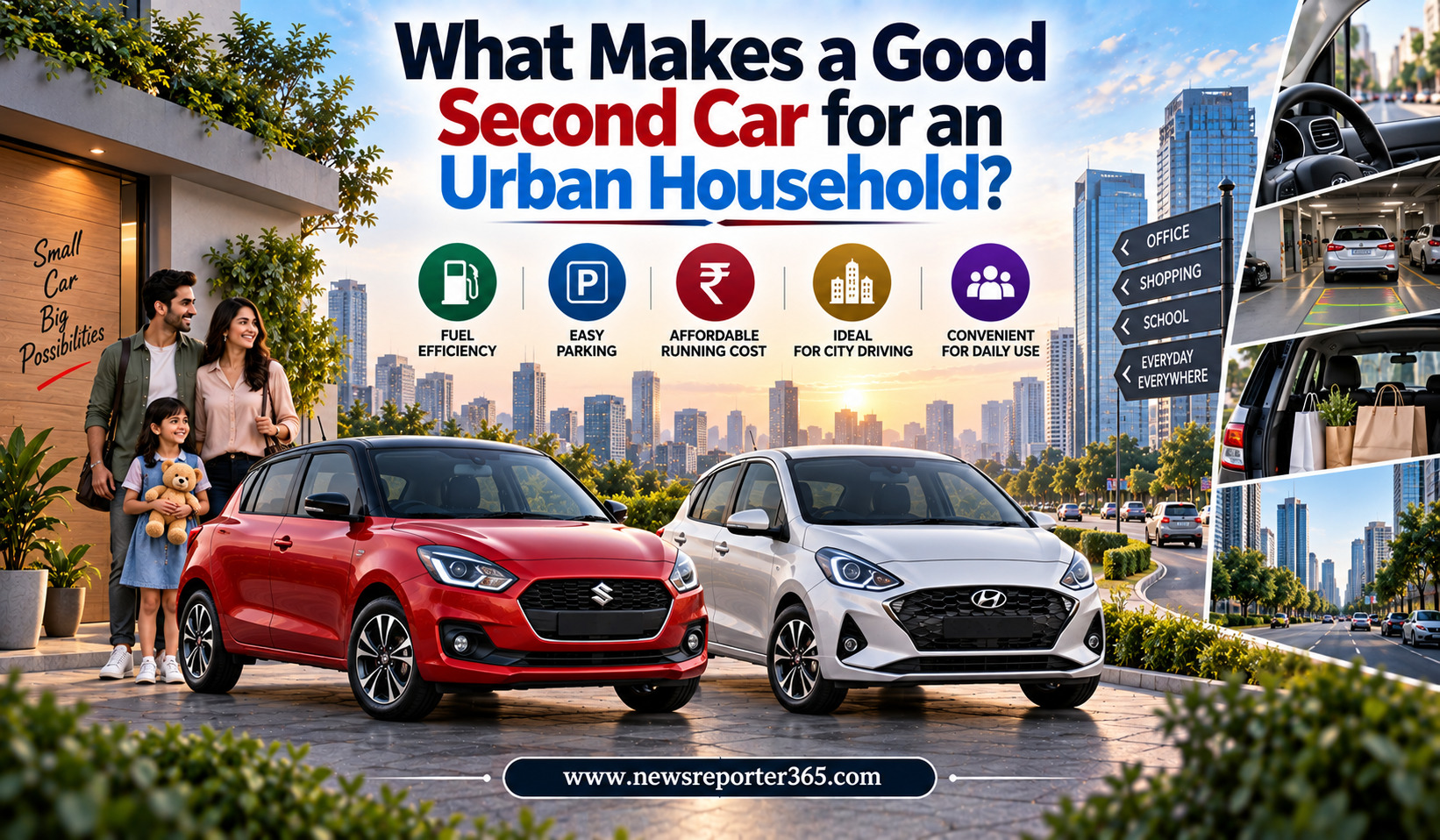
For many urban households, owning two cars is becoming less about luxury and more about convenience. Different family members may have separate office schedules, children may have school or college commitments, and daily errands can require frequent travel in different directions. A second car can make these routines easier, but choosing the right one requires a different approach from buying the family’s primary vehicle.
The ideal second car for an urban household does not necessarily need a large engine, premium equipment or a spacious seven-seat cabin. Instead, easy driving, compact dimensions, affordable running costs and dependable everyday performance can be more valuable. With city traffic becoming increasingly crowded, a smaller and easier-to-use vehicle can complement a larger family car particularly well.
Size Matters More for a Second City Car
One of the biggest advantages of having a dedicated second car is the ability to choose a smaller vehicle. Urban roads often involve congested lanes, tight parking spaces and crowded residential areas. A compact car can make these situations considerably easier to manage.
A smaller footprint can also make U-turns, lane changes and parking less stressful. For households where the primary car is an SUV or a large sedan, a compact hatchback, small SUV or similarly sized urban vehicle can provide a useful contrast.
However, size should not be considered in isolation. Extremely small cars may not offer enough boot space or rear-seat comfort for a family’s requirements. The better approach is to find a vehicle that remains easy to manoeuvre without becoming impractical for everyday family use.
Low Running Costs Can Make a Big Difference
A second car is another expense for a household. Apart from the purchase price, owners have to consider insurance, fuel or charging costs, servicing, tyres, parking and other ownership expenses.
This makes efficiency particularly important. A second vehicle that is primarily used for short city trips should ideally have predictable and manageable running costs. Petrol cars remain a familiar option, while CNG models can appeal to buyers who have convenient access to refuelling infrastructure. Electric cars can also work well as urban second vehicles when reliable home or workplace charging is available.
The right choice depends heavily on the household’s driving pattern. A car covering only a few kilometres each day may not justify a higher upfront cost purely for better efficiency. On the other hand, families with extensive daily usage may benefit more from prioritising lower energy or fuel consumption.
Easy Automatic Driving Is Useful in Traffic
Heavy traffic is one of the biggest challenges of urban driving. Constantly operating the clutch and gear lever can become tiring, particularly during long commutes.
For this reason, an automatic transmission can be an attractive feature in a second city car. It can make stop-and-go traffic easier and allow drivers to concentrate more on the road. Different automatic technologies offer different driving characteristics and ownership costs, so buyers should take a proper test drive before deciding.
A manual transmission can still make sense for households prioritising a lower purchase price or drivers who prefer greater control. However, for a vehicle specifically intended for urban convenience, an automatic can provide a meaningful improvement in everyday usability.
Parking Assistance Can Be a Major Advantage
Parking is another area where a second urban car can deliver practical benefits. Residential parking areas, shopping centres and busy commercial streets often provide limited space.
A reversing camera and parking sensors can make everyday manoeuvring easier. A 360-degree camera can provide additional visibility around the vehicle, although it is not essential for every buyer.
Good outward visibility can be just as important. Large windows, a manageable bonnet and a sensible driving position can make a compact vehicle easier to place in narrow spaces. Buyers should therefore evaluate visibility during the test drive instead of relying only on specifications.
Safety Should Never Be Compromised
Choosing a second car does not mean accepting lower safety standards. Even if the vehicle is primarily intended for short city trips, occupants remain exposed to traffic risks.
Essential safety equipment should remain a priority. Depending on the model and variant, buyers should look for features such as airbags, ABS with EBD, electronic stability control, seat-belt reminders and parking assistance.
A vehicle’s crash-test performance and structural safety can also be relevant when comparing options. Advanced driver assistance features may be useful, but they should be considered additional support rather than replacements for attentive driving.
Practicality Is Still Important
A second car may spend most of its time travelling through city streets, but that does not mean practicality can be ignored. Families may use the vehicle for grocery shopping, school runs, airport trips or weekend activities.
Boot capacity should therefore be assessed according to real requirements. A flexible rear seat can be especially useful when the car occasionally needs to carry larger items.
Interior storage is another small but useful consideration. Door pockets, cup holders, a centre-console compartment and convenient charging points can make daily use easier. These details may not appear particularly important in a showroom, but they can become valuable after months of regular driving.
Connectivity and Convenience Features
Modern urban drivers often depend on smartphones for navigation, communication and entertainment. Smartphone connectivity can therefore be more useful than some traditional premium features.
Android Auto and Apple CarPlay, Bluetooth, USB ports and steering-mounted controls can simplify daily journeys. A responsive infotainment system is generally more useful than a large display that is difficult to operate.
Other convenience features, such as keyless entry, push-button start, automatic climate control and electrically adjustable mirrors, can also improve everyday usability. Buyers should, however, prioritise features according to their budget rather than selecting an expensive variant simply to obtain a few additional conveniences.
Second Car: What Should an Urban Household Prioritise?
| Feature | Importance | Why It Matters |
| Compact dimensions | High | Easier to drive and park |
| Good fuel/energy efficiency | High | Controls recurring costs |
| Automatic transmission | High | Convenient in heavy traffic |
| Safety equipment | Very High | Important regardless of trip length |
| Rear camera and sensors | High | Helps with parking |
| Smartphone connectivity | Medium-High | Useful for navigation and communication |
| Comfortable seats | Medium-High | Helpful for regular commuting |
| Large boot | Medium | Important for family errands |
| 360-degree camera | Medium | Useful in tight parking areas |
| Premium audio/sunroof | Low-Medium | Lifestyle features rather than necessities |
Petrol, CNG or Electric: Which Works Best?
There is no universal answer when it comes to choosing a powertrain for a second car. Urban households should first consider how and where the vehicle will be used.
A petrol car can offer flexibility and widespread refuelling availability. It may be a straightforward choice for households that want to use the second car for both city trips and occasional longer journeys.
CNG can make sense for frequent urban drivers who have convenient access to CNG stations. However, buyers should consider boot-space compromises and the availability of refuelling facilities along their regular routes.
Electric vehicles can be particularly attractive as second cars for households with predictable city usage and access to home charging. An EV can work well for daily commuting and errands, but charging arrangements should be considered before purchase.
The Second Car Does Not Need to Duplicate the First
One common mistake is choosing a second car that performs exactly the same role as the primary vehicle. If the household already owns a large SUV for family trips, the second vehicle could instead focus on city convenience.
A compact hatchback or small urban car may be easier to park and less expensive to operate. Similarly, if the primary vehicle is a manual transmission, the second car could be an automatic for family members who spend more time in traffic.
The idea is to divide responsibilities between the two vehicles. One can handle long-distance journeys, larger family trips and luggage-heavy travel, while the other focuses on commuting and everyday errands.
Maintenance and Ownership Support Matter
The purchase price is only one part of the cost of owning a second car. Regular maintenance should be considered before making a decision.
Buyers should check service intervals, routine maintenance costs, tyre prices and the availability of service centres in their area. A vehicle with predictable servicing requirements can be easier to budget for.
Resale value may also matter. Household needs can change, and a second car may eventually be sold or replaced. A model with strong demand in the used-car market can potentially make the ownership cycle easier.
Avoid Buying More Car Than You Need
A second car is often purchased for convenience, so overspending can defeat its purpose. Features such as large sunroofs, premium audio systems, oversized wheels or elaborate interior lighting may look attractive, but they are not necessarily important for daily city use.
A sensible second car should provide the essentials without putting excessive pressure on the household budget. Buyers should calculate the complete monthly cost, including financing, fuel or electricity, insurance, maintenance and parking.
The most suitable option is therefore not always the cheapest car or the most feature-loaded model. It is the vehicle that performs its intended role efficiently while remaining comfortable and dependable.
Final Word
A good second car for an urban household should complement the primary vehicle rather than simply replicate it. Compact dimensions, easy parking, manageable running costs, strong safety equipment and convenient city driving characteristics can make a significant difference.
Before purchasing, families should consider who will drive the vehicle, how many kilometres it will cover, where it will be parked and whether it will be used only for city travel or occasional highway trips. Once these factors are clear, choosing the right size, powertrain and feature package becomes much easier.
For many urban households, the smartest second car may not be the biggest or most powerful option. It could simply be a practical vehicle that makes everyday travel easier, costs less to operate and fits naturally into the family’s routine.
FAQs
1. What is the ideal size for a second city car?
A compact hatchback, compact sedan or small SUV can work well. The best size depends on parking availability, family requirements and the amount of luggage normally carried.
2. Is an automatic transmission useful for a second car?
Yes. Automatic cars can be particularly convenient for frequent city driving and stop-and-go traffic.
3. Should a second car be electric?
An electric car can be a strong second-car option when most trips are within the city and the household has convenient access to charging.
4. Which features are most important in a second car?
Safety equipment, efficient running, compact dimensions, parking assistance, comfortable seats and smartphone connectivity should generally receive priority.
5. Is a small car safe for family use?
Size alone does not determine safety. Buyers should consider the vehicle’s safety equipment, structural performance and independent crash-test results where available.