

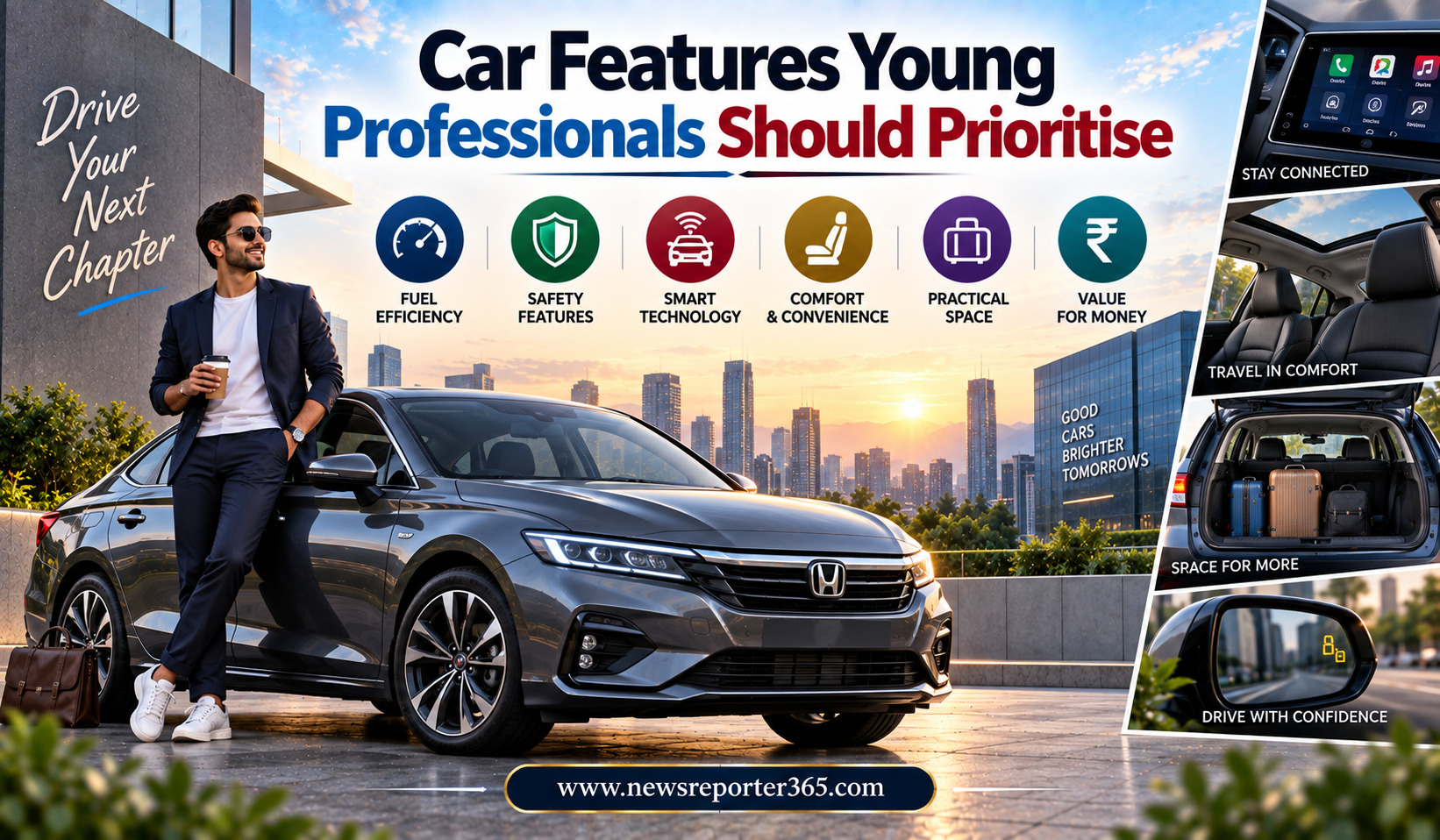
For young professionals, buying a car is no longer only about choosing a stylish model or a powerful engine. Daily commuting, weekend travel, traffic conditions, fuel expenses, connectivity and safety all influence the ownership experience. As modern cars become more technology-focused, buyers also have more features to consider than ever before.
A young professional may use the same car for office commuting during the week, long-distance trips at the weekend and occasional family travel. This makes practicality and convenience particularly important. Instead of paying extra for every available feature, buyers should focus on equipment that provides genuine value in everyday driving.
Safety Should Come Before Luxury
Safety is one of the most important areas young buyers should consider when selecting a car. Attractive interiors and large infotainment screens may make a vehicle appealing, but safety equipment can have a much more meaningful impact on ownership.
Features such as multiple airbags, electronic stability control, ABS with EBD, a rear parking camera and parking sensors should be considered essential rather than optional conveniences. A strong body structure and a good safety rating can also provide additional confidence during daily travel.
Some newer cars also offer advanced driver assistance features such as lane-keeping assistance, adaptive cruise control, autonomous emergency braking and blind-spot monitoring. These systems can be useful, particularly for professionals who regularly drive on highways. However, buyers should understand how these technologies work rather than selecting a vehicle simply because it has a long list of electronic features.
Connected Features Can Make Daily Driving Easier
Young professionals often depend heavily on smartphones, navigation applications and digital services. As a result, smartphone connectivity has become one of the most useful features in a modern car.
Wireless or wired Android Auto and Apple CarPlay allow drivers to access navigation, music, calls and compatible applications through the car’s infotainment system. This can be more convenient than relying on a separate phone holder for every journey.
A responsive touchscreen, Bluetooth connectivity, USB charging ports and steering-mounted controls can further improve usability. However, screen size should not be the deciding factor. A smaller system with quick responses and easy controls can be more useful than a large display that is complicated to operate.
Fuel Efficiency Matters for Regular Commuters
For professionals travelling to work every day, running costs can have a significant effect on the overall ownership budget. Fuel efficiency therefore deserves attention alongside the vehicle’s purchase price.
A car with reasonable mileage can help reduce monthly fuel expenses, especially for people covering long distances in city traffic. Buyers should look at real-world efficiency expectations instead of depending entirely on official test figures.
Engine size, transmission type, vehicle weight and driving conditions all influence fuel consumption. Automatic transmissions can be particularly attractive for city commuters because they reduce the effort required in stop-and-go traffic. However, the choice between manual, automatic, hybrid and electric powertrains should depend on the buyer’s driving pattern and charging or refuelling access.
Automatic Climate Control Is More Than a Premium Feature
India’s varied weather conditions make climate control an important part of everyday comfort. Automatic climate control can be particularly useful for professionals who spend significant time in traffic.
Instead of repeatedly adjusting the air-conditioning controls, the system maintains a selected cabin temperature. Rear AC vents can also be valuable when the vehicle is frequently used by passengers.
Ventilated seats, air purifiers and multi-zone climate control can improve comfort further, but they may not be essential for every buyer. Young professionals working with a fixed budget should first prioritise effective basic air-conditioning before spending more on premium comfort equipment.
Parking Assistance Can Reduce City Driving Stress
Urban driving can involve narrow roads, crowded parking areas and limited spaces. Parking assistance features can therefore provide considerable practical value.
Rear parking sensors and a reversing camera are particularly useful for everyday manoeuvring. A 360-degree camera can offer an even clearer view around the vehicle, although its usefulness depends on image quality and system calibration.
Young drivers should remember that electronic assistance does not replace careful driving. Cameras and sensors can have blind spots, particularly in poor weather or low-light conditions. These features should be treated as additional support rather than a substitute for checking the surroundings.
Storage and Practicality Should Not Be Ignored
A car may look impressive in a showroom but still become inconvenient if its cabin lacks useful storage. Young professionals often carry laptops, backpacks, bottles, documents and other everyday items, making interior practicality important.
A reasonably sized boot, useful door pockets, a centre-console storage area and a dedicated space for small electronic devices can make a difference over time. Rear-seat folding capability can also be useful for people who occasionally transport larger items.
Cabin space is another consideration. A compact car may be easier to park and cheaper to operate, while a larger vehicle may offer greater comfort for frequent highway journeys. The right balance depends on how the car will actually be used.
Features Worth Prioritising
Rather than selecting a car based on the number of features listed in its brochure, young professionals can divide equipment into essential, useful and optional categories.
| Feature | Importance for Young Professionals | Why It Matters |
| Multiple airbags | High | Adds occupant protection |
| Electronic stability control | High | Helps maintain vehicle control |
| ABS and EBD | High | Supports safer braking |
| Rear camera and sensors | High | Makes parking easier |
| Android Auto/Apple CarPlay | High | Improves navigation and connectivity |
| Good fuel efficiency | High | Helps control running costs |
| Automatic climate control | Medium-High | Improves everyday comfort |
| Cruise control | Medium | Useful during highway journeys |
| 360-degree camera | Medium | Helpful in tight parking spaces |
| Sunroof | Low-Medium | Mostly a comfort and lifestyle feature |
| Premium audio | Low-Medium | Useful for entertainment but not essential |
| Ambient lighting | Low | Primarily an interior styling feature |
ADAS: Useful, But Buyers Should Understand It
Advanced Driver Assistance Systems are increasingly appearing in vehicles across different price segments. For young professionals who frequently travel between cities, these systems can offer additional assistance.
Adaptive cruise control can maintain a set distance from the vehicle ahead, while lane-departure warning can alert the driver if the vehicle unintentionally moves out of its lane. Emergency braking systems can also assist in certain situations.
However, ADAS should not be treated as autonomous driving. The driver remains responsible for controlling the vehicle and monitoring the road. Buyers should also check whether the particular system works effectively in the traffic and road conditions where they normally drive.
Comfort Features That Can Improve Ownership
Once safety, practicality and running costs have been covered, buyers can consider additional comfort features. Push-button start, keyless entry, electrically adjustable mirrors, cruise control and steering-mounted controls can make regular journeys easier.
For professionals who spend several hours behind the wheel, seat comfort can be more important than flashy equipment. A well-designed driving position, adjustable steering, supportive seats and good visibility can reduce fatigue during longer trips.
Similarly, features such as a wireless phone charger can be convenient, but buyers should check whether the charging speed and phone compatibility suit their needs.
Don’t Overspend on Features You May Rarely Use
Modern cars can offer everything from panoramic sunroofs and powered tailgates to premium audio systems and elaborate interior lighting. While these features can enhance the ownership experience, they should not take priority over safety and practical equipment.
A young professional may have a limited monthly budget after considering the car loan, insurance, fuel, servicing and parking expenses. Spending more on unnecessary features can increase the purchase price without delivering equivalent everyday value.
A sensible approach is to first identify how the car will be used. Someone who spends most of the week in city traffic may value an automatic transmission, good fuel efficiency, parking assistance and smartphone connectivity. A person who frequently travels on highways may place greater importance on cruise control, comfortable seats, strong safety equipment and highway-oriented driver assistance.
Electric and Hybrid Features Are Becoming More Relevant
The growing popularity of electric vehicles and hybrids is also changing what young buyers consider important. An EV can offer quiet operation and potentially lower energy costs, but charging availability is an important part of the ownership decision.
Professionals living in apartments or travelling long distances should check charging access before choosing an electric vehicle. Home charging can make EV ownership considerably more convenient, while dependence on public chargers may require additional planning.
Regenerative braking, driving modes and connected vehicle applications can also become relevant for EV buyers. However, the same principle applies: technology should solve a practical problem rather than simply add to the specification sheet.
What Should Young Professionals Look for in a Car?
For most young professionals, the ideal car is one that balances safety, operating costs, technology and comfort. The latest model or the most expensive variant is not automatically the best choice.
The strongest buying decision usually comes from matching features with real requirements. A professional commuting through congested city roads may need a different vehicle from someone travelling hundreds of kilometres every weekend.
Before making a purchase, buyers should take a proper test drive, check the driving position, evaluate visibility and test the infotainment system. It is also worth comparing insurance costs, service expenses, fuel or charging requirements and resale prospects.
Ultimately, the best car is not necessarily the one with the longest feature list. It is the one that provides the features a buyer will genuinely use while keeping safety, reliability and ownership costs under control.
Final Word
For today’s young professionals, a car needs to be more than a means of transportation. It should support daily commuting, weekend travel and changing lifestyle requirements without creating unnecessary financial pressure.
Prioritising safety, efficiency, connectivity, parking assistance and comfort can help buyers choose a vehicle that remains useful well beyond the excitement of the first few months. Instead of chasing every new feature, buyers should focus on technology and equipment that genuinely improve their everyday driving experience.
FAQs
1. Which car features should young professionals prioritise first?
Safety equipment, good fuel efficiency, smartphone connectivity, parking assistance and comfortable seats should generally be high on the priority list.
2. Is Android Auto and Apple CarPlay important?
Yes. They can make navigation, calls and entertainment easier to access while reducing the need to operate a smartphone separately while driving.
3. Is ADAS necessary for a first car?
ADAS is not essential for every buyer, but it can provide additional assistance, especially for frequent highway drivers. Buyers should understand its limitations before relying on it.
4. Should I choose an automatic car for city driving?
An automatic can be convenient in heavy traffic because it reduces the need for frequent clutch and gear changes. However, buyers should compare the purchase price, maintenance requirements and driving preferences before deciding.
5. Are premium features worth paying extra for?
It depends on usage. Features that improve safety, comfort or everyday convenience can offer meaningful value, while purely cosmetic features may be less important when working with a limited budget.