

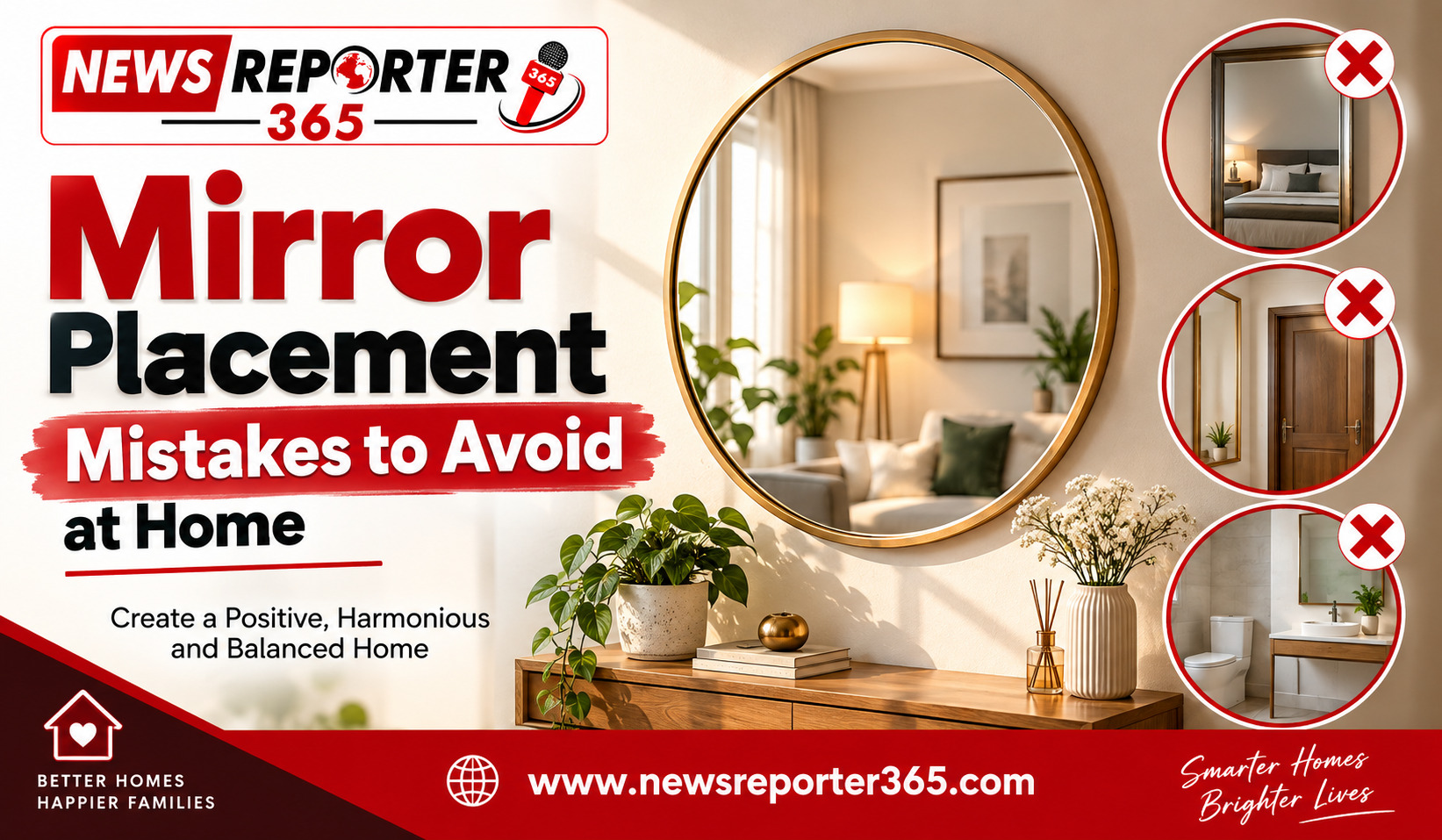
A mirror can do much more than help you check your appearance before leaving home. When you place it correctly, it can make a room feel brighter, more spacious, and more inviting. But when you put it in the wrong spot, the same mirror can make your space feel uncomfortable, cluttered, or visually unbalanced.
Whether you are decorating a new home or simply trying to refresh an existing room, paying attention to mirror placement can make a surprising difference. You may have the perfect mirror, but if it is positioned poorly, you will not get the look or functionality you expect.
Before you hang another mirror, take a few minutes to understand the most common Mirror Placement Mistakes you should avoid at home.
1. Hanging a Mirror Too High
One of the most common mistakes you can make is placing your mirror too high on the wall. A mirror should be positioned at a comfortable viewing height, especially if you are using it regularly to check your appearance.
If the mirror is mounted too high, you may only see part of your reflection. It can also make the wall arrangement feel disconnected from the furniture underneath it.
Before drilling holes, stand in front of the wall and decide where your eye level falls. If you are placing the mirror above a console table, dresser, or vanity, leave an appropriate amount of wall space between the furniture and the bottom of the mirror.
A good placement should feel intentional rather than as if the mirror has simply been pushed toward the ceiling.
2. Choosing a Mirror That Is Too Small
A beautiful mirror can still look wrong if its size does not suit the room. Choosing a mirror that is too small is another mistake that can affect the overall appearance of your space.
For example, if you have a large empty wall above a wide sofa or console, a tiny mirror may look lost. Instead of becoming an attractive focal point, it may appear like an unrelated decoration.
When choosing your mirror, consider the size of the wall and the furniture around it. A larger mirror can work particularly well in spacious rooms because it fills the visual space while also reflecting light.
However, bigger does not always mean better. The goal is to create balance between the mirror, furniture, and surrounding décor.
3. Placing a Mirror Directly Opposite a Cluttered Area
Mirrors reflect whatever is in front of them. This simple fact is easy to forget when you are decorating.
If you place a mirror directly opposite an untidy shelf, overflowing storage area, or cluttered corner, the mirror effectively doubles what you see. Instead of making the room look larger, it can make the space feel even busier.
Before finalizing your mirror position, stand where the mirror will be installed and look at the opposite wall. Ask yourself whether you actually want that area reflected.
Ideally, position your mirror so it reflects something attractive, such as artwork, greenery, a well-decorated wall, or natural light.
4. Ignoring Natural Light
One of the biggest advantages of using mirrors is their ability to reflect light. If you ignore the direction of natural light, you may miss an opportunity to make your room brighter.
Placing a mirror near a window can help distribute daylight throughout the room. You do not necessarily have to put the mirror directly opposite the window. Even positioning it on an adjacent wall can create a brighter and more open feeling.
Take some time to observe how sunlight moves through your room during the day. Your ideal mirror location may become obvious once you see which walls receive the most light.
5. Using Too Many Mirrors in One Room
Mirrors can make a small room feel more spacious, but using too many can have the opposite effect.
When several mirrors are placed close together, the room can start feeling visually confusing. Multiple reflections of furniture, lights, people, and decorations may create unnecessary visual noise.
You do not need a mirror on every available wall. Instead, choose one or two strategic locations where a mirror provides a clear purpose.
If you want to use multiple mirrors, consider choosing different shapes or sizes and spacing them carefully. The arrangement should look like a deliberate design feature rather than a collection of random mirrors.
6. Placing Mirrors Where Reflections Feel Uncomfortable
Not every reflection is pleasant. One of the important Mirror Placement Mistakes you should avoid is positioning a mirror where it reflects something you would rather not see.
For example, a mirror facing your bed may not appeal to you if you find your own reflection distracting at night. Similarly, placing a mirror where it constantly reflects a television screen can create an unpleasant visual effect.
Before installing a mirror permanently, temporarily hold it against the wall or use removable mounting solutions when appropriate. Walk around the room and see what the mirror reflects from different angles.
This small test can save you from making unnecessary holes in the wall.
7. Hanging a Mirror Without Considering the Furniture
Your mirror should work with the furniture around it rather than looking like a separate object.
A mirror above a console, dresser, sideboard, or bathroom vanity should generally have a visual relationship with the furniture beneath it. If the mirror is dramatically narrower or wider without a deliberate design reason, the arrangement may feel unbalanced.
Think about the proportions of the entire setup. A round mirror above a rectangular console can create an attractive contrast, while a large rectangular mirror can reinforce the clean lines of modern furniture.
The important thing is to consider the furniture and mirror as one composition.
8. Forgetting About the Mirror’s Purpose
Before deciding where to place a mirror, ask yourself what you want it to do.
Are you using it to check your outfit? Make a hallway look larger? Reflect sunlight? Add a decorative element? Create a focal point?
The answer should influence its location.
A full-length mirror needs enough surrounding space for you to step back and see yourself properly. A decorative mirror may be better positioned where it can become part of a wall arrangement.
When you identify the purpose first, choosing the right location becomes much easier.
9. Using the Wrong Mirror Shape for the Space
Shape matters more than you might think. One of the less obvious Mirror Placement Mistakes is choosing a mirror shape that clashes with the existing design of the room.
If your room already contains lots of sharp lines and rectangular furniture, a round or oval mirror can soften the appearance. On the other hand, a rectangular mirror may work well in a space with a clean, contemporary design.
You can also use mirror shapes to create visual interest. A curved mirror can make a room feel softer, while geometric designs can give your décor a more modern character.
Choose a shape that complements the room instead of selecting one simply because it looks attractive in a store.
10. Installing a Heavy Mirror Without Proper Support
Style should never come before safety. Large decorative mirrors can be surprisingly heavy, and mounting them incorrectly can cause serious damage to the wall or the mirror itself.
Before installation, check the weight of the mirror and the type of wall you have. Drywall, brick, concrete, and other surfaces may require different mounting methods.
Use suitable hardware and follow the manufacturer’s installation instructions. If the mirror is particularly large or heavy, professional installation can be a worthwhile investment.
A securely mounted mirror will give you peace of mind while also protecting your wall and furniture.
11. Placing a Mirror Too Close to a Busy Entrance
A mirror near the entrance can be extremely useful, especially when you want a quick appearance check before heading outside. However, positioning it in a high-traffic area without considering movement can be problematic.
If people constantly brush against the mirror, it may become difficult to keep clean and could be vulnerable to accidental damage.
Make sure there is enough space for people to walk comfortably. If you have children or pets, think carefully about whether the mirror’s location creates an additional safety concern.
12. Forgetting to Clean the Surrounding Area
Even perfectly positioned mirrors can look unattractive if the area around them is messy.
Dust, fingerprints, cables, overcrowded shelves, and random objects can take attention away from the mirror and make the entire arrangement appear untidy.
Once you have chosen the right location, keep the surrounding area relatively clean and organized. A mirror works best when it has enough visual breathing room.
You can also use the space around the mirror to introduce simple decorative elements such as a small plant, artwork, or a stylish console.
How to Choose the Right Mirror Placement for Your Home
Instead of following a single rule, consider your room’s size, lighting, furniture, and purpose. Start by identifying what you want the mirror to achieve.
If your room feels dark, look for a position that can reflect natural or artificial light. If your room feels small, consider a larger mirror that can create a greater sense of depth.
If you are decorating a bedroom, think about whether you want a functional dressing mirror or a decorative piece. In the living room, focus more on what the mirror reflects and how it works with your furniture.
Most importantly, do not rush the decision. Try different positions before permanently mounting the mirror.
Final Thoughts
Avoiding common Mirror Placement Mistakes can completely change how your home looks and feels. The right mirror can brighten a dark corner, create the illusion of more space, complement your furniture, and add personality to an otherwise plain wall.
At the same time, poor placement can highlight clutter, create awkward reflections, or make your décor feel unbalanced.
Before you install your next mirror, look beyond the wall itself. Consider what the mirror will reflect, how much light it will catch, how it relates to nearby furniture, and whether its size and shape suit the room.
A little planning can help you turn an ordinary mirror into one of the most effective decorative features in your home.